The European Union has imposed sanctions on two Iranian individuals and a unit of Iran’s Islamic Revolutionary Guard Corps (IRGC), accusing them of threatening freedom of navigation in the strategically vital Strait of Hormuz, a move that marks the first use of the bloc’s newly expanded sanctions framework targeting maritime disruptions.
The sanctions were announced on Monday as tensions remain elevated in the Gulf region following months of conflict involving Iran, the United States, and Israel. The EU said the measures were directed at those responsible for actions that hindered or endangered international shipping through the narrow waterway, which handles approximately one-fifth of the world’s oil trade.
Who Has Been Sanctioned?
According to the European Union, the sanctions target:
- The Hormozgan Provincial Command of the IRGC Navy.
- Mohammad Akbarzadeh, Deputy Commander for Political Affairs of the IRGC Navy.
- Hamid Hosseini, a representative of Iran’s Oil, Gas and Petrochemical Products Exporters’ Union.
The sanctions typically include asset freezes within the EU, travel bans, and restrictions on conducting business with European entities.
First Use of New Maritime Sanctions Powers
The move is significant because it represents the first application of the EU’s recently established “freedom of navigation” sanctions regime. The framework was introduced earlier this year after concerns grew over repeated disruptions to shipping lanes in the Gulf and the impact on global energy markets.
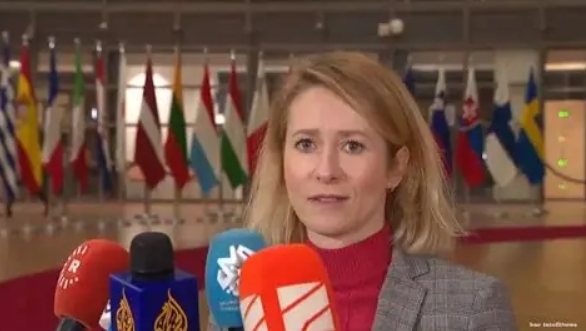
Speaking in Cyprus, EU foreign policy chief Kaja Kallas said the bloc considered Iran’s actions unacceptable and warned that further sanctions could follow if maritime traffic continued to be threatened.
The EU has argued that unrestricted passage through international waterways is essential for global trade and energy security, particularly in the Strait of Hormuz, which connects the Persian Gulf to the Gulf of Oman and the Arabian Sea.
Background: Hormuz Crisis and Regional Conflict
The sanctions stem from events that followed the outbreak of hostilities between Iran, the United States, and Israel earlier this year. Following U.S.-Israeli military strikes against Iran in late February, Tehran moved to restrict traffic through the Strait of Hormuz, leading to severe disruptions in global shipping and energy markets.
Shipping traffic through the waterway has remained volatile for months. Maritime security officials have reported threats to commercial vessels, increased insurance costs, and uncertainty for shipping companies attempting to navigate the region.
The crisis has left hundreds of vessels delayed or stranded and has fueled concerns about global energy supplies, given the strait’s importance to oil and liquefied natural gas exports from Gulf producers.
EU Considering Expanded Naval Role
Alongside sanctions, European policymakers have explored broader measures to secure maritime routes. The EU’s Aspides naval mission, originally created to protect commercial shipping from attacks in the Red Sea, has been discussed as a possible leader in future mine-clearing and maritime security operations in the Strait of Hormuz if security conditions improve.
European officials have warned that prolonged restrictions on navigation could have serious economic consequences not only for the Middle East but also for Europe and the wider global economy.
Impact on Global Markets
The Strait of Hormuz remains one of the world’s most important energy chokepoints. Any disruption to shipping through the passage can rapidly influence oil prices, shipping costs and global supply chains. Analysts have repeatedly warned that uncertainty in the region continues to weigh on international markets despite ongoing diplomatic efforts aimed at stabilizing the situation.
Although negotiations between Washington and Tehran have produced tentative ceasefire arrangements and discussions on restoring normal shipping operations, significant disagreements remain, and maritime traffic has yet to fully recover.
Looking Ahead
The latest EU sanctions underscore growing European willingness to directly penalize individuals and organizations viewed as threats to international shipping routes. As diplomatic efforts continue and regional tensions remain high, the European Union has signaled that it stands ready to deploy additional sanctions and maritime security measures to protect freedom of navigation in one of the world’s most strategically important waterways.
________________________________________________________________________________________________________________