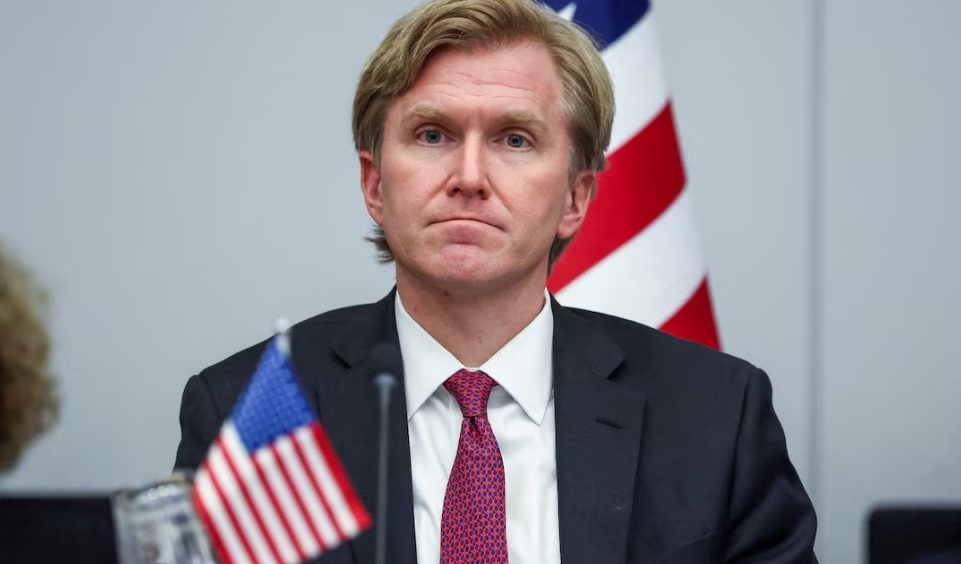
Senior European diplomats are preparing to meet U.S. Under Secretary of Defense for Policy Elbridge Colby as concerns grow over Washington’s review of American military deployments in Europe and the future direction of the transatlantic alliance.
Colby is expected to brief NATO ambassadors at the alliance’s headquarters in Brussels on Thursday as European governments seek greater clarity about the six-month U.S. force posture review launched in June. The review comes as the Trump administration presses European allies to assume greater responsibility for the continent’s defence.
Uncertainty Over U.S. Troop Presence
The United States currently has roughly 80,000 troops stationed in Europe, but Washington has already announced some troop withdrawals and reductions to forces assigned to NATO defence plans.
European governments are now closely watching whether the review will result in further reductions, and if so, which countries and military capabilities could be affected. The uncertainty has raised concerns among some NATO members about the long-term level of U.S. commitment to European security.
The review is being led primarily by Colby, who has described it as an effort to strengthen and modernise the alliance. He said the process is intended to advance what he called a “NATO 3.0” focused on clarity, readiness and strategic effectiveness.
Questionnaire Raises Political Concerns
The Pentagon has circulated documents to NATO members outlining the objectives of the review, including greater European responsibility for defending the continent and improved U.S. access to European bases and airspace.
A questionnaire sent to allies also asks about defence spending, military procurement, restrictions on U.S. access, basing and overflight rights, and whether governments publicly support U.S. foreign-policy priorities.
Some European officials have questioned whether the process is a genuine consultation or a negotiating strategy intended to secure greater political and military concessions from allies. The inclusion of questions about support for U.S. foreign policy has particularly fuelled concerns that Washington may be taking a more transactional approach to the alliance.
Europe Signals Greater Defence Responsibility
Despite concerns about the review, European governments are increasingly acknowledging the need to strengthen their own defence capabilities.
Estonian Defence Minister Hanno Pevkur said his country agrees that Europe needs to do more for its own defence and is preparing its response to the American questionnaire. Other European officials are expected to use the Brussels meeting to highlight their contributions to NATO’s collective security.
NATO has also intensified efforts to increase European military capabilities, with the alliance announcing major investments in defence production, drones, fuel infrastructure and other strategic capabilities at its 2026 summit.
Russia Remains a Major Concern
The discussions are taking place against the backdrop of continuing concerns over Russia and the security of NATO’s eastern flank.
European officials want to ensure that any changes to U.S. force deployments do not undermine NATO’s ability to deter potential Russian aggression. At the same time, Washington is pushing allies to assume a larger share of the military burden and strengthen their own defence capabilities.
The central question now is whether the U.S. review will ultimately lead to a substantial restructuring of American forces in Europe or primarily encourage European allies to increase their contributions while maintaining a strong U.S. military presence.
What Comes Next
The Brussels briefing is unlikely to provide all the answers, as the six-month review remains underway. European officials say they have received some positive signals from Washington but remain cautious because key decisions could ultimately be made by President Donald Trump and Defense Secretary Pete Hegseth.
For NATO, the review represents another important test of the alliance’s transatlantic relationship. While European countries are moving toward greater defence responsibility, uncertainty over the future scale of U.S. military involvement continues to shape strategic planning across Europe.
________________________________________________________________________________________________________________