New Tumen River Crossing Marks Another Step in Moscow-Pyongyang Strategic Partnership
North Korea and Russia have inaugurated their first dedicated road bridge across the Tumen River, opening a new direct land connection as political, economic and military ties between Moscow and Pyongyang continue to deepen.
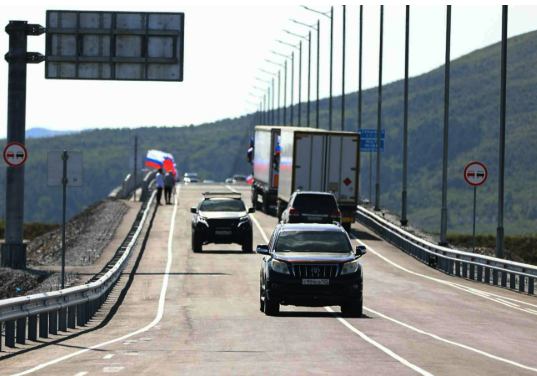
The approximately one kilometre, two lane bridge connects the Russian border town of Khasan with Tumangang in North Korea. The opening ceremony was held on September 7, with Russian Prime Minister Mikhail Mishustin and North Korean Premier Pak Thae-song addressing officials and workers by video link.
A NEW CROSS-BORDER LINK
The new bridge runs just a short distance from the existing Friendship Bridge, the railway crossing between the two countries that was completed in 1959.
Unlike the older rail connection, the new bridge is designed specifically for road traffic. Russia says it can accommodate up to 300 vehicles a day, with cargo traffic beginning first and passenger traffic expected to follow later this year.
Mishustin described the opening as a historic event, saying the new infrastructure would provide a powerful boost to trade and cooperation in economic, scientific, technological and cultural fields, as well as tourism.
BRIDGE AGREED DURING PUTIN-KIM PARTNERSHIP
The project follows an agreement reached during Russian President Vladimir Putin’s visit to North Korea in 2024, when Moscow and Pyongyang signed a comprehensive strategic partnership treaty that included a mutual defence commitment.
Construction of the bridge formally began in April 2025 after years of discussions about creating a road connection between the two countries.
The crossing is named after Yakov Novichenko, a Soviet Red Army officer whom North Korean authorities credit with saving the life of founder Kim Il Sung.
ECONOMIC AND TOURISM POTENTIAL
Moscow and Pyongyang have presented the bridge primarily as an economic and transport project.
The new road link is expected to make the movement of goods and people easier and complement the countries’ existing rail and air connections.
Russia has also sought to expand tourism to North Korea, while both governments have promoted greater economic cooperation since the signing of their strategic partnership.
MILITARY DIMENSION RAISES QUESTIONS
The bridge is opening against the backdrop of an unprecedented expansion in Russia-North Korea military cooperation.
North Korea has provided Russia with military support during the war in Ukraine, including ammunition and troops, according to Western and South Korean assessments. Thousands of North Korean personnel have been deployed to support Russian forces, particularly in the Kursk region. Ukraine has also accused Russia of using North Korean missiles and other military supplies.
Ukrainian analysts have raised concerns that the new road crossing could eventually facilitate military logistics in addition to legitimate commercial traffic.
Those concerns have not been established as the stated purpose of the bridge. Russia and North Korea have publicly emphasized trade, tourism and broader economic cooperation as the main objectives.
A DEEPENING MOSCOW-PYONGYANG ALLIANCE
The opening is the latest visible sign of the rapid strengthening of relations between Russia and North Korea since the beginning of the Ukraine war.
Moscow and Pyongyang have expanded cooperation across defence, trade, infrastructure, technology and political affairs, moving their relationship significantly beyond the more limited ties that existed before 2022.
For North Korea, closer relations with Russia provide access to a major diplomatic and military partner. For Moscow, Pyongyang has become an increasingly important source of military support while Russia faces continued confrontation with Ukraine and the West.
A NEW SYMBOL OF THE PARTNERSHIP
The Tumen River bridge therefore carries significance beyond transportation.
What Moscow describes as a route for trade and tourism also represents a new physical link between two governments whose strategic relationship has become increasingly important in the changing geopolitical landscape.
As vehicles begin crossing the new bridge, its long-term impact will depend on how extensively it is used for commercial traffic and how much the infrastructure contributes to the broader strategic partnership between Russia and North Korea.