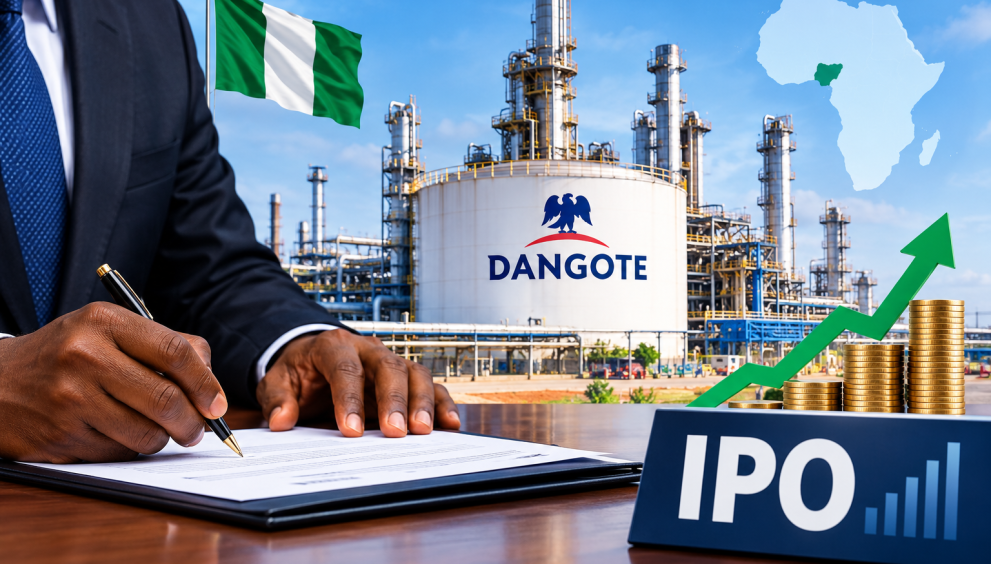
Nigeria’s Dangote Petroleum Refinery is planning a $14.3 billion expansion that would double its processing capacity to 1.4 million barrels per day by 2029, as the company moves ahead with an initial public offering (IPO) expected to become Africa’s largest-ever share sale.
The expansion was disclosed as Dangote and its advisers signed the IPO documents in Lagos on September 7, setting the stage for the refinery’s planned listing on the Nigerian stock market.
IPO Targets $1.63 Billion
The IPO is expected to raise about 2.15 trillion naira ($1.63 billion) through the sale of 4.1 billion ordinary shares at 525 naira per share.
The offering is scheduled to run from September 14 to October 13, with the shares potentially beginning to trade in late November. The company is primarily targeting retail investors and has indicated that the offering is designed to give Nigerians, the diaspora and other African investors an opportunity to own part of the major industrial asset.
The refinery also has a greenshoe option that could allow it to sell additional shares if demand exceeds the initial offering.
Refinery Expansion
The planned $14.3 billion investment would increase the refinery’s current capacity from around 700,000 barrels per day to 1.4 million barrels per day. The project is expected to be completed by 2029.
Located near Lagos, the refinery began operations in 2024 after an investment of about $20 billion. Its expansion would strengthen Nigeria’s position as a major refined petroleum products supplier in Africa and potentially increase the country’s ability to export fuels to international markets.
Stronger Financial Performance
The IPO comes after a major improvement in the refinery’s financial performance. According to its prospectus, Dangote Refinery recorded an after-tax profit of $1.82 billion in the first half of 2026, compared with a $476 million loss for the whole of 2025.
The refinery has benefited from disruptions in global energy markets while expanding exports of refined products, including jet fuel, to African and European markets.
Wider African Expansion
Dangote has also indicated plans to expand its refining business beyond Nigeria. The group is planning a new refinery on Kenya’s coast in partnership with East African governments, while the company has said that ADNOC, the United Arab Emirates’ state oil company, is among potential investors interested in the Nigerian refinery.
The IPO and expansion could therefore mark a significant new phase for Dangote Refinery, potentially transforming it into one of Africa’s largest publicly held energy companies while providing additional refining capacity for the continent.
________________________________________________________________________________________________________________