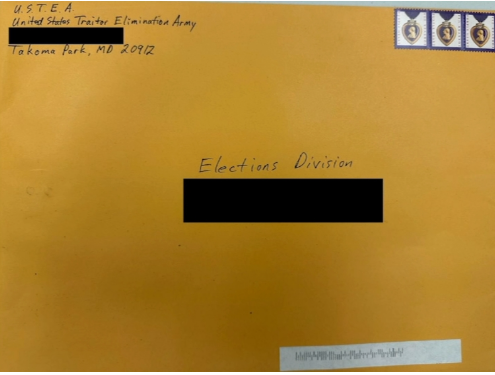
US federal authorities are investigating letters containing suspicious substances sent to congressional and election offices across the country. The FBI, US Postal Inspection Service and US Capitol Police are working to intercept additional mailings as officials warn recipients that the packages could pose a potential hazard, weeks before the November 3 midterm elections.
Federal authorities in the United States have launched an investigation into letters containing suspicious substances that have been mailed to congressional and election offices nationwide.
The investigation involves the Federal Bureau of Investigation (FBI), the US Postal Inspection Service and US Capitol Police, which are working together to identify the source of the mailings and prevent further letters from reaching their intended destinations.
The investigation was first disclosed in a notice from the Senate Sergeant at Arms obtained by The Associated Press on Thursday. The message warned Senate offices that law enforcement agencies were working to intercept additional letters but cautioned that some could still reach their destinations.
Officials have urged recipients to treat the mailings as potentially hazardous while investigations continue. Authorities have not confirmed the nature of the substances or established whether they pose a broader threat.
Reports indicate that the threat within Congress appeared to be limited to the Senate, although the House of Representatives was also monitoring the situation. Election offices across the country have also been identified as potential recipients of the suspicious mail.
The investigation comes just weeks before the November 3 midterm elections, when voters will decide key congressional races and other contests across the United States. The timing has heightened attention on the security of election-related institutions and the safety of public officials and staff.
Federal agencies are continuing their efforts to trace the mailings, assess potential risks and prevent further deliveries. Authorities have not publicly identified a suspect or disclosed a motive.
The investigation remains ongoing as officials work to establish who sent the letters, what substances they contain and whether the mailings are connected.