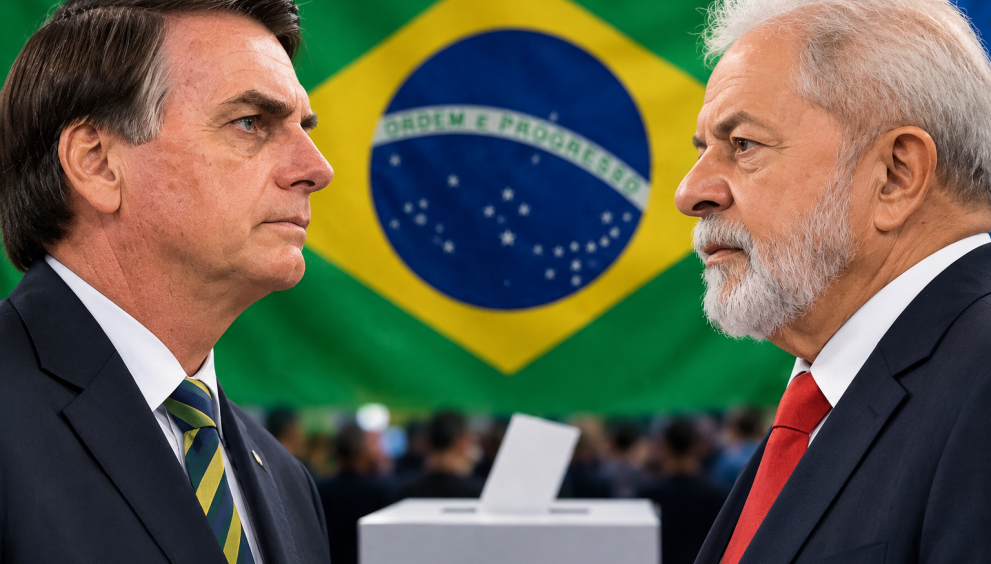
Brazil’s presidential race is tightening ahead of Sunday’s October 25 runoff, with new opinion polls showing Senator Flávio Bolsonaro’s advantage over incumbent President Luiz Inácio Lula da Silva narrowing as both candidates intensify their campaigns.
Flávio Bolsonaro, the eldest son of former Brazilian president Jair Bolsonaro, outperformed expectations in the first round of voting earlier this month, finishing ahead of Lula. However, the latest surveys suggest that the contest remains highly competitive, with the incumbent seeking to rally support before voters return to the polls.
Polls Point to a Tightly Contested Race
A Nexus/BTG Pactual poll released on Monday put Flávio Bolsonaro at 50.3% of valid votes, compared with 49.7% for Lula. The survey interviewed 2,000 voters between October 16 and 18 and had a margin of error of two percentage points, placing the candidates within the range of a statistical tie.
The findings reinforce the trend of a narrowing contest. Other recent surveys have also shown Bolsonaro maintaining a modest advantage, although the size of that lead varies between polling organisations.
Campaigns Intensify Before October 25
Both candidates are working to secure undecided voters and consolidate their support ahead of the decisive vote.
Lula, a left-wing leader seeking a fourth non-consecutive presidential term, is campaigning on his record in government and his commitment to social programmes. Bolsonaro, a right-wing senator, is presenting himself as an alternative to the incumbent and drawing support from conservative voters.
Their first televised debate on Sunday was marked by heated exchanges and personal accusations, with limited discussion of detailed policy proposals. The confrontation highlighted the deep political divisions shaping the election.
Brazil Faces a Crucial Political Decision
The election carries significant implications for Brazil’s economic direction, social policies and international relations. A Lula victory would extend the current administration’s political agenda, while a Bolsonaro win could shift the country towards a more conservative government and closer alignment with the United States.
With only days remaining before the runoff, the narrowing polling gap suggests that neither candidate can take victory for granted. Voter turnout, undecided voters and the final campaign exchanges could prove decisive in determining who leads Latin America’s largest economy for the next presidential term.
The final result will be determined by voters on October 25, with the latest polls indicating a close contest rather than a clear frontrunner.
________________________________________________________________________________________________________________