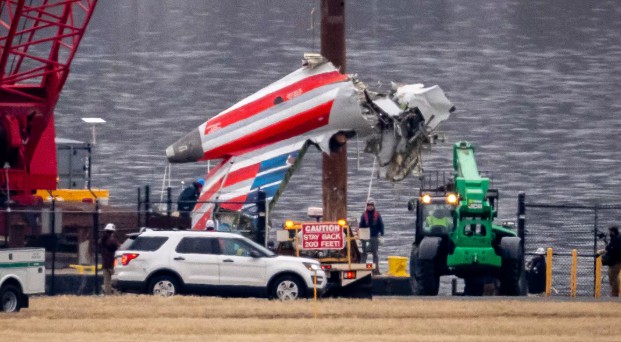
In a highly anticipated Senate subcommittee hearing on Thursday, officials from the U.S. Army and the Federal Aviation Administration (FAA) came under intense scrutiny for the first time since the January midair collision in Washington, D.C. that claimed the lives of 67 people.
Families Demand Answers
Family members of the victims attended the hearing, seeking accountability and answers as lawmakers grilled officials about the causes of the tragic incident. The collision between an Army helicopter and a commercial airliner near Reagan National Airport in January shocked the nation, and the Senate hearing was the first public opportunity for officials to respond to the growing concerns about aviation safety and accountability.
The preliminary findings from the National Transportation Safety Board (NTSB) suggest a number of issues may have contributed to the collision, but the specifics are still under investigation. The hearing focused on the roles both the U.S. Army and FAA played in the accident, including questions about airspace management, communication breakdowns, and oversight failures.
FAA Acknowledges Need for Improvement
In his testimony, FAA Administrator Billy Nolen acknowledged that the agency “must do better” to prevent such tragedies in the future. Nolen expressed regret over the incident and emphasized the importance of improving air traffic control systems and coordination between military and civilian aviation authorities.
“We are fully committed to improving our oversight and coordination to ensure that this type of tragedy never happens again,” Nolen said during the hearing. He also vowed that the FAA would take necessary steps to implement the recommendations that would emerge from the NTSB’s final investigation.
U.S. Army’s Role Under Scrutiny
U.S. Army officials also faced tough questions about their role in the collision. Lawmakers demanded clarification on why the Army helicopter, which was reportedly conducting a routine training mission, was in the same airspace as the commercial airliner. Several lawmakers expressed concern about the communication between military and civilian aviation authorities, noting that the collision could have been prevented with better coordination.
General Daniel Hokanson, the Chief of the National Guard Bureau, testified that the Army would review its internal processes to ensure better communication in the future. He also extended condolences to the families affected by the tragedy, acknowledging that the military’s actions must be scrutinized to prevent future accidents.
Senators Demand Accountability and Action
Senators on the subcommittee expressed frustration with the lack of clarity surrounding the incident. Senator Maria Cantwell (D-WA) called for a thorough review of the FAA’s safety protocols, urging the agency to make necessary improvements immediately.
“We owe it to the victims and their families to understand how this happened, and to ensure it never happens again,” Cantwell said. “The safety of every American in the skies must be our top priority.”
Senator Ted Cruz (R-TX) similarly pressed for greater accountability, stating that both the Army and FAA must take full responsibility for their roles in the crash.
Next Steps and Ongoing Investigation
The Senate hearing is only the beginning of what is expected to be a long process of inquiry into the causes of the collision. The NTSB is continuing its investigation into the incident, and lawmakers have pledged to follow up with further hearings as new information becomes available.
While the FAA has promised to make improvements in its airspace management and coordination efforts, the families of the victims are demanding concrete changes to prevent such a tragedy from happening again.
As the investigation continues, all eyes will remain on the FAA, the U.S. Army, and other aviation authorities to ensure that lessons are learned and that steps are taken to enhance aviation safety.