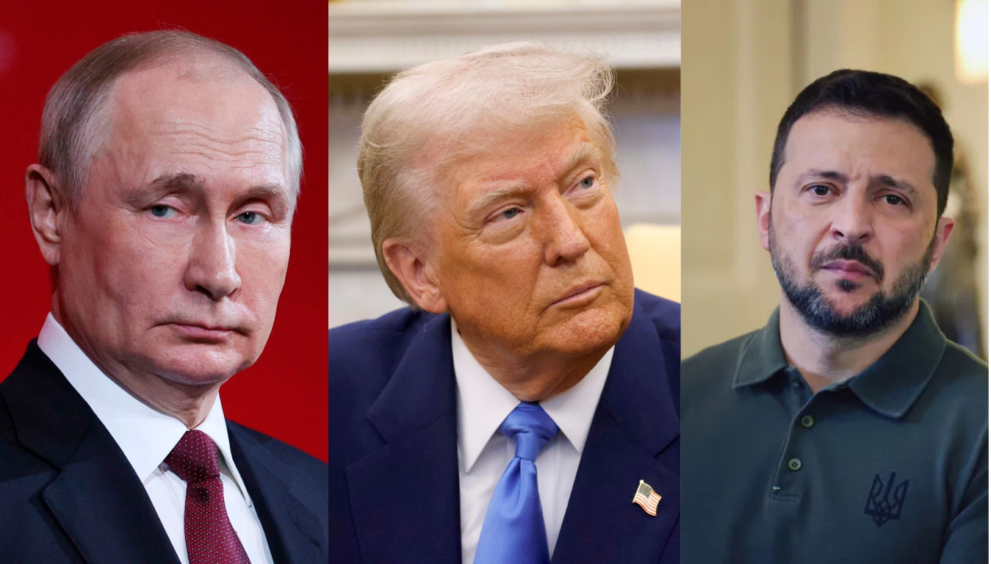
The Kremlin stated on Monday that Russia and the United States are working together on potential solutions for a peace agreement in Ukraine while also striving to improve bilateral relations, despite U.S. President Donald Trump recently expressing frustration with Russian President Vladimir Putin.
Trump voiced his anger over Putin’s criticism of Ukrainian President Volodymyr Zelenskyy’s credibility and warned that he might impose secondary tariffs of 25% to 50% on Russian oil imports. However, he later reassured me that progress is being made, even if it’s slow.
Kremlin spokesperson Dmitry Peskov confirmed that Moscow continues to engage with Washington, with Putin remaining open to communication with Trump. He emphasized that Russia is focused on rebuilding strained U.S.-Russia relations and exploring potential solutions for the Ukraine conflict, although this process is complex and time-consuming. Peskov noted that a call between the two leaders could be arranged if needed.
Trump, who wants to be remembered as a peacemaker, reiterated his goal of ending the war in Ukraine and warned of the risk of it escalating into a global conflict between the U.S. and Russia if left unresolved. He emphasized his desire to end the bloodshed and stop both Russian and Ukrainian soldiers from dying. Additionally, he stated that if Putin didn’t cooperate, he would impose tariffs on Russian oil.
During a meeting with Trump, Finland’s President Alexander Stubb suggested setting a deadline for a ceasefire to ensure its success, pointing out that Trump is the only person Putin respects enough to broker peace. Trump’s frustration with the lack of progress, particularly regarding a ceasefire, was evident.
Since taking office, Trump has adopted a more conciliatory approach to Russia, which has raised concerns among Western allies. His frustration was clear when he said that if Russia didn’t reach an agreement to stop the violence, he would impose secondary tariffs on Russian oil, potentially affecting countries like China and India, which purchase most of Russia’s oil.
Talks about possible cooperation on rare earth metals and other projects between Russia and the U.S. have begun, but there are still no clear details.
The Kremlin views the peace process as slow-moving. Peskov stated that no concrete results have been achieved yet and that Russia has rejected a U.S. proposal for a full 30-day ceasefire, with the possibility of a partial ceasefire also complicated by the conditions set by the Kremlin. Trump, who promised to quickly end the war, is growing frustrated with the lack of progress.
Although Trump criticized Putin over his comments on Zelenskyy, Peskov reaffirmed that Putin remains open to discussions with the U.S. president. Both countries are bracing for intensified military actions in the coming months, with Putin recently ordering the drafting of 160,000 conscripts into the Russian military.
Ukrainian President Zelenskyy stated that Russian attacks are ongoing, underlining the brutal nature of the conflict. He called for more international pressure on Russia to force it into negotiations, including the imposition of additional sanctions. EU foreign policy chief Kaja Kallas echoed this view, stating that Russia is not genuinely interested in peace and that more pressure is needed.
The conflict persists, with continued attacks, including a recent drone strike on Kharkiv, and Ukrainian forces targeting Russian energy infrastructure. Russia’s Defense Ministry reported shooting down numerous Ukrainian drones. Both sides continue to face significant obstacles, and a resolution remains elusive.