U.S. military intensifies pressure on Tehran over nuclear ambitions and Houthi insurgencies.
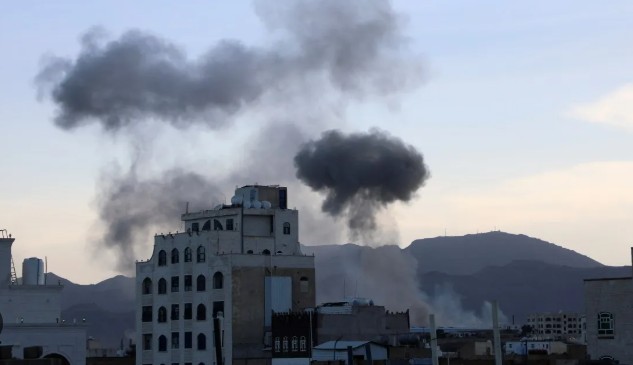
April 2025 — U.S. Central Command conducted a series of airstrikes targeting Yemen’s Iran-backed Houthi rebels over the weekend, marking a significant escalation in the ongoing regional tensions. The strikes, which were carried out by fighter jets operating from the Red Sea, targeted key positions in the Houthi-controlled Al Jabal al Aswad area in the Bani Matar district, located west of the Yemeni capital Sana’a.
These operations are part of a broader strategy by Washington to exert pressure on Iran, which it accuses of fueling instability in the region by supporting the Houthi rebels in Yemen and advancing its uranium enrichment program. The U.S. government has long criticized Tehran’s involvement in the conflict, viewing it as a proxy battle that serves to further Iran’s geopolitical and military ambitions.
Targeting Key Rebel Positions
The airstrikes, which were executed on the heels of heightened tensions in the region, are part of ongoing military efforts aimed at weakening the Houthi rebel group’s capabilities. The U.S. Central Command confirmed that the strikes were designed to disrupt Houthi operations and infrastructure, particularly in areas that have seen significant Houthi activity and aggression against Saudi Arabia and other Gulf nations.
While the immediate impact of these strikes remains unclear, the U.S. military’s message is clear: it seeks to curb the growing influence of Iran in Yemen and to halt the trajectory of Tehran’s nuclear program. The strikes come amid increasing concerns that Iran’s nuclear ambitions could destabilize the entire Middle East and spark a broader conflict.
U.S. Strategy to Pressure Tehran
In Washington, officials have stated that the airstrikes are not only aimed at the Houthi rebels but are also part of a larger strategy to pressure Iran over its nuclear developments. The U.S. has long accused Tehran of making advances in uranium enrichment, moving closer to potentially obtaining the capability to produce nuclear weapons.
The White House has reiterated its commitment to confronting Iran’s destabilizing actions in the region. The Biden administration has made it clear that it will use all available tools, including military action, to push back against Tehran’s growing influence in Yemen and its continued nuclear progress.
“We will take necessary actions to protect our interests and our allies in the region,” said a spokesperson for the U.S. Department of Defense. “These strikes are a clear message to Iran that its involvement in destabilizing conflicts will have consequences.”
The Regional Implications
The escalation of hostilities in Yemen has broader implications for regional security, particularly concerning Saudi Arabia and the wider Gulf Cooperation Council (GCC) states. The Houthis have increasingly targeted Saudi Arabian infrastructure, including oil facilities, exacerbating tensions in an already volatile region.
Iran’s support for the Houthis is seen as part of its larger strategy to project power in the Middle East, creating a network of proxy groups that challenge U.S. influence and threaten the interests of its allies. The U.S. response is part of an ongoing effort to contain Iran’s influence and prevent the expansion of Tehran’s regional footprint.
A Diplomatic Path Forward?
As the U.S. ramps up military pressure, the path to a diplomatic resolution remains unclear. The conflict in Yemen, which has raged for nearly a decade, has led to a humanitarian crisis, with millions displaced and tens of thousands of civilians killed. The continued support of the Houthis by Iran complicates efforts to achieve a lasting peace.
International diplomats have called for renewed talks, but the volatile situation on the ground and the entrenched positions of all parties involved make negotiations difficult. As military actions intensify, the focus on diplomatic solutions will likely remain a key challenge for all parties involved in the region.