

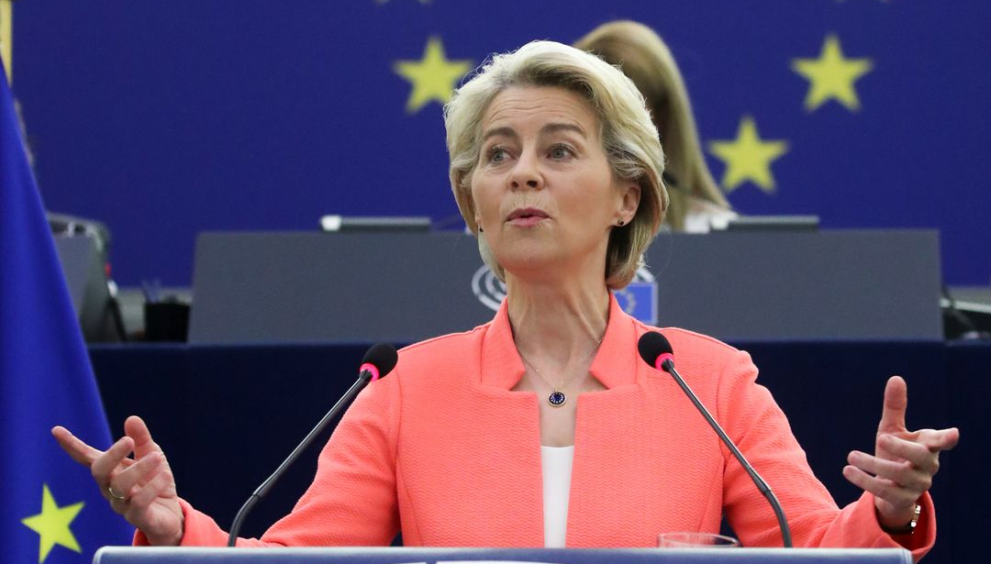
The European Union has decided to pause its planned countermeasures against U.S. tariffs after President Donald Trump temporarily reduced the duties he had imposed on several countries. The EU had intended to introduce tariffs on about €21 billion ($23.25 billion) of U.S. goods, including steel and aluminum, in response to Trump’s 25% tariffs. Ursula von der Leyen, the European Commission president, stated that the EU would delay these countermeasures for 90 days to allow time for negotiations.
Meanwhile, the U.S. is evaluating offers from over a dozen countries concerning tariff agreements, with some negotiations nearing completion, according to White House economic adviser Kevin Hassett. These discussions are being prioritized at the White House.
Trump’s decision to pause the new tariffs, announced just one day after they were implemented, helped ease market volatility, which had wiped out trillions of dollars in stock value and caused a surge in U.S. government bond yields. U.S. stock indexes rose, and markets in Asia and Europe followed suit. However, Trump increased tariffs on Chinese imports to 125% and signed an executive order to reduce China’s control over global shipping while boosting U.S. shipbuilding.
In response, China rejected the U.S.’s approach, asserting its willingness to continue talks but only based on mutual respect. The Chinese government had already imposed its retaliatory tariffs on U.S. goods.
Trump has suggested a potential resolution with China, but U.S. officials are focusing on other countries, including Vietnam, Japan, and South Korea, to negotiate trade deals. The yuan reached its lowest value against the dollar since the global financial crisis.
In Europe, markets reacted positively to Trump’s tariff pause, with bond yields rising and stocks gaining. However, Ursula von der Leyen warned that the EU could reinstate its countermeasures if negotiations do not yield satisfactory results. The U.S. tariff pause does not affect existing duties on goods from Canada and Mexico under the U.S.-Mexico-Canada Agreement.
The EU’s planned tariffs on U.S. products like maize, motorcycles, poultry, and fruit have been suspended for now. Other countries, such as India, are eager to move quickly on trade deals with the U.S.
Despite the temporary relief, oil prices fell 2% due to ongoing concerns about the U.S.-China trade war and its impact on global growth. Central bankers have remained cautious, and business leaders warned that while the tariff pause is a positive step, uncertainty still lingers. For example, the head of the French wine and spirits industry noted that while the pause would ease some pressures, the remaining tariffs would still lead to price increases and reduced consumption in the U.S.

