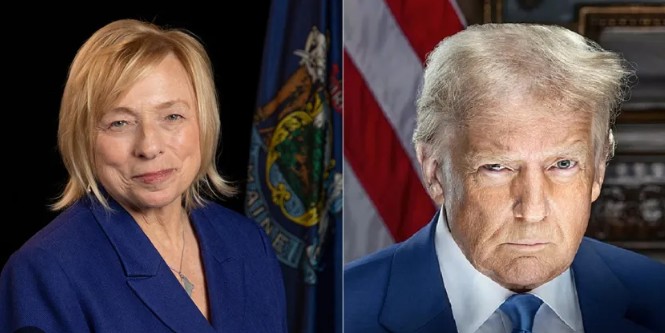
Maine Risks Millions in Federal Education Funding Over Transgender Sports Dispute
April 11, 2025 | Washington, D.C. / Augusta, ME — The Trump administration announced Friday that it has initiated the process of withholding federal K-12 education funding from the state of Maine, following the state’s continued refusal to comply with new federal guidelines regarding transgender participation in school athletics.
The standoff, now entering its eighth week, could put hundreds of millions of dollars in federal education support at risk funding that supports some of the state’s most vulnerable students. Critics say Maine’s leadership is prioritizing political grandstanding over the basic responsibilities of educating children.
A Political Stand at a High Price
At issue is Maine’s outright rejection of federal guidelines requiring schools to align athletic participation with biological sex rather than gender identity a move the Trump administration says is necessary to ensure fairness in school sports.
Rather than seek compromise or legal clarification, Maine officials have dug in, accusing Washington of “discrimination” and “bullying,” despite the fact that the proposed regulations apply nationwide and reflect a growing debate over fairness in girls’ sports.
Governor Janet Mills has framed the administration’s demands as a civil rights issue, saying, “Our schools will continue to support and protect all students including transgender youth regardless of threats from Washington.” But critics argue this position has less to do with student welfare and more to do with scoring political points.
“Let’s be clear: this is not about education. It’s about political defiance,” said Dana Keller, a parent advocate from Bangor. “Meanwhile, children in underfunded schools are left wondering if they’ll lose their teachers, lunch programs, or special education support.”
Federal Government Draws a Line
In a statement Friday, a Department of Education spokesperson said, “States that refuse to comply with federal guidelines will no longer be eligible to receive funding under Title I and other programs. The goal is to preserve fairness and integrity in school sports not play politics with classrooms.”
Maine received approximately $330 million in federal K-12 aid last year, including critical funding for high-poverty districts, rural education, and special needs services. If the funding is cut, education advocates warn, it won’t be state politicians who suffer it will be the students.
A Misplaced Fight
While the debate over transgender rights is complex, many argue it should not come at the expense of basic education funding. Maine’s decision to risk federal support over this issue is raising eyebrows, especially as other states seek to work through legal channels or await court guidance.
“There are ways to engage on policy differences without jeopardizing school budgets,” said Tom Wallace, a former superintendent and education consultant. “This isn’t principled resistance — it’s performative politics. And kids are caught in the middle.”
Setting a Precedent?
Legal experts say the situation could become a flashpoint for other states with similar laws, but most have opted to remain in dialogue with federal agencies rather than provoke a funding crisis.
Maine, however, appears ready to take the matter to court and into the national spotlight even if it means students across the state could lose vital resources in the process.
“The foundation of education is reading, writing, and preparing our children for the future not political gamesmanship,” said Wallace. “We’ve lost sight of that in this debate.”
As summer budget planning begins, school districts across Maine are left in limbo unsure whether to plan for federal dollars that may never arrive. One thing is certain: in this clash between principle and policy, it’s the classroom that may pay the price.