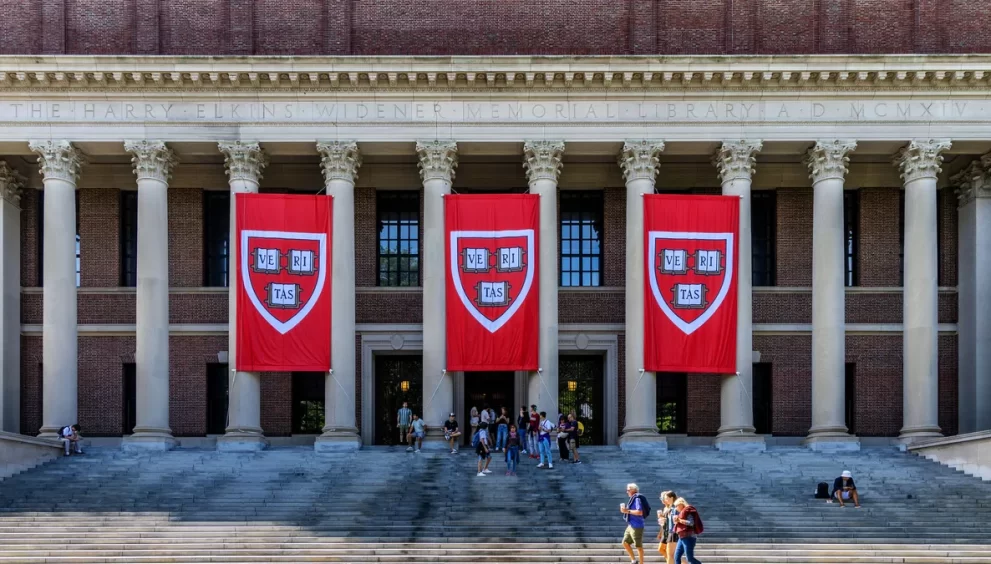
The Trump administration moved quickly on Monday to freeze over $2.2 billion in long-term grants and contracts after Harvard University declined to meet several demands made by the government just days before. These demands involved changes to the university’s hiring, admissions, and other policies.
Harvard’s president, Alan Garber, informed faculty and students in a letter that the university would not adhere to the government’s requests. Among these requests were the dismantling of diversity, equity, and inclusion (DEI) programs, screening international students for ties to terrorism or anti-Semitism, and ensuring diversity of opinion in faculty hiring. These demands were linked to around $9 billion in federal funding.
Garber emphasized that no government, irrespective of its political affiliation, should have the authority to dictate the policies of private universities, including their admissions, faculty choices, and academic objectives.
The government’s Joint Task Force on Anti-Semitism swiftly condemned Harvard’s position, accusing the university of expecting federal support while neglecting its obligation to uphold civil rights laws. In response, they announced the suspension of more than $2.2 billion in multi-year grants and an additional $60 million in contracts.
The statement underscored that recent disruptions on college campuses were intolerable, and prestigious institutions must take concrete steps to address these concerns if they want to continue receiving taxpayer funding.
In response to the funding freeze, a Harvard spokesperson referenced Garber’s letter, which argued that the federal government’s decision would not only harm millions of individuals but also pose a threat to the nation’s economic stability and well-being.
Harvard was one of several universities facing scrutiny from the Trump administration, which has been targeting institutions nationwide over alleged civil rights violations. The administration had previously slashed $400 million in funding to Columbia University following pro-Palestinian protests and froze $1 billion for Cornell University and $790 million for Northwestern University.
University leaders have expressed challenges in balancing federal expectations with their commitment to student welfare and academic priorities. Earlier this year, the government announced a review of $9 billion in grants and contracts with Harvard. U.S. Secretary of Education Linda McMahon criticized the university for not adequately protecting students from anti-Semitic discrimination, while also supporting ideologies that undermine free academic inquiry. She called on Harvard to correct the situation and reaffirm its commitment to academic excellence and student safety.
In response, Harvard’s legal team outlined steps it had taken over the past year to address anti-Semitism, including disciplining violators and hiring additional staff. They also argued that the government’s demands infringed upon Harvard’s First Amendment rights and exceeded federal authority in enforcing civil rights laws.