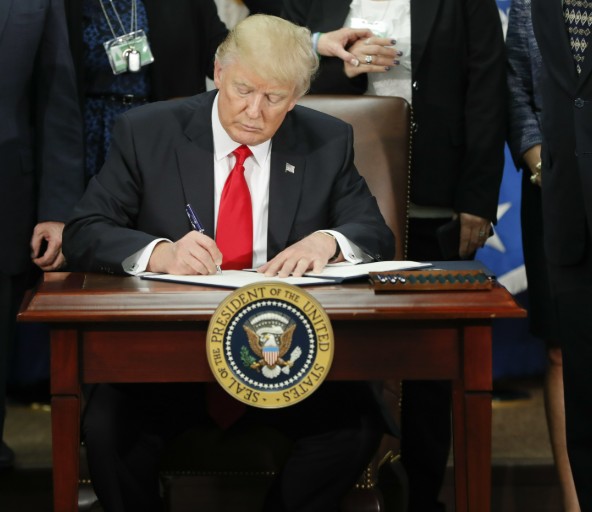
President Donald Trump is set to sign a new executive order directing federal officials to identify cities and states that are not complying with federal immigration laws, a move that intensifies his administration’s push against so-called “sanctuary jurisdictions.”
According to a senior White House official, the order will task the U.S. Attorney General and the Secretary of Homeland Security with compiling a detailed list of local and state governments that are refusing to cooperate fully with federal immigration enforcement. The list is expected to be delivered within 30 days of the order’s signing.
The order is being positioned as a transparency measure, aimed at highlighting non-compliance and pressing local governments to align with federal immigration priorities. Critics, however, argue that the move could reignite legal and political battles over states’ rights and immigration policy.
This development comes just one week after a federal judge blocked a previous attempt by the Trump administration to withhold federal funding from more than a dozen jurisdictions that had refused to assist with immigration crackdowns. That ruling marked a temporary setback for the administration’s strategy, but today’s executive order signals that the president intends to keep pressure on cities and states resisting his immigration agenda.
“Sanctuary cities endanger the lives of law-abiding Americans,” Trump said in a recent statement. “We are committed to restoring law and order and ensuring that every part of this country respects our immigration laws.”
Legal experts anticipate the order may trigger further constitutional challenges, particularly around federal overreach and states’ rights. Several governors and mayors have already signaled that they will continue to resist federal mandates they believe infringe on local autonomy and community trust.
As the debate intensifies, immigration is once again shaping up to be a defining issue in Trump’s ongoing re-election campaign and a major point of division across the American political landscape.