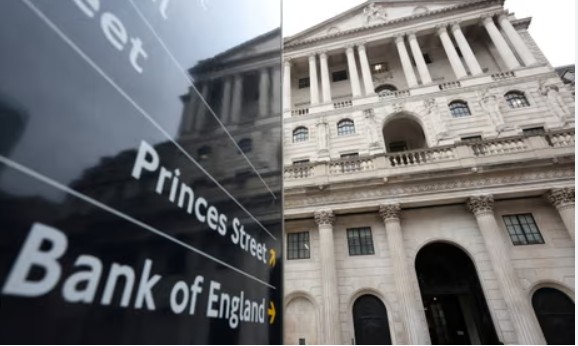
The Bank of England (BoE) lowered its benchmark interest rate by 25 basis points to 4.25% on Thursday, aligning with market expectations amid rising concerns over the economic impact of new U.S. tariffs. The move is the BoE’s first rate cut in over a year and signals the beginning of a potential easing cycle to support the UK economy in an increasingly uncertain global landscape.
The decision, however, revealed a rare three-way split among Monetary Policy Committee (MPC) members, suggesting diverging views within the central bank on the pace and timing of future cuts. The vote breakdown was 5-4 in favour of a 0.25% reduction, with two members advocating for a larger 50 bps cut, one preferring no change, and the majority opting for the more cautious 25 bps move.
BoE Governor Andrew Bailey acknowledged the challenging trade environment created by U.S. tariffs on British exports, which are expected to slow industrial activity and consumer confidence. “This cut is a preemptive step to ensure that inflation remains within target while supporting demand,” Bailey said at a post-decision press conference.
While inflation remains above the central bank’s 2% target, it has been on a steady downward trajectory, giving policymakers room to act. Markets had largely priced in the rate cut, but the internal disagreement within the MPC dampened expectations for aggressive rate reductions in the coming months.
Still, the BoE signaled that it is prepared to lower rates further if economic data continues to soften. Analysts now predict at least one more rate cut by the end of the third quarter, barring a surprise rebound in global trade or domestic inflation.
The pound weakened slightly against the dollar following the announcement, reflecting investor expectations of a looser monetary stance.
This rate cut comes as other major central banks, including the U.S. Federal Reserve and the European Central Bank, weigh their own paths forward in an environment marked by slower global growth and trade tensions.