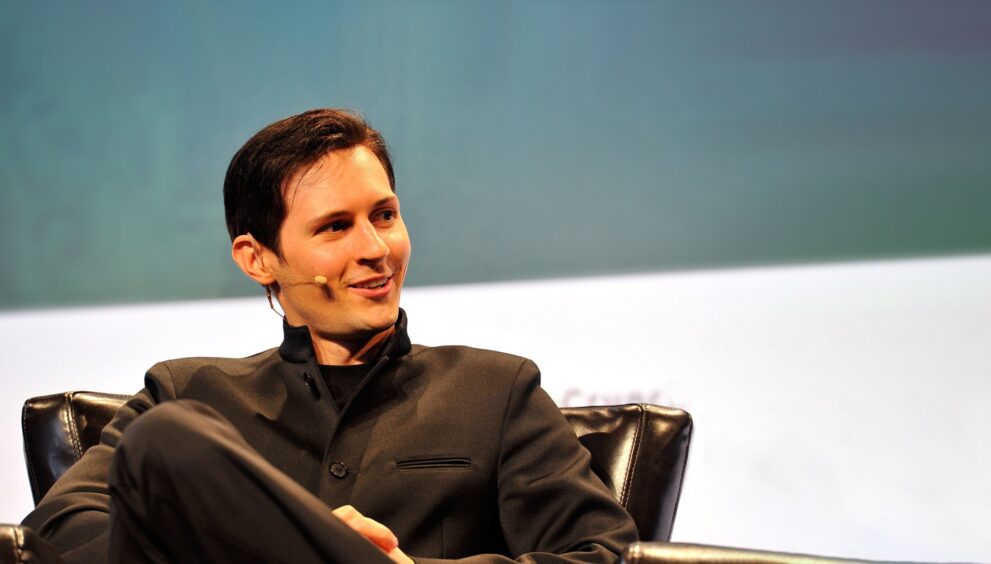
Telegram founder Pavel Durov has claimed that the head of France’s foreign intelligence agency personally asked him to block Romanian conservative voices on his platform ahead of upcoming elections. Durov said he rejected the request.
Currently under judicial supervision in France, Durov is staying at a luxury hotel in Paris while facing formal investigation over allegations linked to criminal activity on Telegram. He said the intelligence chief approached him during a meeting at the hotel earlier this spring.
According to Durov, he was asked to silence certain political voices in Romania, but refused, citing Telegram’s history of allowing freedom of expression, even in politically sensitive situations in countries like Russia, Belarus, and Iran. He emphasized that this policy would not change in Europe.
In Romania’s recent presidential election, centrist candidate Nicusor Dan defeated nationalist rival George Simion in an unexpected outcome. The result was seen as reassuring by some European leaders, amid fears that discontent over economic and migration issues could increase support for far-right movements and strain the continent’s unity on key issues such as relations with Russia.
France’s foreign intelligence service acknowledged meeting with Durov in the past, stating that these meetings were aimed at reminding him and his company of their responsibilities in addressing threats such as terrorism and child exploitation. However, the agency strongly denied ever requesting the suppression of political content during elections.
Simion, the losing candidate, commented that even if Durov’s claims were accurate, it was unlikely Telegram was the only platform contacted.
The controversy drew attention on social media, where high-profile figures in the tech world reacted, pointing to broader concerns over potential efforts to suppress certain political viewpoints in Europe. Durov had earlier suggested that a Western government—implied to be France—had approached him with a similar request during the final stages of the Romanian election.
Telegram maintained that it would not interfere with Romanian users’ freedom or censor political channels. The French foreign ministry rejected the idea of any interference, calling for responsibility and respect for the Romanian democratic process.
President-elect Nicusor Dan criticized Durov’s public comments, calling them an improper intervention by a digital platform that could be seen as an attempt to sway the election’s outcome.
The broader debate over free speech online intensified following Durov’s arrest last year, drawing reactions from global tech figures. Some of them have also been scrutinized by French authorities for issues such as algorithmic bias and influence on domestic politics.
A recent report from a technology watchdog group claimed that nearly a quarter of Romanian-language Telegram channels were distributing what it identified as pro-Kremlin disinformation. Telegram responded by saying its users only see content they choose to follow.