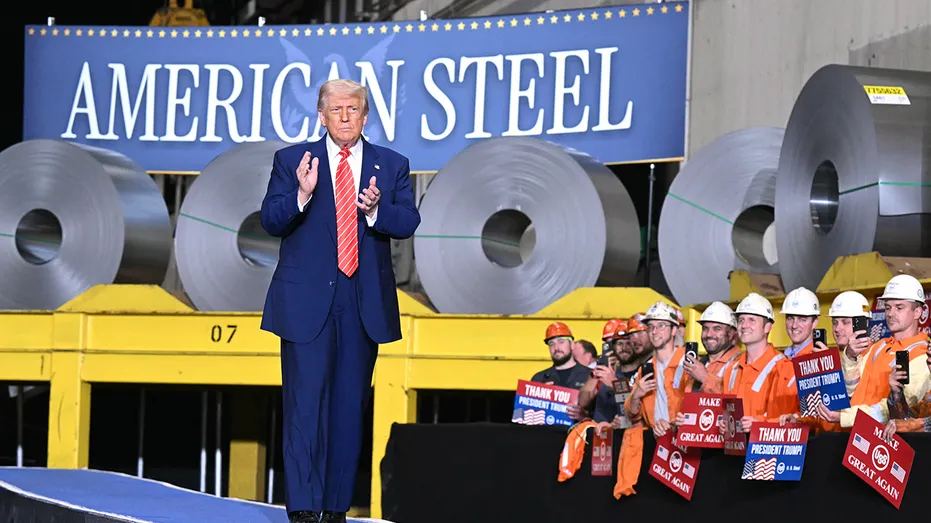
President Donald Trump has approved the $14.9 billion acquisition of U.S. Steel by Japan’s Nippon Steel, concluding an 18-month process marked by union resistance and multiple national security evaluations.
Trump signed an executive order allowing the transaction to proceed, contingent on the companies reaching an agreement with the U.S. Treasury addressing national security concerns. Following the order, both companies confirmed they had finalized such an agreement, effectively securing clearance for the deal.
In a joint statement, the steelmakers expressed appreciation for the approval and said they are eager to fulfill their promises aimed at revitalizing U.S. steel production and manufacturing. The agreement includes plans for $11 billion in investments by 2028 and contains provisions related to governance, production, and trade. Nippon Steel is set to acquire full ownership of U.S. Steel, according to a company representative based in Tokyo.
Details remain scarce regarding the “golden share” the companies agreed to provide to the U.S. government—a special class of stock that could grant veto power over certain decisions. Senator David McCormick of Pennsylvania previously stated this would ensure Washington retains influence over strategic matters involving U.S. Steel, which is headquartered in the state.
There are also plans for an additional $3 billion investment after 2028 to support a new steel mill. The acquisition positions the American company to receive substantial capital at a time when infrastructure spending in the U.S. is ramping up. Nippon Steel, in turn, gains access to a vital market while avoiding a $565 million termination fee that would have applied if the merger had failed.
For Nippon Steel—the world’s fourth-largest steelmaker—this move represents a critical step in expanding its international footprint. The U.S. steel sector, especially in high-grade materials where Nippon Steel excels, is growing amid increased global trade frictions and tariffs.
Despite the strategic advantages, some investors in Japan are uneasy about the financial demands of the significant investment package.
The Japanese government welcomed the decision and praised the approval as a step forward in boosting innovation and reinforcing economic ties between the two nations. Japan’s Economy, Trade, and Industry Minister Yoji Muto issued a statement saying the investment will benefit both steel industries and strengthen bilateral cooperation.
While approval was not guaranteed, speculation had grown after Trump voiced general support for the investment at a campaign event on May 30, calling Nippon Steel a “great partner.”
Earlier on the day of the announcement, U.S. Steel’s stock dropped slightly after a Nippon Steel executive remarked in a Japanese news outlet that completing the deal would require the company to retain some operational independence—comments that seemed to contrast with Trump’s earlier assertion that the U.S. would retain control via the golden share.
Nippon Steel’s offer, launched in December 2023, encountered political resistance early on. The United Steelworkers union opposed the deal, and both Joe Biden and Trump criticized the acquisition while campaigning in the key battleground state of Pennsylvania.
Biden, before leaving office in January, blocked the acquisition over national security concerns. That decision triggered legal action from the companies, which alleged the review process was unfair—a claim the prior administration denied.
Trump’s return to office brought new momentum to the deal. His administration initiated a new 45-day national security review in April. However, his public remarks—alternating between welcoming foreign investment and suggesting stricter oversight—created some uncertainty around the final outcome.
With Friday’s announcement, the companies appear to have cleared the final hurdles and are set to move forward with the merger.