Tensions in the Middle East escalated sharply Thursday as Israel launched airstrikes on Iranian nuclear sites, while Iran retaliated with missile and drone attacks after hitting an Israeli hospital overnight. The intensifying conflict, now entering its second week, shows no signs of de-escalation from either side.
The White House said President Donald Trump is expected to decide within two weeks whether the United States will intervene in support of Israel. However, such timelines from the president are often flexible. Meanwhile, diplomatic contacts have reportedly been ongoing between Trump’s special envoy Steve Witkoff and Iran’s Foreign Minister Abbas Araqchi.
Since last Friday, Israel has conducted sustained aerial attacks on Iranian targets, citing concerns over Tehran’s nuclear ambitions. Iran, which denies seeking nuclear weapons, has responded with its own strikes targeting Israeli cities.
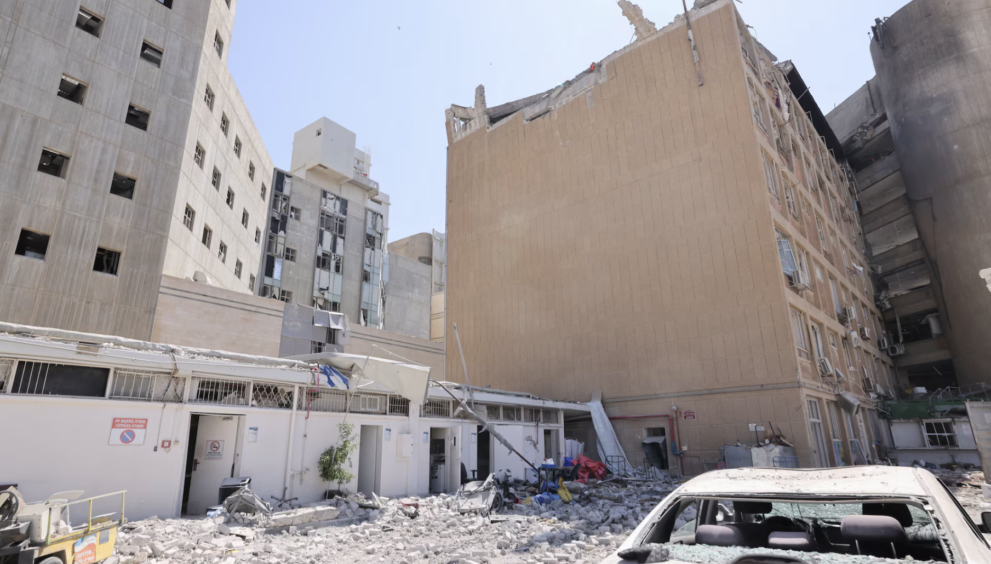
Israeli Prime Minister Benjamin Netanyahu condemned the hospital strike, which damaged the Soroka Medical Center in Beersheba, and warned that Iran would pay a “full price.” Netanyahu suggested the Iranian regime could ultimately fall but stated that change must come from within Iran.
Israeli military officials accused Iran of intentionally targeting civilians, stating that a missile carrying cluster munitions caused widespread damage. This was reportedly the first use of such weapons in the current conflict.
Iran’s Revolutionary Guards said they were aiming for military and intelligence facilities near the hospital, a claim denied by Israeli authorities, who said no such installations were nearby.
In retaliation, Israel struck the headquarters of Iran’s internal security forces in Tehran. Defense Minister Israel Katz stated that the military had been ordered to increase attacks on strategic targets to neutralize threats and undermine the leadership of Iran’s Supreme Leader Ayatollah Ali Khamenei.
Iranian air defenses were active Thursday night, engaging what state media described as “hostile targets” over northern Tehran. The broader objective of Israel’s campaign, according to various sources, is to not only degrade Iran’s nuclear and missile capabilities but also to destabilize Khamenei’s government.
Netanyahu reportedly aims to pressure Iran into significant concessions—dismantling its nuclear enrichment programs, ballistic missile initiatives, and support for militant groups across the region.
Iran’s top security body warned that its strategy could change if a third nation were to join Israel in the conflict—a veiled reference to potential U.S. involvement.
Earlier, Israeli forces struck Iran’s nuclear facilities at Natanz, Isfahan, and the partially completed Arak heavy-water reactor. Satellite imagery released by a research organization showed significant damage to the Arak site, including a large breach in the reactor’s roof and destroyed infrastructure.
Heavy-water reactors are capable of producing plutonium, which can be used for nuclear weapons. A former nuclear inspector said Israel likely targeted the facility to prevent it from becoming operational next year.
Israel’s military campaign has reportedly decimated Iran’s upper military command and caused hundreds of fatalities. Iran’s retaliatory strikes have killed at least two dozen civilians in Israel.
On Thursday, Iran said it had launched combined drone and missile attacks on military and industrial targets tied to Israel’s defense sector in Haifa and Tel Aviv.
Iranian officials are also weighing broader strategic responses. One lawmaker on the country’s national security committee suggested Iran might consider closing the Strait of Hormuz, a vital oil shipping route.
Multiple Fronts, Mounting Casualties
Israel continues to face conflict on several fronts following the October 7, 2023, Hamas-led attack that sparked the Gaza war. Since then, Israel has carried out strikes against Iranian-linked groups in Gaza, Lebanon, and Yemen.
The full scope of the damage inside Iran remains unclear. Authorities have stopped providing casualty updates, media outlets have limited reporting, and internet access has been severely restricted.
In Tehran, a resident described seeing children and women killed in an Israeli strike that hit a residential building near his home. “Is this what liberation looks like? Leave our country alone,” he said.