Oil Market Braces for Turmoil
Iranian state-owned outlet Press TV has released a new report quoting Major General Kowsari, a senior member of the Iranian Parliament’s National Security Commission, who stated that the Parliament has reached the conclusion that the Strait of Hormuz should be closed, but the final decision in this regard lies with the Supreme National Security Council. If Ayatollah Ali Khamenei approves the proposed closure of the critical maritime chokepoint—through which approximately 30% of global seaborne oil and 20% of LNG transit—Brent crude and natural gas futures will surge sharply. But first, who and what is behind the conflict?
The importance of the Strait of Hormuz to global oil markets
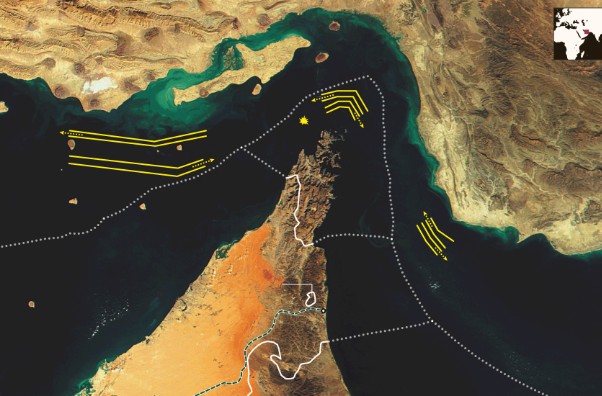
Let’s talk about the Strait of Hormuz, a narrow waterway connecting the Persian Gulf to the Arabian Sea, is one of the world’s most vital energy chokepoints. Roughly 20% of global oil and a significant portion of liquefied natural gas pass through its waters daily. Iran, positioned along its northern edge, has periodically threatened to close the strait amid geopolitical tensions.
The importance of the Strait of Hormuz to global oil markets
Approximately 20-30% of global oil trade—around 20 million barrels per day (bpd)—and 20% of global liquefied natural gas (LNG) shipments pass through this 21-mile-wide passage at its narrowest point. A closure, even partial or temporary, would have profound implications for global oil markets, energy prices, and economic stability. A closure of the Strait of Hormuz would disrupt oil exports from major producers like Saudi Arabia, the United Arab Emirates (UAE), Kuwait, Iraq, Qatar, and Iran itself, which collectively account for a significant portion of global oil supply. In 2024 and early 2025, the strait handled about 20% of global petroleum liquids consumption and a quarter of seaborne oil trade. A full blockade could remove up to 20 million bpd from the market, a volume far exceeding current global spare capacity. A sustained closure could push Brent crude oil prices above $100 per barrel, with some projections as high as $150-$200 per barrel in extreme scenarios. For context, Brent crude was trading at around $77 per barrel in June 2025, having risen 10% since mid-June due to escalating tensions. Even a partial disruption, such as targeted attacks on tankers or mine-laying, could add a geopolitical risk premium, driving prices up by $3-$5 per barrel in the short term. Let me show you an excerpt from my conversation with Lindokuhle Mabaso on the Podcast regarding this.
The Strait of Hormuz is a linchpin for global energy security, and its closure would ripple across economies, particularly those heavily reliant on Middle Eastern oil and LNG. Over 80% of the oil and 83% of the LNG transiting the strait in 2024 went to Asian markets, with China, India, Japan, and South Korea as top importers. A closure would severely impact these economies, which accounted for 69% of Hormuz crude flows in 2024. For example, China, the largest buyer of Iranian oil, and India, importing 2 million bpd through the strait, would face significant supply challenges. The U.S. is less dependent, with only 7% of its oil imports (0.7 million bpd) and 3% of its petroleum consumption coming through the strait in 2022. However, global price surges would still raise U.S. gasoline prices, which climbed to $3.22 per gallon in June 2025, up nearly 3% in a week. Europe, reliant on Qatari LNG for 20% of its supply, would face tighter gas markets and higher energy costs. A prolonged closure could trigger a global recession by driving oil prices to levels that increase inflation, raise transportation costs, and disrupt supply chains. The cost to charter large oil tankers through the strait has already doubled since recent tensions, signaling rising shipping risks.
Limited Alternatives to Mitigate Possible Hormuz Disruption
Bypassing the Strait of Hormuz is challenging due to limited pipeline capacity and logistical constraints. Only Saudi Arabia and the UAE have pipelines that can partially circumvent the strait. Saudi Arabia’s East-West Pipeline (Petroline) has a capacity of 5 million bpd (with temporary expansion to 7 million bpd), but only about 3.3 million bpd is unused. The UAE’s Abu Dhabi-Fujairah pipeline has a capacity of 1.5 million bpd. Together, these pipelines offer roughly 4.2 million bpd of spare capacity—far short of the 20 million bpd transiting the strait. These pipelines are not immune to disruption. The UAE’s Fujairah route could be targeted by Iran-backed Houthis in Yemen, who have disrupted Red Sea shipping. Iraq, Kuwait, and Qatar lack viable pipeline alternatives, making them entirely dependent on the strait. Global oil markets have some buffers, but they are insufficient to fully offset a Hormuz closure. OPEC+ holds about 5.7 million bpd in spare capacity, with Saudi Arabia and the UAE accounting for 4.2 million bpd. However, most of this capacity is exported via the strait, rendering it inaccessible during a closure. The International Energy Agency (IEA) requires member countries to hold 90 days of oil import stocks, totaling around 4.2 billion barrels globally. While these could mitigate short-term disruptions, a prolonged closure would deplete reserves, especially for Asian nations with high import dependence. Countries like India have diversified import sources (e.g., Russia, the U.S., Brazil), which could mitigate some impacts. Russian oil, for instance, avoids the strait via the Suez Canal or other routes. However, rerouting increases costs and delays, and non-Middle Eastern supplies cannot fully replace the strait’s volume.
Iran’s Capacity and Motivation to Close the Strait
Iran has the means to disrupt the strait, though a full closure is considered unlikely due to its own economic dependence on oil exports (96% of which pass through the strait). Iran could deploy mines, missiles, or its Islamic Revolutionary Guard Corps (IRGC) to attack or seize tankers, as seen in incidents in 2019, 2021, and 2023. While a sustained blockade is logistically challenging due to the U.S. 5th Fleet’s presence in Bahrain and international naval forces, even short-term disruptions could rattle markets. Closing the strait would harm Iran’s economy and alienate key partners like China, which relies on Iranian oil. Experts suggest Iran might opt for targeted disruptions to create fear and volatility without a full closure. Recent Iranian parliamentary votes to consider closure (pending Supreme Leader approval) reflect this as a geopolitical deterrent rather than an imminent action. Historical Reluctance: Despite threats during past conflicts (e.g., 2011, 2018, 2020), Iran has never fully closed the strait, wary of provoking a military response from the U.S. and its allies.
What would closing the Strait of Hormuz mean for Iran itself?
Only 5% of US oil goes through it, but 50% of China’s does, Iran’s ally, not to mention Middle East countries. This would be a massive strategic blunder and further isolate the rogue state. So, lets answer the question, what would this mean for Iran itself? Let’s explore the economic, political, and social consequences of such a decision. Iran, heavily reliant on oil exports for revenue, would be hit hard. About 60% of Iran’s oil passes through the Strait of Hormuz. Blocking it would effectively choke its own exports, slashing government income. In 2024, Iran’s economy was already strained by sanctions and inflation. A self-imposed embargo could deepen economic crisis, with estimates suggesting a potential 10-15% GDP contraction within months. Foreign exchange reserves would dwindle, weakening the rial further. Inflation, already hovering around 40% in 2025, could surge, making basic goods unaffordable for many Iranians. Energy subsidies, a lifeline for citizens, might face cuts, exacerbating poverty.
Could Iran really block the Strait of Hormuz?
Closing the Strait would provoke swift international backlash. The United States, which maintains a naval presence in the region, has vowed to keep the strait open. Military conflict could erupt, with Iran’s navy—outmatched by U.S. and allied forces—facing significant losses. Airstrikes on Iranian infrastructure, like ports or oil facilities, could follow, further crippling the economy. Regional rivals, such as Saudi Arabia and the UAE, might escalate tensions, potentially aligning with Western powers. China and India, major buyers of Iranian oil, could pressure Iran diplomatically to reopen the strait, as both rely on its stability for energy imports. Iran risks alienating even its allies, isolating itself further on the global stage.
Closing the Strait of Hormuz would be a high-stakes gamble for Iran, with catastrophic economic, military, and social consequences likely outweighing any short-term leverage. While it could disrupt global markets, Iran itself would bear the brunt of the fallout, risking collapse at home and isolation abroad. The strait remains open—for now—but its future hinges on delicate geopolitical balances. Well, Iran’s Foreign Minister Abbas Araqchi says that they have “multiple options” for retaliation after U.S. strikes on nuclear sites.
Written by Tatenda Belle Panashe