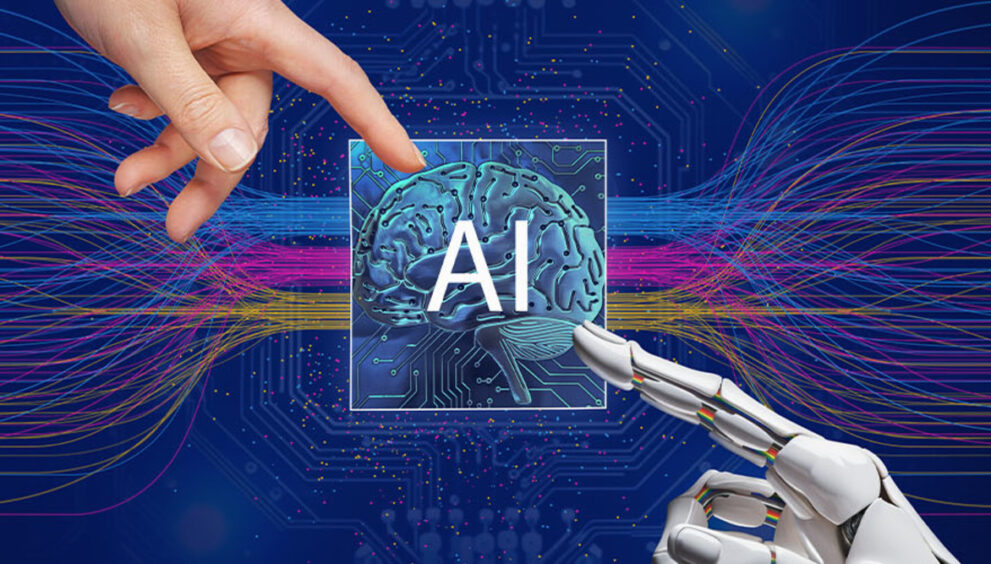
Former Zimbabwe Deputy PM Warns of AI’s Geopolitical Consequences and Ethical Dilemmas in Candid Interview
Johannesburg — In a powerful and wide-ranging interview on Yvonne Katsande Live, journalist and broadcaster Yvonne Katsande sat down with Professor Arthur G.O. Mutambara, former Deputy Prime Minister of Zimbabwe and current Director at the Institute for the Future of Knowledge, to unpack the ethical, political, and existential dimensions of artificial intelligence (AI).
The conversation, titled “How Far Is Too Far?”, confronts one of the most urgent questions of our time: Can AI be both a force for good and a threat to humanity? Prof. Mutambara doesn’t shy away from difficult answers.
“AI is not just code. It is power. It can liberate or enslave depending on who is in control,” he warned.
🎥 Watch the Full Interview Below
Technology in the Wrong Hands: A Double-Edged Sword
In one of the most striking moments of the interview, Prof. Mutambara reminds viewers that technology is never neutral. He describes AI as a double-edged sword holding transformative potential for social good, but also immense danger when misused.
“We must never forget that AI is a tool and like any powerful tool, it can build or destroy. The question is: who holds the handle?” he said.
Katsande expanded the conversation into critical territory, asking:
-
Who really controls emerging technologies?
-
Are global institutions enabling justice or preventing it?
-
What role do African nations play in shaping the ethics and direction of AI?
The discussion touched on AI’s potential to uplift marginalized communities, revolutionize healthcare, and transform education but also on the risks of digital surveillance, algorithmic bias, and economic exclusion.
“We talk about innovation as liberation,”Yvonne Katsande noted. “But who gets to innovate and who gets silenced?”
Mutambara emphasized that AI is now central to geopolitics, comparing it to nuclear power in its global significance. He warned that without ethical oversight, AI could become a tool of oppression rather than empowerment.
“If we are not the creators or the regulators,” he said, “we become the experimented.”
Geopolitics, Inequality, and the Future of Knowledge
Much of the conversation focused on the geopolitical race for AI dominance. Mutambara expressed concern that Africa risks being left behind, both in infrastructure and in influence, unless it takes bold, coordinated steps. The dialogue also challenged common narratives that paint AI as a purely commercial or academic concern. Instead, Yvonne Katsande and Arthur Mutambara reframed it as a struggle for human agency and fairness in a world of accelerating automation.