French President Emmanuel Macron has called on the United Kingdom and France to strengthen their cooperation in response to global instability and to reduce what he described as over-dependence on both the United States and China.
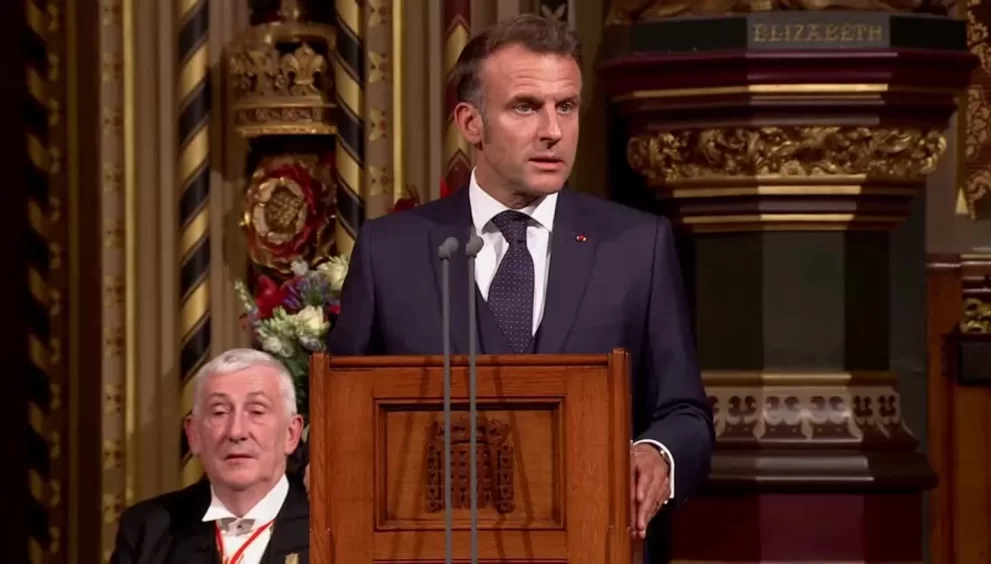
During a rare speech to both chambers of the British parliament, Macron highlighted the renewed warmth in Franco-British relations, marking the first state visit by a European leader to the UK since it left the European Union. The occasion symbolized an effort to rebuild and deepen cooperation following years of strained ties.
Speaking in Westminster after a ceremonial welcome by the British royal family, Macron emphasized the need for unity between the two countries on key issues such as defense, climate change, trade, and immigration. He underscored that facing today’s challenges—ranging from geopolitical tensions to economic pressures—requires close collaboration.
“We must show the world that when France and the UK stand together, we can shape the future,” he said, urging both nations to move forward “hand in hand.”
Macron cautioned against relying too heavily on major powers like the US and China, arguing that Europe should take steps to safeguard its economic and societal independence. He advocated for measures to reduce risk and bolster resilience.
In his remarks, Macron also promoted initiatives to make it easier for students, artists, and researchers to live and work in each other’s countries. He suggested both nations should team up on artificial intelligence and commit to protecting children in the digital space.
His speech aligned with the new UK government’s ambitions to reset its relationship with European partners. The Labour-led administration under Prime Minister Keir Starmer views enhanced cooperation with France as key to its foreign policy goals.
The visit included traditional state pageantry, with Macron joining King Charles, Prince William, and Princess Catherine for a formal procession in Windsor. King Charles, who is receiving treatment for cancer, showed signs of a burst blood vessel in his eye, which palace sources said was not connected to his illness. The monarch is also expected to speak on the shared challenges both nations face at a state banquet.
To mark the occasion, France’s EDF announced a £1.1 billion investment in a new nuclear power facility in eastern England. Cultural ties were also highlighted with plans to loan the historic Bayeux Tapestry to the UK, while Britain will reciprocate by lending French museums Anglo-Saxon and Viking artifacts.
This state visit follows Queen Elizabeth II’s hosting of former French President Nicolas Sarkozy 16 years ago.
While differences remain—particularly over post-Brexit arrangements and the ongoing crisis of migrants crossing the English Channel—Paris and London are working on a joint military initiative aimed at supporting Ukraine should a ceasefire with Russia be agreed.
The UK government is hopeful that increased cooperation on defense will help encourage French support for a bilateral deal aimed at curbing illegal migration. The proposed arrangement would allow each country to return an asylum seeker to the other under specific conditions, aiming to undercut human smuggling operations.
However, Paris has so far resisted such a deal, arguing that any solution should involve broader coordination with all EU member states. The issue remains politically charged in Britain, especially as rising numbers of people have crossed the Channel in small boats this year, putting additional pressure on Starmer’s government, which is trailing in the polls behind right-wing challengers.