

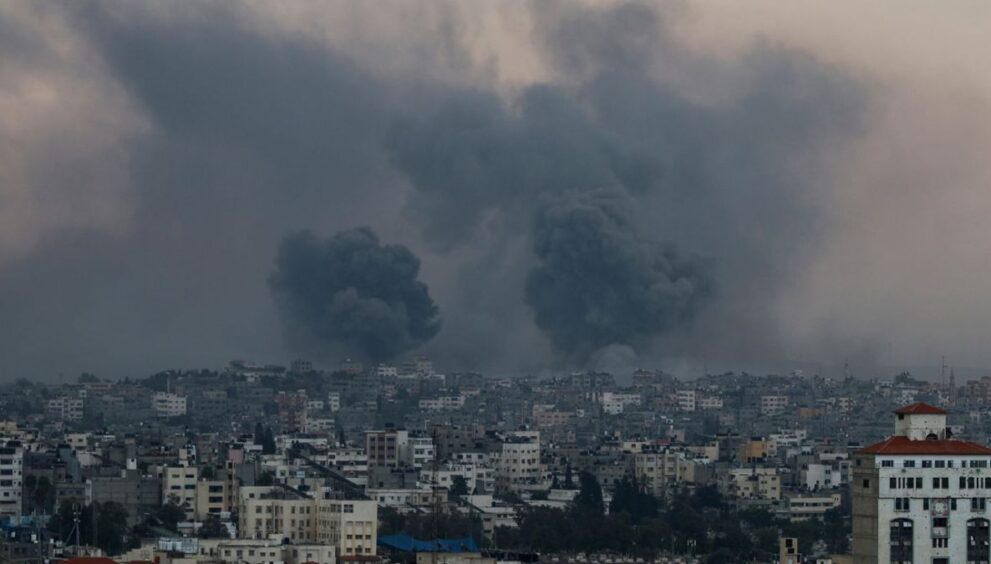
The Syrian government announced on Saturday that security forces had been deployed to the southern city of Sweida, a region largely inhabited by the Druze community. Authorities urged all sides to uphold a ceasefire following several days of intense inter-communal violence that have resulted in significant casualties.
In a separate address, Interim President Ahmed al-Sharaa acknowledged that diplomatic efforts involving both Arab nations and the United States had contributed to restoring some calm. He also condemned Israeli airstrikes carried out during the week, which targeted government positions in both southern Syria and the capital, Damascus.
Violence erupted in Sweida province nearly a week ago, initially triggered by fighting between local Druze factions and Bedouin groups. The clashes prompted Damascus to dispatch state security personnel in an effort to restore order.
Israel, which has cited the protection of the Druze population as justification, has launched aerial attacks on Syrian military sites in both the south and in Damascus. Many members of the Druze minority reside within Israel and the Golan Heights, which Israel occupies.
On Saturday, a statement from the Syrian presidency declared a full and immediate halt to hostilities and urged all armed groups to comply. The interior ministry confirmed that law enforcement units had started operations in Sweida to stabilise the situation.
President Sharaa emphasised the importance of unity, stating that Syria must not become a battleground for division or sectarian conflict. In a national address, he warned that foreign military involvement had escalated the crisis to a dangerous level, putting the nation’s stability at risk.
Meanwhile, U.S. envoy Tom Barrack announced that both Syria and Israel had agreed to a truce, brokered with support from Turkey, Jordan, and other regional actors. Barrack, who serves as both U.S. envoy to Syria and ambassador to Turkey, called on all ethnic and religious groups—Druze, Bedouin, Sunni, and others—to lay down their weapons and work toward a unified Syrian identity.
Since the fall of former President Bashar al-Assad seven months ago, Israeli forces have targeted various military installations across Syria. Israeli officials have stated their intent to ensure that areas along the southern border remain free of heavy weaponry.
On Friday, a representative from Israel confirmed that a temporary agreement had been reached, allowing limited Syrian military access to Sweida over the next 48 hours.

