

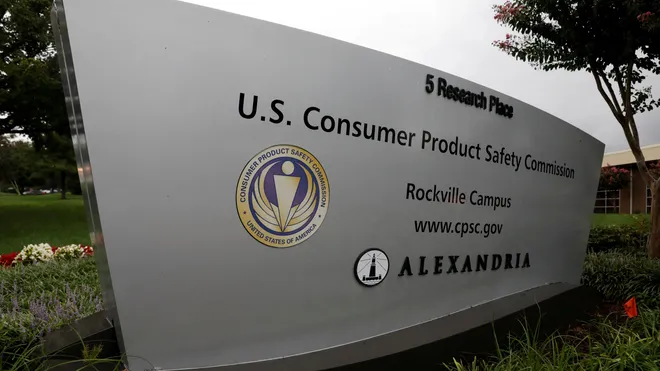
The U.S. Supreme Court ruled Wednesday to allow President Donald Trump to remove three members of the Consumer Product Safety Commission (CPSC), expanding his authority over agencies that Congress had intended to function independently of the executive branch.
The Court granted a request from the Justice Department to lift a lower court’s order that had temporarily blocked the removal of the commissioners—Mary Boyle, Alexander Hoehn-Saric, and Richard Trumka Jr.—who were appointed during the previous administration. A district judge in Maryland had previously ruled that the president lacked the power to fire them without cause.
In a brief unsigned opinion, the justices signalled that the Trump administration is likely to prevail in its argument that the Constitution permits the president to dismiss CPSC members. This marks another high-profile legal win for Trump, as the Supreme Court has recently paused several lower court decisions that sought to limit his executive actions.
The decision was not unanimous. The Court’s three liberal justices—Elena Kagan, Sonia Sotomayor, and Ketanji Brown Jackson—dissented. Justice Kagan warned that the Court’s use of its emergency docket in this case undermines the independence of agencies that Congress specifically designed to operate separately from presidential control.
Created in 1972, the CPSC is responsible for safeguarding the public from dangerous or defective products. To insulate the agency from political influence, Congress had stipulated that its commissioners could only be removed for cause, such as misconduct or neglect of duty—not simply at the president’s discretion.
Following their dismissal in May, the three commissioners sued, claiming the president overstepped his constitutional authority. Their terms were scheduled to last until 2025, 2027, and 2028, respectively. Their attorney criticised the Supreme Court’s decision, arguing it weakens consumer protection and creates confusion about agency independence.
The Justice Department countered that the law protecting commissioners from being removed at will infringes on the president’s executive power as outlined in the Constitution. A federal judge had sided with the commissioners last month, citing a 1935 Supreme Court ruling that upheld similar protections for members of the Federal Trade Commission.
In her dissent, Justice Kagan argued that the Court’s move effectively nullifies that precedent and gives the president undue control over agencies intended to operate without political interference. She expressed concern that decisions like this could gradually shift the balance of power between the branches of government.
This case follows a recent Supreme Court ruling in which Trump was permitted to remove members of other federal boards—such as the National Labor Relations Board and Merit Systems Protection Board—despite statutory job protections. The Court held that these officials, like those at the CPSC, exercise executive functions and thus fall under the president’s authority to dismiss.
Kagan emphasised that by giving the president unchecked removal powers, the Court threatens the bipartisan structure and independence of federal commissions, risking a broader erosion of the separation of powers.

