

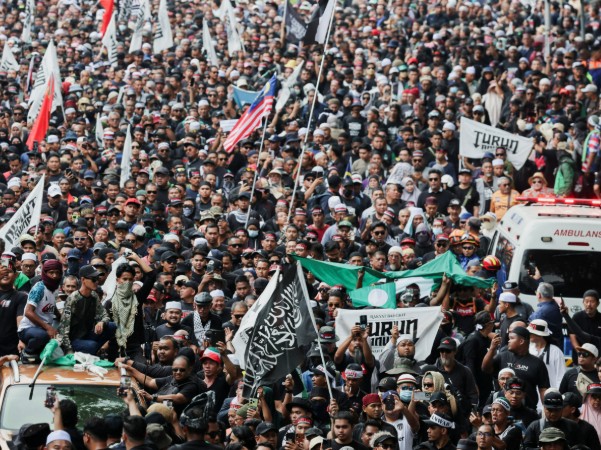
In the largest protest since his 2022 election, tens of thousands of Malaysians took to the streets of Kuala Lumpur on Saturday to demand the resignation of Prime Minister Anwar Ibrahim. The mass rally, organized by opposition parties, unfolded despite drizzle, heavy police presence, and heightened political tensions. Protestors many clad in black and wearing bandannas converged on Merdeka (Independence) Square, holding signs declaring “Turun Anwar” (“Step Down Anwar”) and demanding accountability for promises left unfulfilled.
Reasons Behind the Unrest
Many participants voiced frustration over surging living costs and what they see as a failure by Anwar’s unity government to deliver on its reform agenda despite being elected on a platform pledged to fight corruption, nepotism, and cronyism.
Protesters criticized recent economic measures, including the extension of sales and services tax, the removal of blanket fuel subsidies, and hikes in electricity rates which they argue will disproportionately impact lower-income citizens.
Anwar’s Government Response
Days prior to the march, Anwar’s administration unveiled populist measures intended to quell discontent: a one-off 100 ringgit cash handout for all citizens aged 18 and older, beginning August 31, along with subsidized fuel prices reducing RON95 to 1.99 ringgit per liter.
These moves were widely seen as tactical attempts to deflect mounting pressure, though critics argue they offer little long-term relief.
Political Tensions and Leadership Fallout
The rally drew sharp condemnation from notable figures, including former Prime Minister Mahathir Mohamad, who joined the protest and accused Anwar of wielding power to marginalize political rivals.
Anwar has denounced the rally as politically motivated, insisting that his government remains committed to anti-corruption efforts and equitable governance.
Public Sentiment and Economic Outlook
Despite current dissent, recent public opinion surveys indicate Anwar retains majority approval, with 55% positive ratings, attributed to gains in political stability and Malaysia’s growing diplomatic profile as the current ASEAN chair.
Economic analysts caution that while the new subsidies may boost short-term sentiment, long-term structural reform is necessary to meaningfully address income inequality and cost pressures.
What Comes Next?
With general elections not due before early 2028, political parties are now accelerating grassroots engagement, and pressure is rising on reform timelines. Future steps may include:
-
Follow-up protests or political mobilization by opposition groups
-
Further populist policy moves by the government
-
Heightened senior-level engagement in preparation for electoral campaigns

