

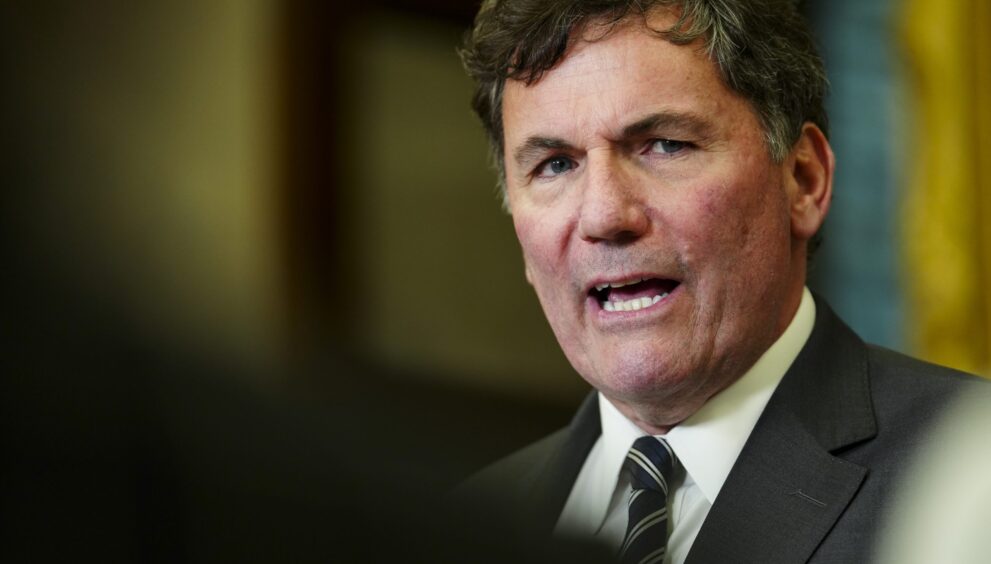
Canada’s trade minister left Washington on Friday without securing a deal after months of negotiations, but remains optimistic that the trade agreement between Canada, the U.S., and Mexico will help mitigate the effects of rising tariffs imposed by the U.S. administration.
The Canadian minister met with the U.S. Commerce Secretary on Tuesday night and held discussions with other senior White House officials. Despite these talks, the U.S. raised tariffs on Canadian goods from 25 percent to 35 percent on Thursday after the two countries failed to reach an agreement.
The minister expects to continue communication with his U.S. counterpart, mentioning plans to speak by phone in the coming week, although no official meetings are currently scheduled.
Even with the increased tariffs, the trade agreement provides broad protections to many Canadian industries, though not all are covered. The minister emphasized that this framework positions Canada favorably compared to other trading partners. His current focus is on working closely with national leadership to support Canadian workers affected by the tariff changes.
Certain goods not protected under the agreement are still subject to higher tariffs. However, forecasts indicate that up to 95 percent of Canadian exports could qualify for exemptions, and more companies are seeking those exemptions.
Before departing Washington, the minister expressed that, overall, Canada remains well-positioned in terms of tariff impacts relative to other countries.
The delegation included senior officials who participated in the final phase of negotiations ahead of the U.S. administration’s self-imposed August 1 deadline. When no deal was reached, the U.S. justified the tariff increase by citing concerns over illegal fentanyl crossing the Canadian border.
Canadian officials pointed out that fentanyl trafficking from Canada accounts for less than 1 percent of the total illicit supply entering the U.S., and highlighted the country’s significant investments in border security, including drones, helicopters, and additional law enforcement.
The Canadian minister expressed disappointment over the tariff hike but emphasized the importance of maintaining constructive engagement with U.S. counterparts.
Industry leaders criticized the U.S. justification for the tariffs as lacking factual basis and warned that such measures do not promote economic security in North America.
Meanwhile, the Canadian minister stressed the shared commitment between both countries to combat the opioid crisis and indicated a shift in focus to domestic efforts aimed at strengthening the national economy and advancing key infrastructure projects.
Upcoming consultations with Indigenous leaders are planned as the government seeks to accelerate approval of major nation-building initiatives, which may include energy corridors, roads, mines, and other infrastructure developments.
The minister acknowledged that Canadian steel and aluminum exports continue to face a 50 percent tariff under separate U.S. national security measures, and that certain automotive products not covered by the trade agreement are subject to a 25 percent tariff.
Efforts will now concentrate on supporting sectors impacted by these tariffs, with upcoming announcements of assistance programs for affected workers and businesses.
The minister also engaged with Mexican officials to discuss initiating talks later this year on the scheduled review of the trade agreement, which is set to occur next year. Mexico recently secured a 90-day extension to allow more time for negotiations with the U.S.
Overall, the minister reaffirmed the value of the trade agreement as a key tool for economic growth across the three countries.

