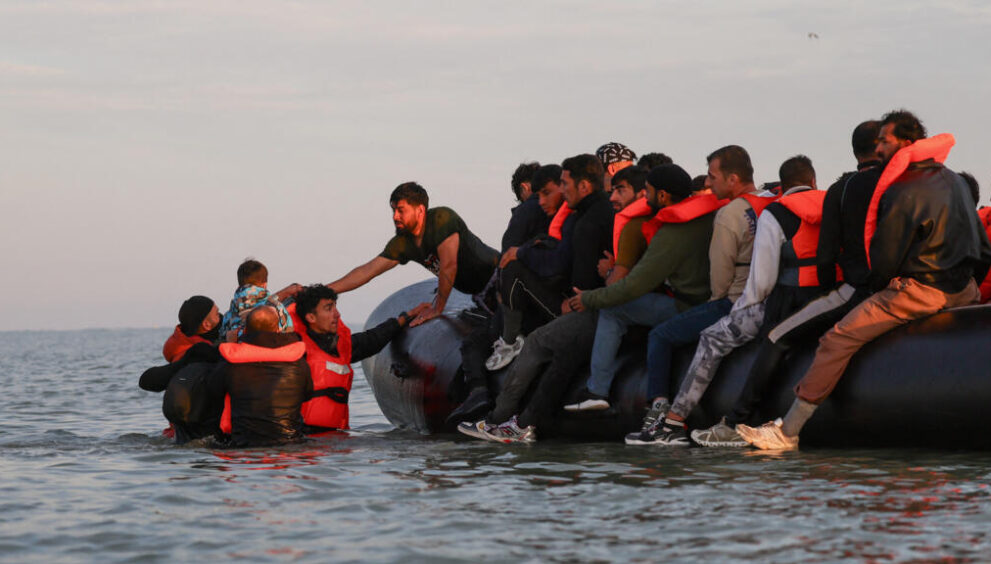
The UK is set to begin implementing an agreement with France in the coming days that allows for the return of certain migrants who arrive in Britain via small boats. This agreement is a key element of the UK’s strategy to reduce illegal migration, following the formal ratification of the treaty earlier this week.
As part of a new pilot program known as “one in, one out,” France will accept undocumented migrants sent back from the UK, while Britain will take in an equal number of legitimate asylum seekers who have family ties in the UK.
So far in 2025, over 25,000 people have crossed to Britain by small boats. Prime Minister Keir Starmer has vowed to dismantle human trafficking operations to curb these arrivals. Despite his previous election success, Starmer faces mounting pressure from political opponents who prioritise halting these crossings.
Recent protests have taken place near hotels housing asylum seekers, involving both anti-immigration activists and supporters.
The French Interior Minister described the deal as a clear effort to disrupt smuggling networks. Meanwhile, the UK’s Home Secretary did not specify how many people would be returned initially but indicated the numbers would start small and gradually increase. The plan targets new arrivals rather than those already residing in the UK.
According to the treaty, individuals could be transferred back to France within a maximum of three months from their arrival in the UK, with the expectation that detentions under the scheme will begin shortly. The UK must request returns within 14 days of arrival, while France retains the right to refuse returns of unaccompanied minors or individuals considered security risks.
Government officials have suggested the deal could lead to roughly 50 returns per week, totalling around 2,600 annually—a small fraction compared to the over 35,000 arrivals recorded last year.
Some critics argue that the limited scale of the program will not deter migrants, but officials emphasise that this agreement is only one part of a broader strategy. Additional measures include sanctions, restrictions on social media advertising, and collaboration with delivery companies to combat smuggling.