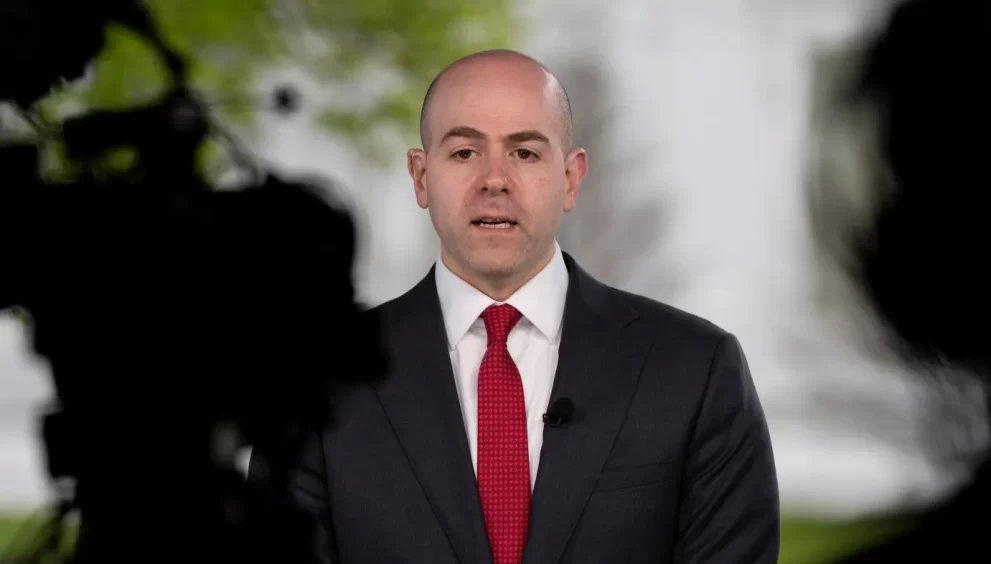
President Donald Trump announced on Thursday his intention to nominate Stephen Miran, Chairman of the Council of Economic Advisers, to fill a recently vacated seat on the Federal Reserve Board for the remainder of the term. This move comes as the administration continues its search for a permanent appointee to the central bank’s governing body and considers candidates to replace Fed Chair Jerome Powell.
Miran, who has advocated for significant changes to the Fed’s structure, will take over the seat left open by Fed Governor Adriana Kugler, who resigned unexpectedly last week to return to her academic position at Georgetown University. The term for this position expires on January 31, 2026, and Miran’s appointment requires Senate approval.
The White House is still looking for a candidate to fill the full 14-year term beginning February 1. Meanwhile, options for the next Fed Chair remain under consideration as Powell’s term is set to end on May 15, 2026.
Trump has frequently pressured Fed officials—including Powell, the board members, and regional bank presidents—to lower interest rates. Installing Miran, even temporarily, could provide the president a more direct influence on monetary policy decisions at the world’s most important central bank.
Analyst Derek Tang from LHMeyer noted that Miran’s interim role could offer Trump immediate policy influence without limiting his options for the Fed Chair position. “Disruption from within is a bonus,” Tang added.
Last year, Miran co-authored a paper advocating for stronger presidential control over the Fed Board, including shorter terms for governors. He also supports ending the “revolving door” between the Fed and the executive branch and nationalizing the Fed’s 12 regional banks. However, the scope for Miran to push through these reforms during his limited tenure remains uncertain, as many would require Congressional approval.
Miran must go through the Senate confirmation process, including hearings before the Senate Banking Committee and approval votes in both the committee and the full Senate. Democrats have been slowing confirmations of Trump’s nominees, signaling potential challenges ahead.
Senate Banking Committee Chair Tim Scott expressed readiness to move swiftly with Miran’s nomination and said he looks forward to hearing Miran’s plans to increase transparency and ensure the Fed remains focused on its mandate. However, top Democrat Elizabeth Warren warned she plans to ask tough questions about whether Miran would act independently or simply serve Trump’s interests.
The Senate will not resume sessions until early September, shortly before the government faces a potential funding crisis. There are only a few policy meetings left before Miran’s term would end.
At their July meeting, Fed officials held interest rates steady due to inflation concerns and uncertainties surrounding tariffs. But recent weaker job reports and comments from some policymakers suggest the Fed could consider cutting rates as soon as the next meeting.
Several central bankers have raised concerns about labor market softness, and some believe tariffs may have less impact on inflation than previously feared. These views align with recent dissenting votes from two Trump-appointed Fed governors who opposed holding rates steady last month.
On Thursday, Miran praised one of those dissenters, Fed Governor Christopher Waller, for resisting what Miran called “tariff derangement syndrome,” a term used to dismiss concerns about the economic effects of higher tariffs.
Waller is reportedly the preferred candidate among Trump’s advisers to succeed Powell as Fed Chair.