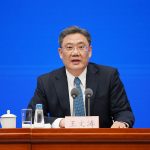
Syria is optimistic that U.S. sanctions will be entirely lifted within the coming months and has begun efforts to restructure billions of dollars in debt accumulated during Bashar al-Assad’s leadership, according to Economy Minister Mohammad Nidal al-Shaar.
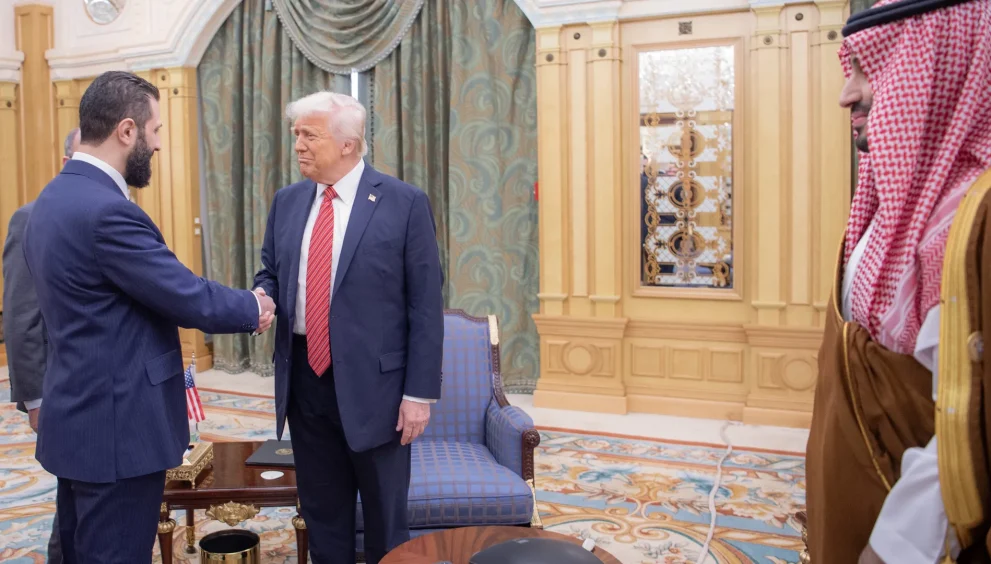
In May, former President Donald Trump ordered the lifting of most U.S. sanctions on Syria after meeting President Ahmed al-Sharaa, but the Caesar Syria Civilian Protection Act of 2019 that authorises them remains U.S. law.
“We have to do some push and some lobbying to continue with this path that started in the right direction, and we’re hoping by the end of the year the bill (to scrap the act) will reach the president (Trump), and hopefully he’ll sign it,” al-Shaar said during a conference in London.
“And once that happens, then we are sanctions-free,” he added on the sidelines of the Future Resilience Forum.
Removing the act would open the door for foreign investment, restore access to international banking, and help revive key industries. Al-Shaar hopes Washington will reduce its 41% tariffs on trade with Syria and that U.S. firms will invest in the country as the economy begins to open up.
He mentioned that Gulf countries have pledged support and Chinese companies have committed hundreds of millions of dollars for “big” new cement, plastic, and sugar factories.
The government is on track to introduce a new currency early next year. Sources said new banknotes would be issued in December, removing two zeros — and Assad’s face — from the currency to try to restore public confidence.
Syria’s pound has lost over 99% of its value since the civil war began in 2011 but has been broadly stable in recent months.
“We’re consulting with many entities, international organisations, experts, and eventually it will come very soon,” al-Shaar said regarding the currency.
A World Bank report recently estimated Syria’s reconstruction cost at $216 billion, calling it a “conservative best estimate.” Al-Shaar said the amount could exceed $1 trillion if the rebuild brings infrastructure up to date, but that spending would be spread out over a long period, with housing reconstruction alone likely taking 6-7 years.
When asked about plans to manage Syria’s debt, al-Shaar said the process has already started.
“The sovereign debt that we have, which is not very big actually, will be restructured,” he said, adding that Syria would be requesting grace periods and other relief.
Assad left Syria in disarray after he was ousted last December, with fighting continuing in the oil-producing north until a ceasefire was agreed upon this month.
“I’m hopeful that the next maybe few weeks, or maybe a month or two, we will reach some kind of an agreement with those who are controlling that part of Syria,” al-Shaar said.
“Once that happens, I think we will have greater ability, financial, natural resources, to really start meaningful (investment) projects,” he added, predicting a “quantum leap in our GDP.”