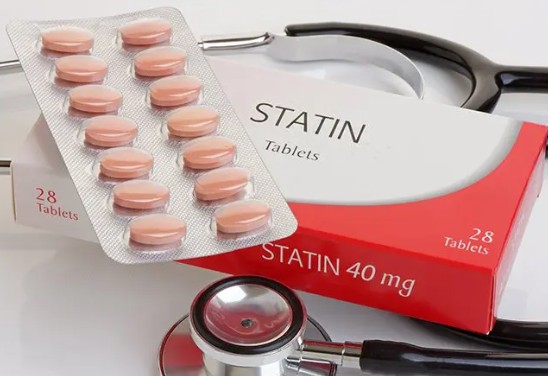
Recently, one of the most prescribed drugs in the world has once again come under the spotlight, and this is as the FDA issued notice in recall of more than 140,000 bottles of common statin medication. Not only does this highlight the concerning issues surrounding the production of drugs in general, considering why recalls tend to take place (to begin with); but this also highlights a continual unravelling of the Statin deception.
THE FDA RECALLS OVER 140,000 BOTTLES OF THE GENERIC ATORVASTATIN
The continual unravelling of the Statin deception; and we ought to begin with the recent FDA recall. So, the Food and Drug Administration (FDA) recently said that it issued a Class II classification notice to a recall of at least 140,000 bottles of the generic version of atorvastatin, a commonly used drug prescribed to treat cholesterol and heart issues. In a notice issued on the 10th of October, the agency said that several versions of generic atorvastatin calcium tablets are under recall because of failed dissolution specifications, indicating the drug did not dissolve at the expected rate under FDA guidelines. This has implications in how the drug is absorbed into a patient’s body.
The generic 10-milligram atorvastatin tablets under recall were sold in 90-count, 500-count, and 1,000-count bottles. They were made by Alkem Laboratories, Ltd, based in India, and distributed by New Jersey-based Ascend Laboratories LLC.
Several versions of the drug were named in the recall, including 20-milligram, 40-milligram, and 80-milligram doses sold in 500-count and 1,000-count bottles – although the FDA recall notice did NOT list how many bottles were recalled.
Now, the FDA’s Class II designation indicates that exposure or usage of “a violative product may cause temporary or medically reversible adverse health consequences or where the probability of serious adverse health consequences is remote – although the notice also did NOT list whether there were any injuries or adverse events associated with the medication under recall.
But, when we consider the growing studies and literature from figures like Dr Aseem Malhotra, that have generally challenged the mass prescription of statins on the back of cholesterol misinformation, which has also curated a public health disaster, it is easy to infer that the recalls we see in the present are part of continual unravelling that began years ago. For instance, the article you are seeing on screen recently surfaced amid the ongoing concerns over Statins – but it was actually published in 2016! Meaning that the truth concerning heart disease and Statins had already been coming out for a very long time; it just manifests differently in the status quo: be it interviews in the mainstream media where they begin to shift their narrative on Statins, or recalls in the FDA, or previously ostracised medical practitioners like Dr Aseem Malhotra addressing policy makers of the ills of statins and the corruption that made them mainstream.
Ultimately, the change in narrative concerning the most prescribed drug in the world, is something to be reckoned with, and we all ought not to miss the crucial nuances in this developing discourse.
ANCEL KEYS, AND HOW THE STATINS DOGMA STARTED
So, where did the presumed narrative of the benefits of Statin begin? Interestingly, the answer to this question has many similarities to the COVID pandemic – which lets you know that Statins are the product of Big Pharma’s deception.
Frequently, when an industry harms many people, it will create a scapegoat to get out of trouble. Once this happens, a variety of other sectors that also benefit from that scapegoat existing will jump on the bandwagon. Before long, a false belief that harms society becomes an unquestionable dogma that becomes very difficult to overturn because many corrupt parties have a vested interest in maintaining the lie.
For example, various easily addressable factors (which often exist in the first place because they benefit an industry) these factors are responsible for the chronic diseases many face in society (e.g., we can look at how the sugar lobby petitioned to have sugar in almost all products, and thus curated the obesity and diabetes epidemics). However, when the deceptive dogma in medicine becomes the claim that all diseases result from insufficient vaccination, it gets all those destructive industries (like the sugar industry) off the hook and creates a huge market for selling vaccines and treatments for these illnesses, instead. Thus, since there are so many vested interests behind the vaccine paradigm, it is very difficult to overturn—despite the fact there’s no evidence vaccines ended the era of infectious disease, while there is an abundance of existing evidence that shows that vaccines are responsible for the massive epidemic of chronic disease around the world.
In essence, in the 1960s and 1970s, a debate emerged over what caused heart disease. On one side, John Yudkin effectively argued that the sugar being added to our food by the processed food industry was the chief culprit. On the other side, Ancel Keys (who attacked Yudkin’s work) argued that it was due to saturated fat and cholesterol. Unfortunately, due to having the corrupt American Heart Association in his corner, Ancel Keys won and Yudkin’s work was largely dismissed, and Keys became nutritional dogma. A large part of Key’s victory was based on his study of seven countries (Italy, Greece, Former Yugoslavia, Netherlands, Finland, America, and Japan), which showed that as saturated fat consumption increased, heart disease increased in a linear fashion.
BUT fortunately, it gradually became recognised that Ancel Keys did not accurately report the data he used to substantiate his arguments. For example, recently an unpublished 56 month randomized study of 9,423 adults living in state mental hospitals or a nursing home that Keys was actually the lead investigator of was unearthed. The study was taken in state mental hospitals and nursing homes, with the idea that it made it possible to rigidly control the diets of those involved – although I am quite concerned about what seemed like a propensity to use vulnerable people (being the mentally ill and elderly) in a study).
That said, this study (inconveniently, for Ancel Keys the lead investigator) actually found that replacing half of the animal fats (being the saturated fats) eaten by those in the study with vegetable oil (e.g., corn oil) lowered their cholesterol, and that for every 30 points it dropped, their risk of death increased by 22 percent (which roughly translates to each 1% drop in cholesterol raising the risk of death by 1%)—so as you can imagine, this study was then never published. And on the back of this concealment, the Ancel Keys cholesterol dogma persisted – because pharmaceutical companies could now sell cholesterol reducing medicines – which was the cue for Statins to enter the market.
Then, by 1987, the FDA approved Merck’s lovastatin, which became the first commercial statin. But, when you look at the history of statins before big pharma moved the goalpost on what was considered bad cholesterol, you realise that the scientific theory behind statins and even the subsequent studies pointed to significant harm.
THE INTERSECTION BETWEEN PHARMACEUTICAL GREED AND STATINS
Now, one of the consistent patterns you can observe within medicine is that once a drug is identified that can “beneficially” change a number, medical practice guidelines will gradually shift to prioritising treating that number and before long, rationals will be created that require more and more of the population to be subject to that regimen. In the case of statins, prior to their discovery, it was difficult to lower cholesterol – in fact, normal cholesterol levels were above 300, but once Statins hit the market, research rapidly emerged stating that cholesterol was more and more dangerous, that lower and lower blood cholesterol levels were needed, and, hence that more and more people needed to be on statins.
The data that you are seeing on screen right now is from the nation of Denmark and it represents this issue: you should see that from the year 200 to 2015 the use of Statins exploded in the country. But, interestingly, this is not mutually exclusive to Denmark: in fact, similar increases also occurred within the USA. For example, in 2008-2009, 12% of Americans over 40 reported taking a statin, whereas in 2018-2019, that had increased to 35% of Americans.
And so, given how much these drugs are used, it then raises a simple question, which is: How much benefit did Statins actually produce to warrant such an increase in consumption? BUT, as it turns out, this is a remarkably difficult question to answer as the published studies use a variety of confusing metrics to obfuscate their data (which means that the published statin trials almost certainly inflate the benefits of statin therapy), and more importantly, virtually all of the data on statin therapy is kept by a private research collaboration which consistently publishes glowing reviews of statins (and attacks anyone who claims otherwise) but simultaneously refuses to release their data to outside researchers, which has led to those researchers attempting to get this missing data from the drug regulators.
Nonetheless, when independent researchers looked at the published trials (which almost certainly inflated the benefit of statin therapy) they weirdly found that taking a statin daily for approximately 5 years resulted in you living, on average, 3-4 days longer. And even then, large trials have found this minuscule so-called “benefit” only to be seen in men. But what this ultimately means in short is that most of the benefit from statins is from creative ways to rearrange data and causes of death, not any actual benefit. And yet, this is one of the most prescribed drugs on earth – a trillion dollar industry – but all based on benefits that do not actually exist.
But, speaking of concealed information – while Statins producers were claiming the benefits of Statins with rare side effects, they were researching side effects on the side through the University of Oxford – meaning that: while the narrative from Statins producers was that side effects were not a concern (based on a re-evaluation of their data), the University of Oxford was, however, being secretly paid for being good at developing a susceptibility test to find side effects from Statins use.
FROM STATINS TO COVID JABS: BIG PHARMA HAS A PROPENSITY TOWARDS CORRUPTING SCIENCE
Now, it is very crucial to note that this problem of manipulated data and concealed information in the claimed benefits of Statis is very similar to Pfizer’s COVID vaccine trial which professed to be “95% effective” against COVID-19.
In fact, we have now even come to find out that a clinical trial whistleblower later revealed that these figures were greatly inflated as many individuals in the vaccine group who developed COVID-19 like symptoms were never tested for COVID-19. Likewise, these benefits were fleeting as it was shown that the so-called “efficacy” of vaccines rapidly waned (disappearing a few months after vaccination). Worse still at six months of follow-up in both Pfizer’s and Moderna’s trials, more vaccinated than unvaccinated individuals died, and similarly a peer-reviewed reanalysis of Pfizer and Moderna’s trial data showed that a person was more likely to suffer a severe adverse event from the vaccine than a hospitalisation from COVID-19.
Furthermore, in circumstances like these where an unsafe and ineffective but highly lucrative drug must be sold, the next step is typically to pay everyone off to promote it. For example, a Dr Malcom Kenrick exposed that: The National Cholesterol Education Programme (NCEP) has been tasked by the National Institutes of Health to develop guidelines [everyone uses] for treating cholesterol levels. Excluding the chair (who was by law prohibited from having financial conflicts of interest), the other 8 members on average were on the payroll of 6 statin manufacturers.
Similarly, in 2004, NCEP reviewed 5 large statin trials and recommended: “Aggressive low-density lipoprotein lowering for high-risk patients [primary prevention] with lifestyle changes and statins. And low density lipoprotein is often cholesterol often referred to as “bad” cholesterol)”.
But, meanwhile, in 2005 a Canadian division of the Cochrane Collaboration [who were not paid off] reviewed 5 large statin trials (3 were the same as NCEP’s, while the other 2 had also reached a positive conclusion for statin therapy). That assessment instead concluded: “Statins have not been shown to provide an overall health benefit in primary prevention trials.” All of this then tells us that there has been a perversion of science by the pharmaceutical industry – all so they can make more money at the expense of your health. Classic pharmakeia playbook material.
But, also on low-density lipoprotein, you’d recall that we recently discussed that these pharmaceutical companies created a questionable dichotomy between good and bad cholesterol. Cholesterol is generally described as a waxy substance essential for building cell membranes and producing hormones. Cholesterol travels through the bloodstream in particles called lipoproteins, primarily as low-density lipoprotein (LDL) and high-density lipoprotein (HDL). LDL, often called “bad cholesterol,” carries cholesterol to cells and arteries, where it can form plaques, narrowing the arteries and increasing the risk of heart attack and stroke. For decades, low-density lipoprotein (LDL) cholesterol has been commonly referred to as “bad cholesterol” due to its association with increased risks of cardiovascular diseases (CVD), such as heart attacks and strokes. Conversely, high-density lipoprotein, known as “good cholesterol,” transports cholesterol from the arteries to the liver for elimination.
HOWEVER, numerous studies have challenged this claim, including even a recent study involving more than 4 million people across China, which suggests that low-density lipoprotein may not be as harmful as previously thought—at least, not for everyone. Research led by Dr Liang Chen and colleagues reveals a more nuanced picture. They found that while high low-density lipoprotein levels are linked to increased mortality in some groups, they do not pose the same risk for others. In addition, they found that the relationship between low-density lipoprotein and mortality varies significantly based on an individual’s cardiovascular disease risk and overall health status.
THE CONTINUAL UNRAVELLING OF THE STATIN DECEPTION
All that we have addressed details the continuous unravelling of the Statins deception. And indeed in it is a protruding trend because there was even also an article was published on the 25th of June detailing that Heart disease has been the leading cause of death in the United States for more than a century, but overall heart disease deaths fell 66% between 1970 and 2022, and this was according to an analysis of Centers for Disease Control and Prevention data published also in the month of June. So, that drop was spurned by a nearly 90% decline in heart attack fatalities during that time.
Now, on the one hand, heart disease has been the leading cause of death in the United States for more than a century, but overall heart disease deaths fell 66% between 1970 and 2022. That drop was spurned by a nearly 90% decline in heart attack fatalities during that time. On the other hand, heart disease has been the leading cause of death in the United States for more than a century, but overall heart disease deaths fell 66% between 1970 and 2022, according to an analysis of Centers for Disease Control and Prevention data published Wednesday. That drop was spurned by a nearly 90% decline in heart attack fatalities during that time.
It’s important to recognise that these changes take place against the backdrop of a high consumption of statins. In fact, in the article referenced, it states that (quote) “Improved cardiac imaging, the invention of coronary artery bypass grafting, the advent of cholesterol-lowering statins and other medical advances contributed to the decrease in heart disease deaths.” Well, contrary to the intentions of the author of the article in question, the findings reported by the CDC and in the article led many to question what would be behind the decrease in heart attacks, and a parallel increase in heart disease. Here’s where Statins fail to live up to their claimed hero status.
In essence, the status quo reports that the cholesterol myth is crumbling, as many people discover that the “go-to” drugs for cholesterol are linked to over 350 adverse effects, including declining brain function (including dementia). But, the discussion of Statins is not just about side effects – rather, it is about a profound set of underreported health risks. In fact, a database of 561 studies reveals the alarming truth about statins: they harm the body and mind. For instance, a study discovered that Statins, while they are widely used for the treatment of hypercholesterolemia and coronary heart disease and for the prevention of stroke, they have actually resulted in various adverse effects, most commonly affecting muscle and ranging from myalgia to rhabdo-myolysis. These adverse effects are said to be due to a coenzyme Q(10) deficiency because inhibition of cholesterol biosynthesis also inhibits the synthesis of CoQ(10).
Written By Lindokuhle Mabaso