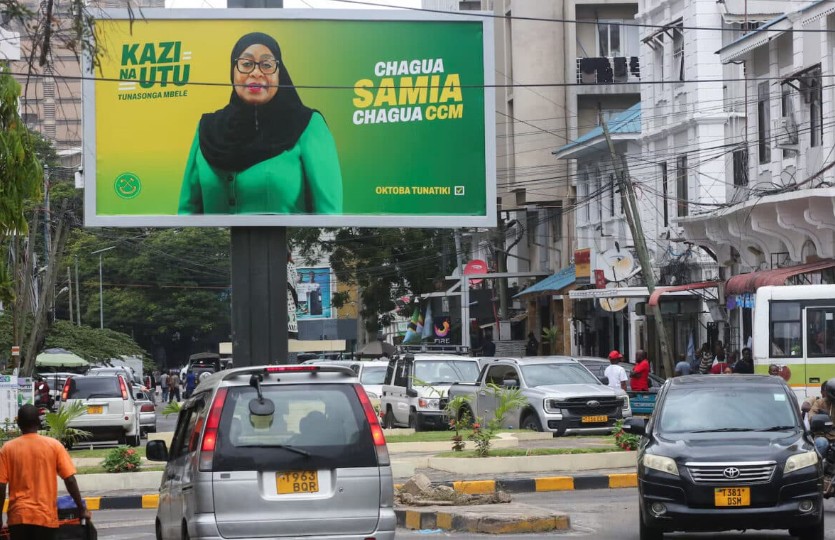
Tanzanians went to the polls on Wednesday in a general election widely expected to hand President Samia Suluhu Hassan a second term in office, following a campaign season marked by controversy and the disqualification of key opposition figures.
Voting took place across the country’s 30 regions and on the semi autonomous archipelago of Zanzibar, where residents are also choosing a regional president and members of the island’s House of Representatives. Nationally, voters are electing a president and 400 members of parliament, in a contest that analysts say could further consolidate the ruling party’s grip on power.
The election, however, has drawn criticism from both local and international observers after the electoral commission disqualified the main opposition party, CHADEMA, in April. The commission accused the party of refusing to sign the national electoral code of conduct a move CHADEMA dismissed as politically motivated.
The party’s leader, Tundu Lissu, remains on trial for treason, charges he has denied, calling them “an attempt to silence dissent.” Lissu, who survived an assassination attempt in 2017 and returned from exile in 2020, has been one of President Hassan’s most vocal critics.
With CHADEMA and other key opposition candidates barred, President Hassan’s ruling Chama Cha Mapinduzi (CCM) faces little organized competition. Her campaign has centered on promises to expand economic reforms, strengthen women’s participation in leadership, and promote national unity after years of political polarization under her late predecessor, John Magufuli.
Hassan, who became Tanzania’s first female president in 2021 following Magufuli’s sudden death, is seen by supporters as a stabilizing figure who has reopened civic space and restored Tanzania’s international relations. Critics, however, argue that recent government actions including opposition bans and media restrictions show a return to authoritarian tendencies.
Election officials reported a strong voter turnout early in the day, though sporadic reports of delays and irregularities surfaced in some urban districts. Results are expected to be announced within the next several days.
Regional observers from the East African Community (EAC) and the African Union (AU) have deployed monitoring teams, though access for some international media outlets has reportedly been restricted.