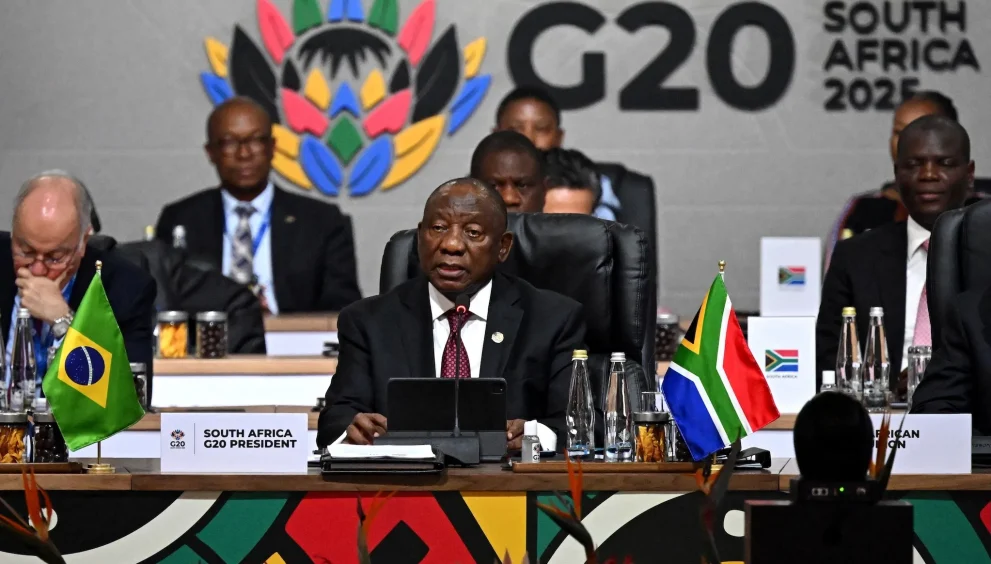
The Group of 20 summit in South Africa adopted a joint declaration on climate action, debt relief, and broader global challenges, despite the absence of the United States and differing views among several members. The document was completed after negotiations that proceeded without U.S. involvement, marking a departure from the G20’s traditional reliance on full consensus. South African officials said the text could not be renegotiated, noting that it reflected months of work and that participating members had reached what they considered sufficient agreement.
The host nation emphasised the importance of concluding the declaration during the first G20 presidency held on African soil. Officials described the final week of negotiations as intensive but said there was broad alignment on the need for a unified outcome. During the summit’s opening session, South Africa stressed the value of maintaining the group’s collective purpose despite disagreements.
Argentina was the only country to explicitly distance itself from the final document. Its representatives argued that portions referencing geopolitical matters, including a line expressing support for a just and lasting peace in the Palestinian territories, did not adequately capture the complexity of ongoing conflicts. Argentina stated it remained committed to the G20’s cooperative spirit but could not endorse the declaration as drafted.
A major point of contention stemmed from the declaration’s focus on climate change. It recognizes the seriousness of global warming, supports renewable energy expansion, and highlights the heavy debt burdens faced by low-income countries. These elements are at odds with positions held by the current U.S. administration, which had signaled opposition to including climate-related language. The United States chose not to attend the summit, leaving 18 member countries, along with the European Union and the African Union, represented by their top leaders or senior officials.
Tensions rose further when the United States requested approval to send a delegation to participate in the ceremonial handover of the G20 presidency, which will transfer to the United States in 2026. South Africa declined the proposal, citing protocol concerns, and said it would ensure that the handover occurred between officials of equivalent diplomatic rank.
The summit unfolded amid a backdrop of global strains, including the war in Ukraine, energy transitions, and economic vulnerabilities linked to international supply chains. Despite differing perspectives among members, South Africa concluded that the level of agreement achieved was adequate to adopt the declaration and signal continued cooperation on shared priorities.