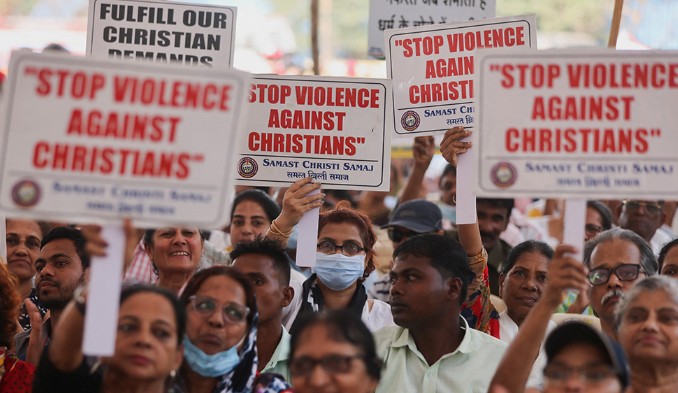
India’s Supreme Court has opened a landmark constitutional review of anti-conversion laws enforced across 12 states, following petitions filed by prominent church bodies.
On February 2, a Supreme Court bench issued notices to the central government and 12 state governments in response to a petition submitted by the National Council of Churches in India (NCCI), which represents approximately 14 million Christians through a broad national network of churches and affiliated institutions.
The NCCI argues that anti conversion legislation, originally framed to prevent forced or fraudulent religious conversions, has increasingly been misused. According to the petition, the laws have allegedly been weaponised through false complaints, arbitrary arrests, and incidents of vigilante violence that effectively criminalise evangelisation and restrict religious freedom.
The Supreme Court has directed the governments to submit a common counter affidavit within four weeks. The matter will be heard by a three
judge bench, underscoring the constitutional importance of the case, particularly concerning the right to freedom of religion as guaranteed under India’s Constitution.
Meanwhile, the NCCI has requested an immediate suspension of the enforcement of anti-conversion laws pending the outcome of the judicial review, arguing that continued implementation risks further rights violations.
India’s anti-conversion laws vary by state but generally require prior notification or approval for religious conversions and impose penalties for conversions deemed forced, fraudulent, or induced. Supporters argue the laws are necessary to protect vulnerable communities, while critics say they infringe upon individual freedoms and disproportionately affect minority religious groups.
The case is expected to have significant implications for religious freedom, state authority, and constitutional interpretation in India.
For religious communities, including Christians in India, freedom of religion is not only a legal matter but also a deeply spiritual and human rights issue. Church leaders argue that evangelisation, worship, and fellowship are integral aspects of Christian belief and must be protected under constitutional guarantees.
Despite ongoing legal challenges and social tensions, Christian communities across India continue their worship, outreach, and service work. Church bodies maintain that the mission of the Church remains active and resilient, emphasizing faith, unity, and perseverance amid legal and societal pressures.