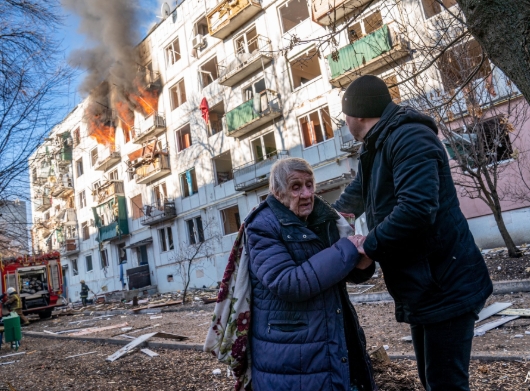
As Ukraine’s devastating war enters its fifth year, countless families are still grieving destroyed homes, missing relatives and shattered lives a stark reminder of the enduring human cost of a conflict that began with Russia’s full‑scale invasion in early 2022.
Where It Began: Russia’s Full‑Scale Invasion
On Feb. 24, 2022, Russia launched a full‑scale invasion of Ukraine, dramatically expanding a conflict that had simmered since 2014. Russian President Vladimir Putin declared a “special military operation,” purporting to protect Russian speakers and counter what the Kremlin called a growing Western threat. For Ukraine, it was an unprovoked attack on its sovereignty and territorial integrity. The invasion triggered global condemnation and is widely seen as an effort by Moscow to halt Ukraine’s drift toward the European Union and North Atlantic Treaty Organization.
The war has produced immense destruction. Russian forces have seized and occupy roughly 20 % of Ukrainian territory, including large swaths of the Donetsk, Luhansk, Kherson and Zaporizhzhia regions in the east and south.
Four Years Later: A Nation Scarred
Today, the conflict has left deep physical and social scars. According to the Norwegian Refugee Council and aid agencies:
- Nearly 4 million Ukrainians are displaced within the country.
- Over 5 million have fled abroad as refugees.
- Millions of homes, schools and hospitals have been damaged or destroyed.
A recent UNICEF report highlights the impact on children: more than one in three Ukrainian children remain displaced, with attacks on civilian infrastructure disrupting schooling, heating, electricity and access to clean water. Thousands of children have been killed or injured since the war began.
Personal Loss and Unspeakable Grief
For many Ukrainians, the statistics represent lived trauma. Halyna Popriadukhina, a 65‑year‑old displaced woman from the Donetsk region, has lived through repeated displacement and deep personal loss. She fled her home three times as frontlines shifted, watching her village fall under occupation and her livelihood vanish. One of her sons remains missing in action, while another is believed to be held by Russian forces.
“I didn’t take anything from there,” she said. “Everything was lost.”
Like millions of others, Popriadukhina refuses to give up on her homeland, despite living in a makeshift shelter in central Ukraine, far from her destroyed hometown. Each day is a struggle, not only to survive but to hold onto hope that loved ones will one day return.
Ongoing Hardship and Future Uncertainty
Though fighting has slowed in some areas, Russian missile and drone strikes continue to disrupt daily life and economic activity. Recent attacks on Ukraine’s Black Sea ports have hindered grain and iron ore exports critical drivers of the country’s economy forcing businesses to adapt and cope with rising transport costs.
Civilians in occupied regions face severe hardships, including restricted access to basic services and repression. Those who remain under occupation in parts of Donetsk, Luhansk, Kherson or Zaporizhzhia cope with water shortages, limited medical care and constant existential threat.
For Ukrainians like Popriadukhina, the war has redefined every aspect of life. “I won’t leave my country,” she said. “But sometimes … I don’t know if I’ll ever see home again.
________________________________________________________________________________________________________________