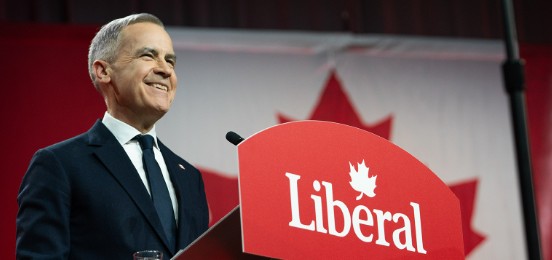
We recently looked at the curious developments in Canada’s Political Landscape, specifically highlighting the conservatives who’ve crossed the floor to join the Mark Carney’s liberal caucasus, as well as the concerning lapses in judgement in the criminal justice system. Well, a number of notable developments have also made recent headlines, further elaborating on the threats posed by Canada’s leadership – which is precisely what we will address today.
THE BRITISH COLUMBIA HUMAN RIGHTS TRIBUNAL’S CONTROVERSIAL FEBRUARY 18TH DECISION
“The Threats Posed by Canada’s Liberal Government”; and we ought to begin with the recent ruling from the British Columbia’s Human Rights Tribunal. In essence, the Tribunal delivered one of the most extreme decisions yet in debates over gender ideology. On the 18th of February, the tribunal ordered former Chilliwack school board trustee Barry Neufeld to pay $750,000 in damages for allegedly violating the province’s Human Rights Code through a series of public statements and publications spanning several years.
The case stemmed from complaints by the British Columbia Teachers’ Federation, on behalf of the Chilliwack Teachers’ Association, alleging that Neufeld’s criticisms of the Sexual Orientation and Gender Identity resources introduced in BC schools (which are also preferred to as SOGI 123) – amounted to discrimination and hate speech against LGBT individuals, particularly transgender people. The tribunal found that Neufeld’s repeated public commentary created a poisoned work environment for queer and trans teachers, exposed them to hatred or contempt based on sexual orientation and gender identity, and breached multiple sections of the Code.
Now, central to the ruling was the tribunal’s characterization of Neufeld’s rejection of the concept of gender identity as separate from biological sex assigned at birth. The decision explicitly stated that denying this separation constitutes a form of (quote) “existential denial” of transgender people’s existence. A particularly striking passage from the ruling even reads that (quote): “A person does not need to believe in Christianity to accept that another person is Christian. However, to accept that a person is transgender, one must accept that their gender identity is different from their sex assigned at birth.”
Here, I’d like to pause the narration of the tribunal’s decision to respond to this passage. This statement is really aggravating because this analogy annoyingly tries to equate faith (which correctly does not imply coercion on others), with a coercive doctrine for accepting transgender ideology. This is to say that while the Christian life is one where we win people through evangelical efforts that do not necessitate coercion, the tribunal appears to imply that this is somehow consistent with mandating the acceptance of gender identity as a factual precondition for recognizing transgender individuals’ validity; while refusing to do so, according to the decision, denies trans people their inherent dignity and can cross into discriminatory territory. But, yes: a person does not need to be a Christian to acknowledge that another is, because Christianity inherently mandates respecting the choice of others – a model which we learn from God. And so, why then must transgenderism necessitate an invasion of the choices of others? These two things are not complementary!
Also, human rights have in part included the development of the idea of bodily autonomy, which emphasises the importance of the application of human rights protections to an individual as opposed to only a group of people. It is thus ridiculous that the autonomy of others to identify as transgender is allowed to trump the autonomy of others not to believe in the rationality of transgenderism. In fact, the idea that a person’s existence and ability to thrive is solely conditioned on all people agreeing with their philosophies on who they are is ridiculous. When Jesus read from the writings of the Prophet Isaiah and proclaimed He was the Christ in Luke Chapter 4, those present at the synagogue refuted that proclamation, but that did not make Him any less of who He is. And so, if Jesus, who redeemed the whole world, did not allow the disbelief of others to deter Him from His Ministry, we certainly have no obligation to acknowledge the obscure identifications of persons, who are in contrast being used to contribute to moral decadence.
But, returning to the BC tribunal’s decision, the tribunal found that former Chilliwack school board trustee Barry Neufeld statements, made primarily via Facebook posts, emails, and public meetings between roughly 2017 and the early 2020s, in which he opposed SOGI 123 as promoting what he called an “evil ideology,” “delusional thinking,” or a threat to children, were apparently discriminatory. Meanwhile, the $750,000 penalty – which was allegedly awarded to compensate affected teachers – it is said to reflect the tribunal’s view of the prolonged, high-profile nature of Neufeld’s campaign. The decision also ordered Neufeld to cease similar conduct.
But, what this decision represents is a dangerous overreach compelling ideological conformity. With this ruling, the tribunal effectively penalizes disbelief in gender identity – which people are entitled to. This case also highlights a growing tension between free expression and anti-discrimination protections in Canada. In fact, in British Columbia, the Human Rights Code now appears to treat non-belief in gender identity theory as potentially actionable discrimination when expressed publicly, especially by those in positions of influence. And so, the tribunal’s logic suggests that affirming transgender people requires endorsing the proposition that gender can diverge from biological sex – which (sensibly) is not an obligation that is imposed on other identity categories.
THE WAR ON CHRISTIANITY IN ALSO OBSERVABLE IN CANADIAN LAW & CULTURE
But, the truth is that this obscure reference to Christianity by the BC tribunal is not at all a mere passing remark. It reflects a much broader war on Christianity. In fact, there has been a relentless, decades-long assault on Christianity in Canada, spanning more than 60 years of gradual secularization and cultural erosion.
This process began during the mid-20th century, as provinces moved to remove overt faith elements from public education. In Ontario, court rulings in the late 1980s ended mandatory school prayers and Christian-focused religious exercises, deeming them unconstitutional under the emerging Charter of Rights and Freedoms. Quebec underwent profound changes during its Quiet Revolution in the 1960s, shifting from Church-dominated schooling to a secular system, later abolishing denominational boards entirely by the late 1990s. Newfoundland followed suit in the 1990s, dismantling its denominational education framework through constitutional amendments. And across the country, public schools transitioned to neutral or fully secular curricula, stripping away Bible readings, prayers, and faith-based instruction that had once been commonplace. So much so, that today, faith-based education (if offered at all) is typically optional.
Then, beyond the classroom, everyday expressions of faith face subtle but persistent hostility. Praying quietly in a public setting, such as a restaurant, can draw uncomfortable stares or outright disapproval in increasingly secular urban environments. Traditional Christian values – on marriage, family, sexuality, or other affairs – are frequently branded as “extremist” in media, political discourse, and even official reports. Recent years have seen heightened tensions, including vandalism and arson attacks on churches (dozens documented since 2021), alongside legislative moves that restrict the expression of one’s Christian faith, such as limits on public faith symbols or debates over faith-based defenses in law.
But, this war on Christianity is especially notable because their neighbour, the US, is a stark contrast, where public displays of faith, patriotic fervor, and robust protections for free speech and liberty to worship God remain more deeply ingrained.
And yet, Canada’s trajectory reflects a broader Western trend toward secularism, where Christianity – once foundational to institutions and culture – has been systematically sidelined. What began as efforts toward inclusivity and neutrality has become a marginalization tactic that stifles open faith practice and labels conviction as intolerance.
INTEGRATING GENDER IDENTITY INTO CANADIAN LAW (AND ALL JURISDICTIONS) IS RIDICULOUS
At this point, I’d also like to highlight the issues with integrating gender identity into Canadian law. In essence, integrating gender identity into Canadian law, which is primarily being done through Bill C-16 (from 2017) and reinforced by Bill C-4 (from 2021), poses significant risks by requiring society to treat gender as potentially separate from biological sex. This legal framework adds “gender identity and expression” to the Canadian Human Rights Act and Criminal Code, prohibiting discrimination and extending hate speech protections to these categories in a manner that effectively mandates affirmation of the idea that a person’s internal sense of gender can override observable biological reality.
But, unlike other protected identity categories – such as race, religion, or sexual orientation – where no comparable obligation exists to affirm a subjective belief contradicting objective facts, gender identity law compels endorsement of the claim that someone can literally be a woman (or man) despite being born male (or female). This divergence is not imposed elsewhere! Yet in Canada, failing to affirm transgender identities in certain contexts can trigger discrimination claims or hate crime considerations, raising concerns about compelled speech and erosion of free expression.
Meanwhile, practical consequences have emerged in single-sex spaces and institutions. Following Bill C-16, Correctional Service Canada policies allow placement in prisons based on self-declared gender identity rather than biological sex. Reports document assaults by trans-identified males in women’s facilities, with data indicating many such transfers involve offenders with violent or sexual histories. This prioritizes gender affirmation over sex-based protections, in a manner that endangers female inmates whose vulnerabilities stem from biological differences.
Additionally, Bill C-4’s ban on “conversion therapy” further entrenches this by criminalizing practices aimed at changing gender identity to align with biological sex. This closes off ethical psychological care, and treats the acceptance of biolog\ical fact as some sort of prohibited “repression,” while mandating affirmation of claimed transgenderism as the only legal path. And so, really, integrating gender identity into Canadian law (and law in any other nation, really) only serves to harm broader society by giving protections to transgender people that do not rationally apply to other categories represented in law.
CANADA APPEARS TO BE OUTSOURCING THE DEFENCE OF ITS SOVEREIGNTY & TERRITORY
Which brings us to yet another recent announcement from the liberal government in Canada. On February 18, 2026, Canada’s government, under Prime Minister Mark Carney, announced updates to the Express Entry immigration system, introducing new priority categories for 2026. These aim to attract highly skilled talent amid labour shortages while reducing overall permanent resident numbers to sustainable levels. Among the changes is a dedicated stream for skilled military recruits, targeting foreign applicants with specialized expertise recruited directly by the Canadian Armed Forces (or the CAF).
In essence, this policy creates a pathway for “highly skilled foreign military applicants” in key roles such as military doctors, nurses, pilots, and other specialized positions (e.g., operations or technical experts). Eligible candidates are required to meet certain criteria: including at least one year of relevant work experience (often expanded to 12 months in eligible occupations over the past three years), a full-time job offer from the CAF lasting at least three years, and typically a post-secondary credential. In some descriptions, recruits need service in a recognized foreign military, potentially with 10+ years of continuous experience.
Additionally, the initiative is said to focus on professionals who can “contribute from day one,” such as medics and aviators, allowing some to enlist first and finalize permanent residency later. This actually builds on prior changes, like allowing permanent residents (not just citizens) to enlist since 2022. Immigration Minister Lena Metlege Diab even emphasized proactive global recruitment stating that (quote): “We’re not waiting for the right people to find us. We will go out into the world to recruit the people our country needs.”
So, here’s my challenge to this: Granted, Canada’s model tries to create a relatively new policy, but GENERALLY, in the world we have the understanding that when a nation invites or relies on troops from another country, it cedes part of its authority – regardless of whether the foreign troops will receive commands from the new host government.
And this is because foreign forces operate under their own command structures, often with status-of-forces agreements granting them immunity or limited accountability for actions on host soil. This creates a perception—and sometimes reality—of external influence over domestic security, thus eroding the monopoly on violence that defines a sovereign state.
Historical and contemporary examples also indicate that foreign bases themselves have sparked resentment, turned host nations into targets for adversaries, fueled anti-foreign radicalism, and even served as pretexts for conflict.
Moreover, such arrangements can undermine self-determination by perpetuating external interference, supporting unpopular regimes, or escalating internal conflicts. Over time, outsourcing military personnel diminishes a nation’s ability to build independent defense capabilities, thus fostering vulnerability and diminished autonomy. And in an era of great-power competition, preserving sovereignty demands prioritizing self-reliant security forces over foreign military personnel, no matter the short-term convenience.
ALBERTA PREMIER DANIELLE SMITH CRITIQUES MASS IMMIGRATION
Meanwhile, immigration is still a controversial matter in Canada due to the porous borders enabled by the liberal government. This is in part why we’ve seen great support for Alberta Premier Danielle Smith as she strongly criticized Canada’s federal approach to immigration, arguing that rapid, unchecked inflows are overwhelming provincial resources. In a recent televised address to Albertans, she stated: “Although sustainable immigration has always been an important part of Alberta’s provincial growth model, throwing the doors wide open to anyone and everyone across the globe has flooded classrooms, emergency rooms and social support systems with far too many people, far too quickly.”
She has also highlighted the dramatic population surge in Alberta, noting that the province has added nearly 600,000 residents in just five years – which, in Canada, is equivalent to incorporating half the size of Calgary or Edmonton in that short timeframe. And, this growth stems largely from former Prime Minister Justin Trudeau’s “disastrous” open-border policies, which have placed unprecedented pressure on essential services.
Additionally, her emphasis is that while controlled, benefit-driven immigration has historically strengthened Alberta’s economy and culture, the current scale lacks planning and sustainability. And so, to address these challenges, Alberta Premier Danielle Smith announced plans for an October 2026 referendum, seeking public mandate on measures to regain provincial control over immigration levels, potentially restricting access to health care and education for certain non-permanent residents, and pursuing constitutional changes to bolster Alberta’s position within Canada.
THE LIBERAL GOVERNMENT HAS MADE CANADA A TESTING GROUND FOR GLOBALIST AGENDAS
Then, in addition to all that we’ve discussed, it has progressively become clear that the liberal government has made Canada a testing ground for globalist agendas, often linked to UN Agenda 2030 and broader sustainability frameworks. This is manifested in the launch of a blueprint for centralized technocratic control.
But, a major flashpoint is the push toward digital currencies and identities. The Bank of Canada has researched a potential central bank digital currency (CBDC), or digital Canadian dollar. Globally, CBDCs are explored for their alleged efficiency, inclusion, and programmable features, but this actually enables surveillance and restricts freedom, with some experts cautioning that combined with digital ID systems, it could fundamentally alter personal autonomy.
Additionally, climate policies form another pillar. PM Mark Carney, who was formerly the UN Special Envoy on Climate Action and Finance, has championed net-zero transitions. His government pursues emissions reductions aligned with Paris Agreement targets.
THE WAR ON FREE SPEECH IN CANADA
In Canada, a troubling shift is underway. Government officials and policymakers are increasingly discussing measures that could limit access to foreign-owned social media platforms. The rationale? That citizens are expressing views that challenge official narratives or discomfort authorities—particularly on topics like immigration, cultural changes, and national identity.
Now, this is not mere regulation for safety; it represents a slide toward state control over discourse. When a government asserts the authority to determine which opinions qualify as acceptable, and which cross into forbidden territory labeled as “harm,” the line between protection and suppression blurs dangerously. Framing certain speech as a security threat or societal danger transforms open debate into a regulated activity, where dissent risks being equated with subversion.
Meanwhile, the core principle of democracy rests on the free exchange of ideas, even those that provoke unease or division. Citizens voicing legitimate concerns about policy impacts – whether demographic shifts straining public services, erosion of shared cultural values, or questions of sovereignty – are not threats to the state. They are exercising their right to participate in the public square. Labeling such expressions as inherently harmful criminalizes ordinary civic engagement and chills broader conversation.
Additionally, history shows that censorship rarely remains confined to its initial targets. What begins as action against extreme or objectionable content inevitably expands, ensnaring moderate views, satire, or inconvenient facts. Once the state claims the power to curate what its people may hear, read, or share, the foundation of self-governance weakens. Citizens become subjects whose information diet is managed “for their own good,” rather than autonomous individuals trusted to discern truth from falsehood through reason and debate.
And the recent legislative efforts, such as proposals around online harms, actually illustrate this trend. While said to be aimed at combating genuine dangers like child exploitation or incitement to violence, these frameworks often include vague categories – such as content that “foments hatred” or causes subjective harm – that invite broad interpretation. Platforms that face hefty fines or operational restrictions, may be coerced to preemptively censor users in an effort to comply, thus effectively outsourcing speech decisions to bureaucratic oversight. Additionally, foreign platforms, like X, become prime targets for restrictions, in a manner that blocks Canadians’ access to uncensored global conversations.
All of this is a problem because true free societies thrive by tolerating discomfort, not by eliminating it. They counter bad ideas with better ones, not by silencing opponents. Robust debate strengthens institutions; suppression breeds resentment and undermines trust. And so, the stakes are really high, because if Canada proceeds down this path – deciding which platforms citizens may use based on the content they host – it risks joining ranks with regimes that prioritize ideological conformity over liberty.
Written By Lindokuhle Mabaso