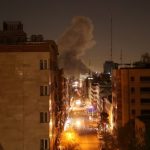
Tehran, Iran where the reported killing of Ayatollah Ali Khamenei, Iran’s long-time supreme leader, has plunged the Islamic Republic into its most severe political crisis since the 1979 revolution, upending the country’s tightly controlled power structure and igniting a fierce race to determine his successor. Reuters described the development as a blow to Tehran’s internal order and a trigger for a fraught leadership transition.
Khamenei, who had led Iran for nearly 37 years and wielded ultimate authority over the state’s military, judiciary, and security apparatus was reportedly killed along with other senior officials in recent strikes linked to a joint U.S.-Israeli military campaign. Iranian authorities have confirmed his death and declared a 40-day mourning period.
Power Vacuum and Interim Leadership
In the immediate aftermath, Tehran activated constitutional mechanisms to manage the transition. A temporary Leadership Council comprising President Masoud Pezeshkian, judiciary chief Gholamhossein Mohseni-Ejei and a cleric chosen by the Guardian Council has assumed the duties of the supreme leader pending the selection of a permanent successor.
Under the Iranian constitution, the Assembly of Experts, an 88-member clerical body, is tasked with electing a new supreme leader, but the process is expected to be complex and opaque. Analysts say the outcome will hinge on which faction hardliners, moderates or Revolutionary Guard-aligned figures can secure backing in a moment of intense political uncertainty.
High-Stakes Succession Dynamics
The killing of Khamenei has unleashed jockeying among elite circles in Tehran. Potential successors discussed by analysts include senior clerics, establishment figures and even members of Khamenei’s own family. However, the selection of a new supreme leader is neither automatic nor guaranteed to restore stability quickly.
The Islamic Revolutionary Guard Corps (IRGC) a powerful military and political force in Iran is likely to play a decisive role in the transition, given its influence over domestic security and regional proxy networks. Experts warn that any misstep in choosing a successor could deepen fractures within Iran’s theocratic system and fuel further unrest.
Regional and Domestic Fallout
Khamenei’s death has not only unsettled Iran’s political equilibrium but also escalated tensions across the Middle East. Tehran has vowed revenge and launched retaliatory strikes, raising fears of broader conflict that could reverberate far beyond its borders.
Domestically, the loss of a unifying, albeit authoritarian leader has exposed latent public dissatisfaction. Widespread protests against economic hardship and political repression in recent years have demonstrated deep fissures in Iranian society issues now exacerbated by the leadership vacuum.
What’s Next?
As Iran enters a critical phase of transition, international observers are watching closely. The succession outcome will not only reshape Tehran’s internal power dynamics but also influence regional security, global energy markets and diplomatic calculations among world powers engaged in the wider Middle Eastern conflict.
________________________________________________________________________________________________________________