

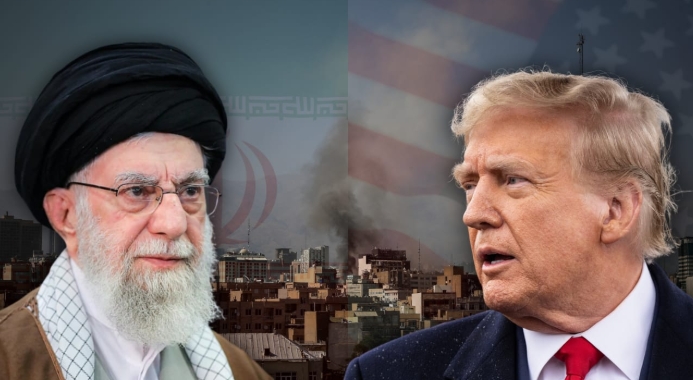
In Washington / Dubai U.S. President Donald Trump has warned that the United States could target Iran’s critical oil infrastructure on Kharg Island if Tehran continues disrupting shipping through the strategic Strait of Hormuz, raising fears of a major escalation in the already volatile Middle East conflict.
The warning comes after U.S. forces reportedly carried out strikes on military installations on Kharg Island, a key hub for Iran’s oil exports. According to President Trump, the attacks destroyed Iranian military targets on the island but deliberately avoided damaging oil facilities at least for now.
Trump said the United States could reconsider that restraint if Iran or its allies continue interfering with maritime traffic in the Gulf, where commercial shipping has been severely disrupted in recent weeks.
Strategic Oil Hub Under Threat
Kharg Island is widely considered the backbone of Iran’s energy exports. The island hosts the country’s main crude oil terminal and handles roughly 90% of Iran’s oil shipments to global markets.
Any strike on its pipelines, storage tanks, or export terminals could dramatically reduce Iranian oil exports and send shockwaves through global energy markets.
Analysts warn that even limited damage to the island’s infrastructure could significantly tighten global oil supply, with some forecasts suggesting crude prices could surge sharply if exports from Iran are disrupted.
Escalating Strait of Hormuz Crisis
The tensions are tied to the ongoing crisis in the Strait of Hormuz, one of the world’s most important maritime trade routes for energy. The narrow passage connects the Persian Gulf to international waters and carries around one-fifth of the world’s seaborne oil supply.
Since late February, the waterway has been at the center of a growing conflict involving Iran, the United States, and regional allies. Iranian forces and affiliated groups have reportedly targeted commercial vessels and warned ships not to transit the area, causing tanker traffic to collapse.
The disruption has forced many shipping companies to halt operations in the region or reroute vessels, creating one of the most significant energy supply shocks in decades.
U.S. Military Response
U.S. officials say the strikes on Kharg Island targeted air defense systems, naval facilities, and military infrastructure used by Iranian forces. Trump described the operation as a major success, claiming American forces “obliterated” all military targets on the island while intentionally leaving oil infrastructure untouched.
The U.S. administration has also signaled plans to increase naval protection for commercial vessels traveling through the Gulf, including possible escort missions to restore shipping through the strait.
Military analysts say such operations could require significant naval resources and carry the risk of direct clashes with Iranian forces.
Iran Warns of Retaliation
Iranian officials have warned that any attack on the country’s energy infrastructure would trigger retaliation against oil facilities linked to the United States and its allies across the Middle East.
Tehran has repeatedly insisted that it will continue resisting U.S. and Israeli pressure and has accused Washington of escalating the conflict.
Regional tensions have already spread beyond Iran, with attacks and military activity reported in several neighboring areas, raising concerns that the confrontation could expand into a broader regional war.
Global Economic Concerns
Energy markets are closely watching the situation, as a strike on Kharg Island could disrupt global oil supply at a time when the Strait of Hormuz crisis has already driven sharp price volatility.
The closure or disruption of the strait alone threatens around 20% of global oil trade, making it one of the most critical chokepoints in the global energy system.
Economists warn that a prolonged disruption could push oil prices dramatically higher, fueling inflation and increasing economic pressure worldwide.
Uncertain Path Ahead
With both Washington and Tehran issuing increasingly strong warnings, analysts say the situation remains highly unpredictable.
A direct strike on Iran’s oil infrastructure would mark a significant escalation in the conflict and could trigger retaliatory attacks on energy facilities across the Gulf potentially destabilizing global energy markets and widening the regional war.
Diplomatic efforts to ease tensions have so far shown little progress, leaving the world watching closely as developments around Kharg Island and the Strait of Hormuz continue to unfold.
________________________________________________________________________________________________________________

