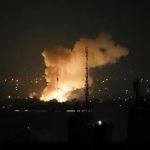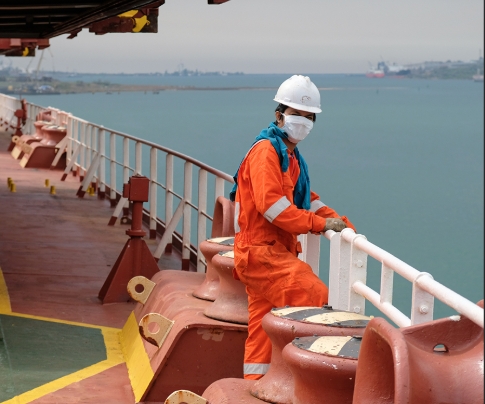
A group of countries has proposed the creation of a safe maritime corridor to evacuate an estimated 20,000 seafarers stranded in the Persian Gulf, as escalating conflict involving Iran continues to disrupt one of the world’s most critical shipping routes.
The proposal was submitted to the International Maritime Organization (IMO) during an emergency council meeting in London, as concerns grow over the safety of thousands of crew members trapped aboard hundreds of vessels in the region.
Humanitarian Crisis at Sea
According to the IMO, roughly 20,000 seafarers are currently stranded due to the near paralysis of shipping traffic through the Strait of Hormuz, a vital waterway that normally carries about one-fifth of global oil and gas supplies.
Hundreds of ships have dropped anchor or halted operations after Iran warned it could target vessels attempting to leave the Gulf, effectively blocking safe passage.
The situation has already turned deadly. At least seven seafarers have been killed in incidents linked to the conflict, with several others injured or missing, highlighting the urgency of international intervention.
Details of the Safe Corridor Proposal
The proposed plan backed by countries including Bahrain, Japan, Panama, Singapore and the United Arab Emirates, with support from the United States calls for the establishment of a protected maritime route to enable the safe evacuation of ships and crews.
“The purpose of this framework would be to facilitate the safe evacuation of merchant ships,” the proposal states, emphasizing the need to protect seafarers from becoming victims of escalating geopolitical tensions.
The IMO council is currently reviewing the proposal, with discussions expected to continue as member states weigh the feasibility and security implications of such a corridor.
Strategic Importance of the Strait of Hormuz
The crisis underscores the global importance of the Strait of Hormuz, a narrow chokepoint connecting the Persian Gulf to international markets. Any disruption in this route has immediate consequences for global energy supplies and trade flows.
Since the conflict intensified, thousands of vessels have either remained anchored or avoided entering the region altogether due to safety concerns, further straining global shipping networks.
Calls for International Action
IMO Secretary-General Arsenio Dominguez has urged urgent action to protect seafarers, warning that they “must not become victims of broader geopolitical tensions.”
NATO and other international actors are also exploring options to enhance maritime security, while the United States has called on allies to help ensure safe navigation through the strait.
However, any coordinated security effort faces significant challenges, including the risk of further escalation in an already volatile region.
Iran’s Response
Iran has defended its position, stating in communications to the IMO that it continues to provide humanitarian assistance to vessels and crews in the Gulf.
At the same time, Tehran has blamed rising tensions on what it describes as external aggression, reflecting the broader geopolitical standoff driving the crisis.
Uncertain Path Forward
While the proposed safe corridor offers a potential solution, it remains unclear whether it can be implemented quickly or effectively. Any such initiative would require coordination among multiple nations, as well as security guarantees in a highly contested environment.
For now, thousands of seafarers remain stranded at sea, facing mounting risks as the conflict continues to disrupt one of the world’s most vital maritime corridors.
The outcome of ongoing IMO discussions may prove critical not only for the safety of those trapped in the Gulf, but also for the stability of global trade and energy markets.
________________________________________________________________________________________________________________