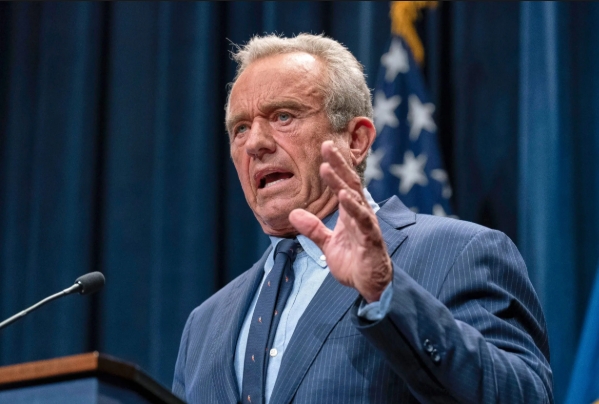
U.S. Health Secretary Robert F. Kennedy Jr. is recalibrating his political strategy ahead of the 2026 midterm elections, shifting away from controversial vaccine-related battles and toward more broadly popular public health initiatives after pushback from the White House, according to officials familiar with internal deliberations.
The move reflects growing concern within President Donald Trump’s political orbit that vaccine policy fights could become an electoral liability at a time when Republicans are preparing to defend congressional majorities.
Vaccine Policy Backlash Prompts Political Reassessment
Kennedy, long associated with vaccine skepticism, had initially backed sweeping changes to childhood immunization recommendations. But after legal setbacks and internal resistance, the administration has reportedly pressed him to focus instead on quicker, more politically marketable health victories.
Sources say the White House is wary that renewed vaccine debates could alienate moderate voters and suburban families key demographics in tight congressional races.
Pivot Toward “Make America Healthy Again” Agenda
Kennedy is now prioritizing initiatives under his “Make America Healthy Again” agenda that can produce visible results before voters head to the polls.
Among the issues gaining attention are stricter food-quality standards, removal of certain synthetic food additives, expanded research into psychedelics for mental health treatment, and faster approvals for new therapies targeting childhood diseases.
These policy areas are viewed by advisers as easier to communicate to voters than divisive vaccine debates.
White House Tightens Control Over Health Messaging
The White House has also reportedly increased oversight of the Department of Health and Human Services, with aides closer aligned to traditional Republican health messaging taking more prominent roles.
Several Kennedy-aligned advisers have been sidelined, while communications strategy has shifted toward chronic disease prevention, food safety, and consumer health priorities.
Legal Setbacks Add Pressure
Kennedy’s recalibration follows a series of legal and political setbacks involving vaccine policy. A federal judge recently blocked elements of earlier changes advanced under his department, citing procedural concerns.
The ruling strengthened internal arguments that aggressive vaccine policy moves could create unnecessary legal and political risk during an election cycle.
Balancing Reform Agenda and Electoral Politics
Despite the shift, tensions remain within the administration over the direction of health policy. Kennedy’s reform-driven agenda still has strong supporters, while Republican strategists are focused on minimizing controversy ahead of the midterms.
How long the current balance holds may depend on whether Kennedy can deliver visible policy wins quickly enough to satisfy both political and policy expectations.
Election Pressure Shapes Health Priorities
For now, the administration appears to be betting that food reform, chronic illness prevention, and treatment innovation offer safer political ground than reopening national battles over vaccines.
With the 2026 midterms approaching, Kennedy’s challenge will be demonstrating measurable results while avoiding issues that could divide voters.
________________________________________________________________________________________________________________
Analysis:
What the report is saying is that people around the White House and Republican leadership are worried that talking too much about vaccines could create political problems before the 2026 midterm elections.
So instead, they want him to:
- Spend less time on vaccine debates (because it’s controversial and divides voters)
- Focus more on “quick wins” in health policy that most people agree with, like food safety, reducing harmful additives and general health improvements
The thinking is political, not purely medical:
- Vaccine issues can split voters and attract backlash
- “Health improvement” topics are more popular and easier to sell to the public before an election
So yes it’s essentially a strategy shift:
less focus on controversial vaccine messaging, more focus on broadly popular health reforms that can help the party politically in the midterms.
The development suggests a clear political calculation ahead of the 2026 midterms. Vaccine-related discussions are seen as politically sensitive, while broader health reforms are viewed as easier to communicate and less divisive. The shift highlights how electoral pressures can shape even technical public health agendas.
Vaccines and immunisation programmes
People were “lied to” about vaccination programmes, vaccines do not work but only work towards the globalists control systems for the ”New World Order” agenda.
With what we have seen, particularly in the fraud of MRNA vaccines. Vaccine actions need to be taken seriously and urgently, people’s lives matter. It is not just about political play!
________________________________________________________________________________________________________________