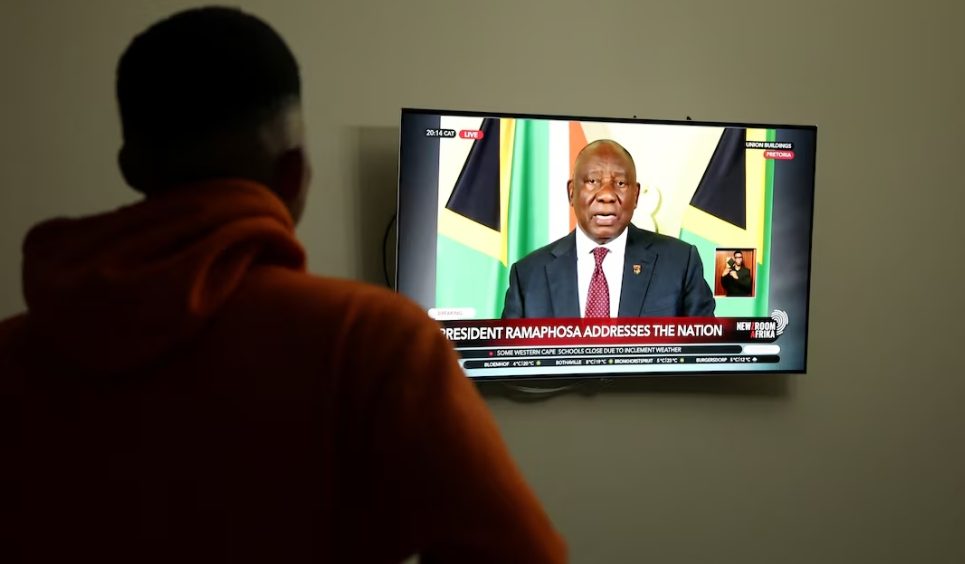
Ramaphosa Defies Resignation Calls as South Africa’s Cash-in-Sofa Scandal Returns to Center Stage
South African President Cyril Ramaphosa is facing renewed political pressure after opposition parties demanded his resignation over the long-running “Phala Phala” cash scandal, a controversy that has again shaken the country’s political landscape and revived questions about accountability at the highest level of government. The latest developments come after South Africa’s Constitutional Court ruled that parliament acted unlawfully when it blocked an impeachment inquiry in 2022, reopening scrutiny of a scandal that first surfaced four years ago.
The scandal centers on a 2020 burglary at Ramaphosa’s private Phala Phala game farm in Limpopo, where thieves stole bundles of foreign currency allegedly hidden inside furniture, including a sofa. The amount at the center of the controversy has widely been reported as about $580,000. Ramaphosa has consistently denied wrongdoing, saying the cash came from the sale of buffalo to a Sudanese businessman and that the money had not yet been banked when the theft occurred.
Constitutional Court Reopens the Case
South Africa’s Constitutional Court delivered a major political blow to the president last week when it ruled that the National Assembly’s 2022 decision to reject an independent parliamentary panel’s findings was unconstitutional. That earlier panel had found preliminary evidence that Ramaphosa may have violated the constitution and committed serious misconduct in the handling of the theft. Parliament is now expected to establish a fresh impeachment committee to reconsider the matter.
The court’s ruling has reignited one of the most politically sensitive controversies of Ramaphosa’s presidency. It also comes at a difficult time for the ruling African National Congress, which is preparing for municipal elections later this year while still adjusting to governing in coalition after losing its parliamentary majority in the 2024 national election.
Opposition Steps Up Pressure
Opposition parties have moved quickly to capitalize on the renewed scandal. The Economic Freedom Fighters and the uMkhonto weSizwe Party, led by former president Jacob Zuma, have intensified calls for Ramaphosa to resign immediately. Some opposition figures are also pushing for a no-confidence vote in parliament.
Critics argue that the president’s anti-corruption image has been severely damaged by the scandal. Ramaphosa came to power in 2018 promising to clean up state institutions after the corruption-ridden era of Zuma. For opponents, the Phala Phala affair has become a symbol of what they say is selective accountability in South African politics.
Ramaphosa Refuses to Step Down
Despite mounting pressure, Ramaphosa has made clear he has no intention of resigning. In public remarks and through his spokesperson, the president has maintained that he did nothing wrong and said he will cooperate with all legal and parliamentary processes. He has also argued that resigning before those processes conclude would undermine constitutional principles.
Political analysts say his position remains relatively secure for now. While the impeachment process could take months, removing a South African president requires a two-thirds majority in parliament. Even though the ANC no longer has an outright majority, it still controls a large enough bloc of seats that, together with coalition partners, could shield Ramaphosa from removal.
A Test for the ANC and Coalition Politics
The scandal is also emerging as an important test for the ANC’s internal unity and for South Africa’s broader coalition politics. The party’s National Executive Committee is expected to discuss the fallout and determine its strategy in the coming days. Any signs of internal division could further complicate governance in a political environment already marked by fragile alliances.
The stance of the Democratic Alliance, the second-largest party in the governing coalition, could also prove crucial. Although there has been no indication that coalition partners are preparing to abandon Ramaphosa, the revived impeachment process gives them increased leverage over government negotiations and policy direction.
What Happens Next?
Parliament’s speaker is expected to initiate the formation of an impeachment committee in the coming days. That committee will assess whether the evidence warrants formal impeachment proceedings against the president. The process could stretch over several months, meaning the scandal is likely to remain a major political issue throughout much of 2026.
For now, Ramaphosa appears determined to fight politically and legally. But the revived Phala Phala scandal has once again put his leadership under intense scrutiny and threatens to cast a long shadow over both his presidency and the ANC’s electoral prospects.
In a country where public frustration over corruption remains high, the renewed controversy is likely to resonate well beyond parliament, testing not only Ramaphosa’s political resilience but also South Africa’s institutions of accountability.
________________________________________________________________________________________________________________