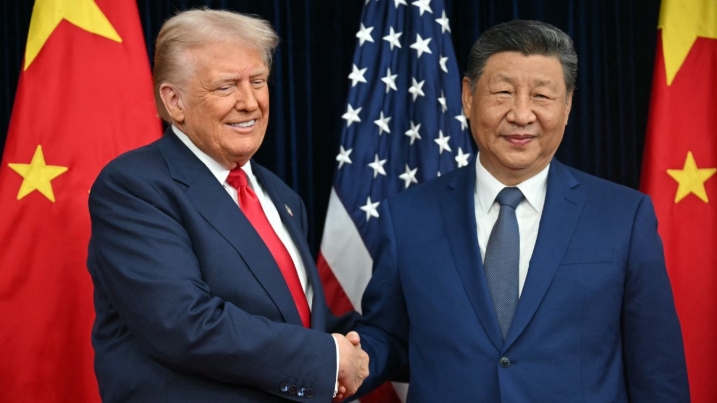
U.S. President Donald Trump said he plans to raise the contentious issues of American arms sales to Taiwan and the imprisonment of Hong Kong media tycoon Jimmy Lai during his upcoming summit with Chinese President Xi Jinping in Beijing this week.
The meeting, scheduled for May 14–15, is expected to be one of the most closely watched diplomatic engagements between Washington and Beijing in years, as tensions continue to simmer over trade, Taiwan, technology restrictions and human rights.
Trump confirmed at the White House that Taiwan’s defense relationship with the United States would be among the topics discussed directly with Xi. Beijing has long opposed U.S. military support for Taiwan, which China considers part of its territory under its “One China” principle. Taiwan’s government rejects Beijing’s sovereignty claims and insists only the island’s people can decide their future.
“I’m going to have that discussion with President Xi,” Trump told reporters when asked about U.S. weapons sales to Taiwan, reiterating that he believes a military conflict over the island is unlikely during his presidency.
Taiwan Remains a Major Flashpoint
The United States remains Taiwan’s most important international security partner and is legally obligated under the Taiwan Relations Act to help the island maintain its defense capabilities. In December, the Trump administration approved what officials described as the largest U.S. arms package ever for Taiwan, reportedly worth more than $11 billion.
The package reportedly included missile systems, artillery platforms, drones and upgrades for Taiwan’s military aircraft, further intensifying tensions with Beijing. China has repeatedly condemned such sales, warning Washington that support for Taiwan crosses a core national security red line.
Ahead of the summit, Chinese officials have urged the United States to handle Taiwan-related issues “prudently,” while analysts say Beijing is likely to pressure Trump to reduce military cooperation with Taipei in exchange for progress on trade and other diplomatic matters.
The Taiwan issue is expected to dominate much of the strategic dialogue during the summit, particularly as China continues military exercises and pressure campaigns around the island. Experts say neither side is expected to make major concessions, but both leaders are likely seeking to avoid a further deterioration in relations.
Jimmy Lai Case Adds Human Rights Dimension
Trump also said he intends to discuss the imprisonment of Jimmy Lai, the founder of the now-shuttered pro-democracy newspaper Apple Daily and one of Hong Kong’s most prominent critics of Beijing.
Lai was sentenced earlier this year to 20 years in prison on charges linked to collusion with foreign forces and sedition under Hong Kong’s sweeping national security law. His prosecution has drawn widespread criticism from Western governments, rights organizations and lawmakers who argue the case symbolizes the erosion of freedoms in Hong Kong.
The 78-year-old businessman, who also holds British citizenship, has become a major international symbol of Hong Kong’s shrinking political freedoms following Beijing’s crackdown on dissent after the 2019 protests.
More than 100 bipartisan U.S. lawmakers reportedly urged Trump to press Xi directly for Lai’s release during the Beijing talks. Trump had previously pledged during his election campaign that he would work to secure Lai’s freedom.
In addition to Lai, Trump said he plans to raise the case of Pastor Jin Mingri, founder of Beijing’s Zion Church, who was detained amid China’s broader tightening of controls over religious activities and unauthorized worship.
Summit Overshadowed by Broader Global Tensions
The Trump-Xi meeting comes at a volatile moment in global politics, with the ongoing Iran conflict, trade disputes and technology competition adding pressure to already strained U.S.-China relations. Analysts say both sides are entering the talks with modest expectations for concrete breakthroughs.
China is expected to push for relief from U.S. tariffs and technology export restrictions, while Washington is seeking Beijing’s assistance in easing tensions in the Middle East and maintaining global economic stability.
Despite sharp disagreements, both governments appear eager to maintain dialogue and prevent relations from spiraling further. The summit will mark Trump’s first visit to China in nearly nine years and could shape the direction of U.S.-China ties heading into the second half of 2026.
________________________________________________________________________________________________________________