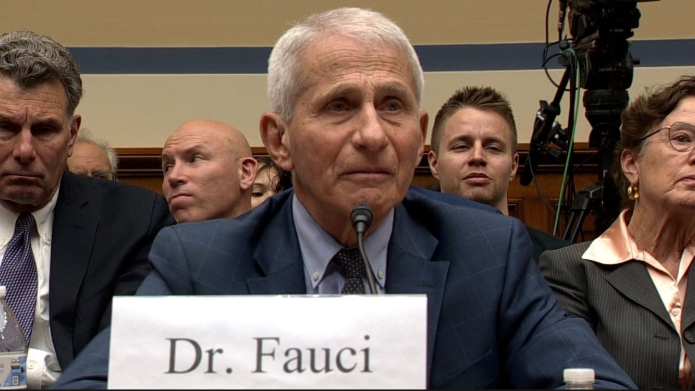
A newly surfaced whistleblower allegation from within the U.S. intelligence community has reignited political controversy over the origins of COVID-19, with claims that former National Institute of Allergy and Infectious Diseases director Dr. Anthony Fauci may have “influenced” aspects of an intelligence review into the virus’s origins as part of an alleged effort to downplay the laboratory leak theory.
The claims, which have not been independently verified, have added fresh fuel to an already highly politicized debate over how the pandemic began and whether early assessments of COVID-19’s origin were shaped by scientific consensus, intelligence interpretation, or political considerations.
Whistleblower Allegations Raise New Questions
According to the whistleblower account cited in recent reports, unnamed CIA analysts suggested that internal deliberations during the early stages of the COVID-19 origin inquiry were subject to external pressure, including alleged indirect influence from senior public health officials.
The whistleblower reportedly alleges that Dr. Fauci’s communications with scientific advisors and government bodies may have shaped the framing of early assessments that leaned toward a natural origin of the virus, rather than a laboratory-related incident.
However, no publicly released intelligence documents have substantiated claims of coordinated interference or suppression of alternative theories.
U.S. intelligence agencies have previously stated that the question of COVID-19’s origin remains unresolved, with divisions among agencies over whether the virus emerged naturally or from a lab-related incident.
Fauci’s Role Under Renewed Scrutiny
Dr. Anthony Fauci, who served as one of the most prominent U.S. public health officials during the pandemic, has previously rejected allegations that he influenced intelligence findings or suppressed alternative hypotheses regarding the virus’s origins.
Fauci has consistently stated that early scientific assessments were based on available evidence at the time, which initially pointed toward zoonotic transmission, while also acknowledging that the lab leak theory could not be definitively ruled out.
Supporters of Fauci argue that he relied on scientific consensus and peer-reviewed data during a rapidly evolving global health crisis, while critics claim that early messaging may have been overly dismissive of competing theories.
Intelligence Community Divisions Persist
U.S. intelligence agencies remain divided over the origins of COVID-19, with some agencies reportedly leaning toward a natural spillover event and others considering a laboratory-related incident as plausible but unconfirmed.
Previous declassified summaries have indicated that there is no unanimous conclusion within the intelligence community, and that confidence levels vary widely depending on the agency and type of analysis conducted.
The latest whistleblower claims are expected to intensify congressional scrutiny of how intelligence assessments were coordinated and whether political or institutional pressures influenced early conclusions.
Political Reactions Intensify
The allegations have quickly become a flashpoint in Washington, where lawmakers have long debated transparency surrounding COVID-19 origins.
Some Republican lawmakers have called for renewed investigations into potential coordination between public health officials and intelligence agencies, arguing that the American public deserves full disclosure of all communications related to the early pandemic response.
Democratic lawmakers, meanwhile, have urged caution, warning against drawing conclusions based on unverified whistleblower claims and emphasizing the need to rely on documented evidence rather than politically charged interpretations.
Scientific Community Urges Caution
Many scientists and public health experts have cautioned against politicizing ongoing investigations into COVID-19 origins, noting that conclusive evidence remains limited and contested.
They argue that while further transparency is important, claims of coordinated “cover-ups” risk undermining public trust in both scientific institutions and intelligence agencies without clear substantiation.
Experts also stress that determining the origins of emerging pathogens is often a complex, multi-year process involving international cooperation and extensive field research.
Outlook
The whistleblower allegations are likely to prompt renewed calls for congressional hearings and additional intelligence reviews in the United States.
However, without publicly available corroborating evidence, the claims remain questionable, and the scientific and intelligence communities continue to treat the origins of COVID-19 as an open question.
As political debate intensifies, officials say the focus remains on balancing transparency with evidence-based analysis in one of the most consequential scientific investigations in recent history.
________________________________________________________________________________________________________________