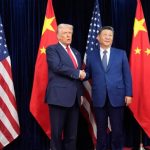
Chinese President Xi Jinping and U.S. President Donald Trump wrapped up a high-profile summit in Beijing on Friday projecting optimism about stabilizing relations between the world’s two largest economies, even as major disagreements remained unresolved over Iran, Taiwan, trade and regional security.
The three-day summit, held amid heightened global tensions and economic uncertainty, produced warm public gestures, promises of deeper economic cooperation and declarations from both leaders that bilateral ties had entered a more “constructive” phase. Yet behind the carefully choreographed diplomacy, stark differences continued to define the relationship between Washington and Beijing.
Leaders Strike Positive Tone
Speaking after final talks at Beijing’s Zhongnanhai leadership compound, Trump described the summit as “a great couple of days” and insisted U.S.-China relations were “in a good place.” Xi, meanwhile, called the visit a “milestone” and said the two powers had established a “constructive, strategic, stable relationship.”
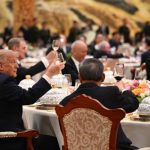
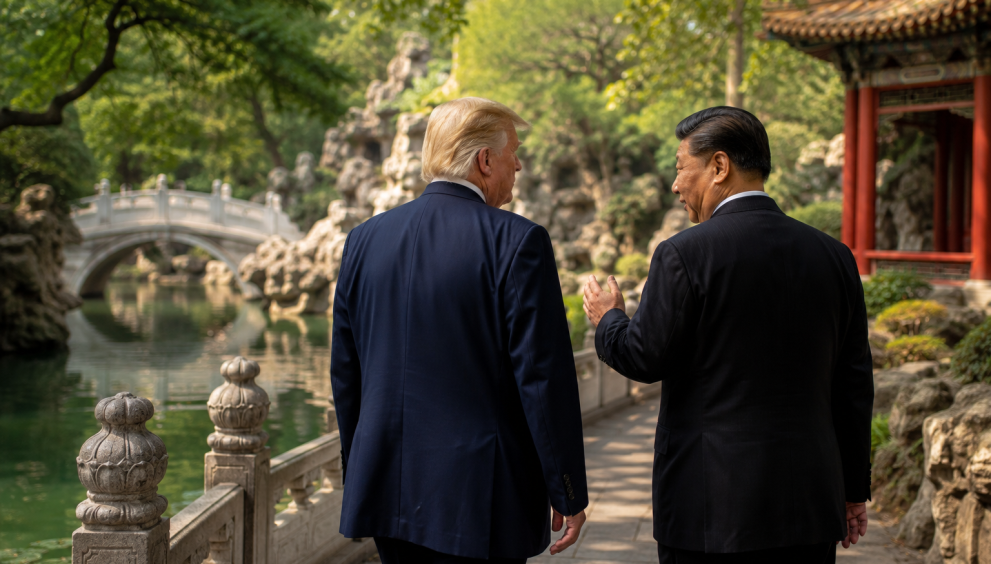
The summit included formal meetings at the Great Hall of the People, a state banquet, cultural visits, and a rare personal tour by Xi through Zhongnanhai’s historic gardens a symbolic gesture widely interpreted as an effort to build personal rapport with Trump.
Both sides highlighted economic cooperation as a key area of progress. Trump touted prospective trade agreements, including reported Chinese commitments to purchase Boeing aircraft and increase imports of American agricultural and energy products.
However, analysts noted that few concrete agreements were announced and several longstanding disputes remained largely untouched.
Taiwan Emerges as Central Flashpoint
Taiwan dominated much of the strategic discussion and underscored the fragile nature of U.S.-China ties.
According to Chinese officials and multiple media reports, Xi warned Trump during private talks that mishandling the Taiwan issue could lead to “clashes and even conflicts” between the two superpowers.
Xi reportedly emphasized that Taiwan remains the most sensitive issue in U.S.-China relations and urged Washington to reduce military and political support for the self-governed island, which Beijing claims as its territory.
The United States reaffirmed that its Taiwan policy remains unchanged. U.S. officials stressed continued opposition to any attempt to change the status quo by force. Secretary of State Marco Rubio described a Chinese military move against Taiwan as “a terrible mistake,” according to reports following the summit.
Despite the sharp rhetoric, both leaders publicly avoided escalating tensions and instead framed the discussions as part of broader efforts to maintain strategic stability.
Iran War Continues to Divide Washington and Beijing
The ongoing Iran conflict also exposed deep policy differences between the two governments.
Trump said he and Xi agreed that Iran should never obtain nuclear weapons and that the Strait of Hormuz must remain open to global shipping and energy supplies.
Still, Beijing appeared reluctant to fully align with Washington’s approach toward Tehran. China criticized the broader conflict and warned that instability in the Middle East threatens global energy markets and supply chains.
The White House has continued accusing Chinese firms of supporting Iran through oil purchases and technology transfers, including satellite imagery assistance. Meanwhile, Beijing has resisted U.S. pressure to crack down more aggressively on Chinese entities linked to Tehran.
Trump suggested Xi had offered to help mediate aspects of the Iran crisis, though Chinese officials provided little public confirmation of any expanded diplomatic role.
Trade and Technology Tensions Remain
Trade disputes and technology competition also lingered beneath the summit’s diplomatic tone.
Although both leaders promoted economic cooperation, disagreements remain over tariffs, semiconductor restrictions, artificial intelligence development, and market access. U.S. officials continue pushing Beijing to curb exports of fentanyl precursor chemicals and address concerns over industrial subsidies and state-backed technology programs.
China, meanwhile, has repeatedly criticized U.S. export controls on advanced chips and what it views as efforts to contain Chinese technological growth.
Observers said the summit succeeded more in preventing further deterioration in ties than in achieving major policy breakthroughs.
Symbolism Over Substance
The Beijing meeting was rich in symbolism and political theater, with Chinese officials offering Trump an elaborate sendoff that included schoolchildren waving Chinese and American flags as Air Force One departed.
The carefully managed optics reflected a shared interest in avoiding a full-scale breakdown in relations at a time of mounting geopolitical instability, slowing global growth, and ongoing conflicts in the Middle East and Eastern Europe.
Still, the summit reinforced how deeply divided the two nations remain on core strategic issues.
While Washington and Beijing may have temporarily stabilized relations through diplomacy and economic incentives, the unresolved disputes over Taiwan, Iran, trade, and military competition continue to cast a long shadow over the future of U.S.-China relations.
________________________________________________________________________________________________________________