The government of Eswatini moved rapidly to join a controversial deportation arrangement proposed by U.S. President Donald Trump, despite mounting legal and constitutional concerns surrounding the program, according to government officials, legal experts and court documents reviewed in recent reports.
The arrangement, first negotiated in early 2025, allowed the United States to deport third-country migrants to Eswatini even when those individuals were not citizens of the southern African kingdom. Critics say the agreement was reached in secrecy, bypassed parliamentary oversight and resulted in detainees being held without proper legal protections.
Secretive Talks Led to Swift Agreement
According to Reuters and regional media reports, Eswatini became one of the first African nations willing to participate after discussions between Prime Minister Russell Dlamini and U.S. diplomats in February 2025. The proposal was reportedly quickly presented to King Mswati III, who approved the plan soon afterward.
Sources familiar with the negotiations said Eswatini viewed the agreement as a way to strengthen relations with Washington at a time when the country remained heavily dependent on American aid and trade benefits. The United States is one of Eswatini’s largest foreign donors, particularly through HIV/AIDS programs and development funding.
Reports indicate the agreement included a payment of approximately $5.1 million from the United States in exchange for accepting up to 160 deportees from various countries, including Cuba, Jamaica, Cambodia, Laos, Vietnam and Yemen.
Legal Challenges Intensify
The deal quickly sparked controversy inside Eswatini, where lawyers and human rights organizations argued that the arrangement violated constitutional protections.
Critics say the deportees were detained without charge at the Matsapha Maximum Security Correctional Complex and denied timely access to legal representation. Under Eswatini’s constitution, detainees are generally required to appear before a court within 48 hours unless formally charged.
Human rights lawyers filed multiple court challenges, arguing that the government acted unlawfully by signing the agreement without parliamentary approval and by detaining individuals who had committed no crimes on Swazi soil.
Although Eswatini’s High Court dismissed one constitutional challenge earlier this year on procedural grounds, the broader legal dispute remains active. Additional complaints have reportedly been submitted to the African Commission on Human and Peoples’ Rights.
In April, a court ruled that deportees held in Eswatini prisons had the right to legal counsel, though activists say access to attorneys remains inconsistent.
Human Rights Concerns Grow
The deportation program has drawn criticism from international human rights organizations, which accuse the Trump administration of outsourcing immigration detention to countries with weaker legal safeguards.
The U.S. State Department’s own 2023 human rights report on Eswatini documented allegations of torture and mistreatment in detention facilities, concerns that have intensified scrutiny of the agreement.
Rights groups also expressed alarm over reports that some deportees had already completed prison sentences in the United States before being transferred to Eswatini. One Cuban deportee reportedly launched a hunger strike while imprisoned in the kingdom, while others challenged their deportation through legal appeals.
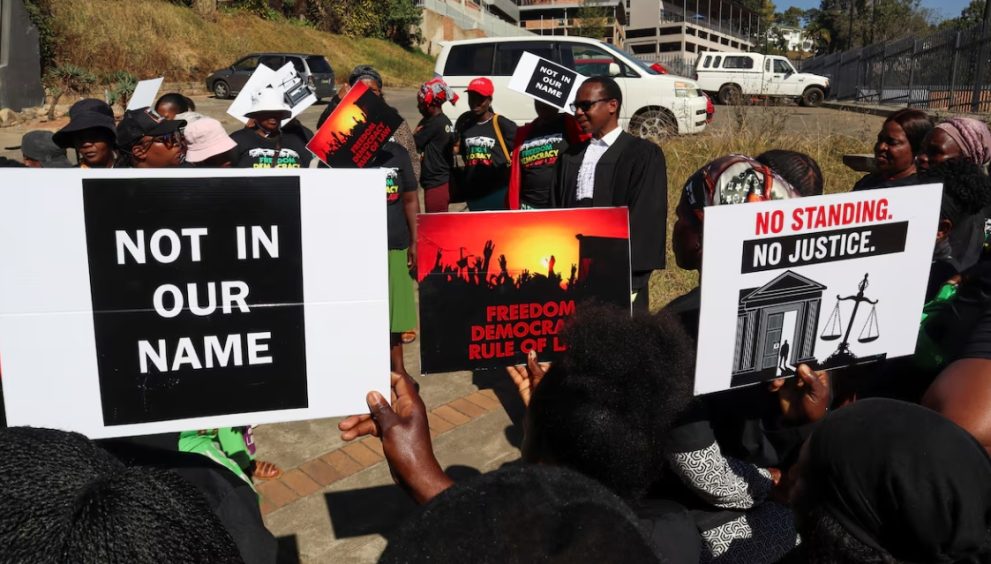
Activists in Eswatini staged rare public protests against the arrangement, with demonstrators accusing the government of turning the country into what some described as a “dumping ground” for foreign detainees.
Trump Administration Expands Third-Country Deportations
The Eswatini agreement formed part of a broader Trump administration strategy aimed at accelerating deportations by sending migrants to countries other than their own when repatriation proved difficult.
The policy faced legal battles in U.S. courts but received a significant boost after the U.S. Supreme Court allowed the administration to continue third-country deportations while litigation proceeded.
Other countries, including Rwanda and Uganda, were also reported to have entered discussions or agreements involving deportees under similar arrangements.
The Trump administration argued the program targeted migrants convicted of serious crimes and was necessary to strengthen immigration enforcement. U.S. officials said countries accepting deportees would receive logistical and financial support.
Regional and International Implications
The controversy surrounding Eswatini’s role in the deportation program has raised broader questions about sovereignty, human rights and the growing pressure smaller nations face in negotiations with major powers.
Analysts say the case could influence how other African governments respond to similar requests from Washington in the future, particularly as migration enforcement becomes an increasingly central issue in global diplomacy.
For Eswatini, the political fallout may continue long after the agreement itself, as legal proceedings, public criticism, and international scrutiny intensify over the treatment of deportees and the secrecy surrounding the deal.
________________________________________________________________________________________________________________