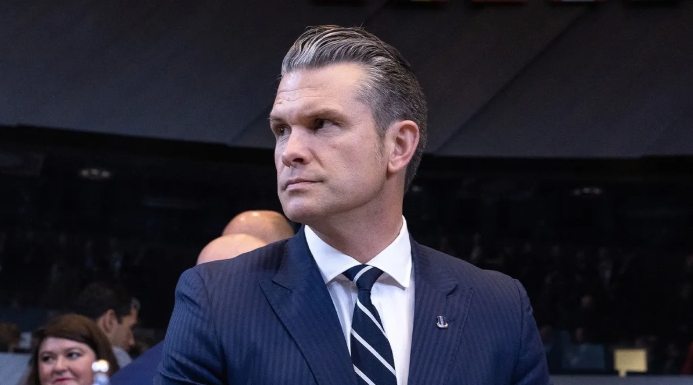
U.S. Defense Secretary Pete Hegseth has said that a “great deal” with Iran appears to be approaching, while warning that Washington remains fully prepared to act militarily if diplomatic efforts collapse, as tensions across the Middle East continue to intensify.
Speaking to reporters on Sunday while departing Paris after attending D-Day anniversary commemorations, Hegseth said the United States believes negotiations with Tehran are advancing toward a breakthrough but stressed that the outcome is not guaranteed.
“Ultimately, we think a deal, a great deal, it’s likely coming soon,” Hegseth said, according to officials familiar with his remarks.
Washington balances diplomacy and military pressure
Hegseth emphasized that while the Trump administration is actively pursuing a diplomatic resolution aimed at preventing Iran from obtaining a nuclear weapon, the U.S. is also maintaining a strong military posture in the region.
He stated that President Donald Trump remains “dedicated” to securing an agreement that would block Iran’s nuclear ambitions, but warned that the U.S. is prepared to respond if talks fail.
“We are prepared … to do what needs to be done to ensure that Iran never gets a nuclear weapon,” he said.
The defense secretary also underscored that any agreement would need to include “meaningful and verifiable” limits on Iran’s nuclear program, reflecting Washington’s long-standing demand for strict enforcement mechanisms.
Maritime security and regional flashpoints
Hegseth also addressed growing concerns over maritime security, warning that any Iranian interference with international shipping routes particularly in the Strait of Hormuz would draw a U.S. response.
He said commercial shipping in the region is continuing, but added that Washington “would take care of” any attacks on maritime traffic, signaling continued U.S. naval presence in the Gulf.
The remarks come amid heightened instability in the region, where recent months have seen repeated exchanges of fire between Israel and Iran, missile attacks across multiple fronts, and rising global concern over energy security.
Backdrop of escalating Middle East tensions
Hegseth’s comments arrive at a moment of sustained volatility in the Middle East. Recent weeks have seen intensified clashes involving Iran and Israel, with strikes targeting military infrastructure and retaliatory missile attacks contributing to broader regional instability.
Global leaders have repeatedly urged restraint as fears grow that the conflict could widen into a broader regional war, disrupting energy supplies and international trade routes.
Oil prices have fluctuated sharply during the crisis, while diplomatic efforts led by multiple global actors continue behind the scenes in an attempt to prevent further escalation.
Outlook: fragile diplomacy under pressure
While U.S. officials publicly signal optimism about a possible nuclear agreement, analysts note that the situation remains highly unstable, with military preparedness continuing alongside diplomatic engagement.
Hegseth’s remarks highlight the dual-track U.S. strategy: pursuing a negotiated settlement while maintaining credible military deterrence in case talks fail.
For now, both Washington and Tehran remain cautiously engaged but the region continues to sit on a precarious edge between diplomacy and further conflict.
________________________________________________________________________________________________________________