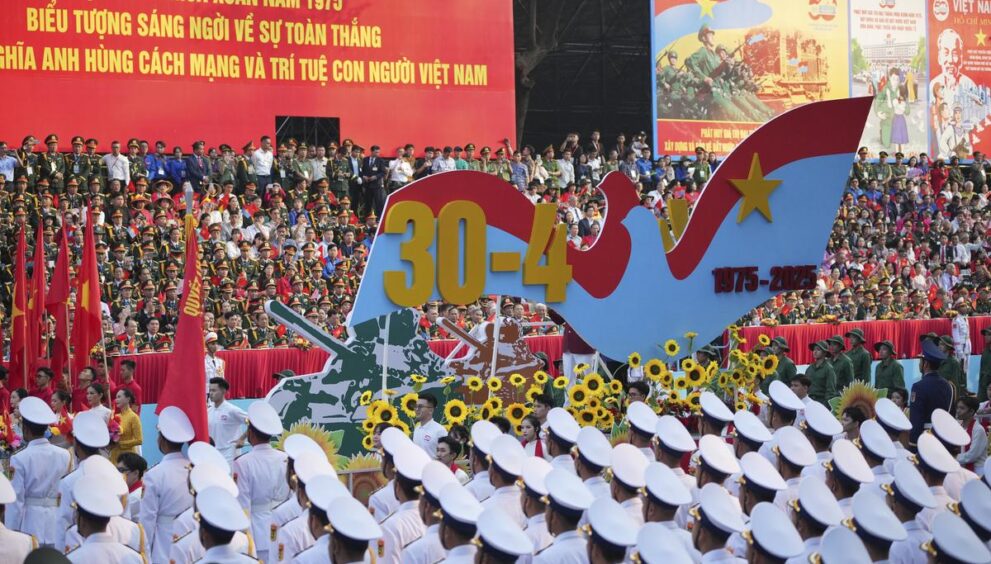
On Wednesday, tens of thousands in Vietnam commemorated half a century since the end of the Vietnam War, an event described by the country’s top leader as a “triumph of unity and conviction.”
A large-scale parade in Ho Chi Minh City showcased thousands of soldiers, an aerial display with Russian-built jets and helicopters, and crowds waving red flags while singing national songs. The commemoration marked the fall of Saigon on April 30, 1975, when forces from the North captured the Southern capital, leading to the country’s reunification and the city’s renaming in honor of the North’s revolutionary leader.
Top official To Lam described the outcome as a victory of “justice over oppression,” emphasizing national solidarity with a famous quote affirming that Vietnam and its people remain indivisible.
The capture of Saigon occurred two years after American combat forces withdrew, concluding a 20-year war that claimed the lives of about 3 million Vietnamese and nearly 60,000 Americans, many of them conscripts.
Eyewitness accounts from the day recall a peaceful entry by Northern forces, which included heavily armed troops and young fighters, some barefoot. The final scenes of the conflict were etched in global memory as helicopters evacuated around 7,000 people from rooftops, including the last American military personnel.
Vietnam was officially reunified a year later, ending more than two decades of division that began after the end of French colonial rule.
Diplomatic ties between Vietnam and the U.S. were restored in 1995 and have strengthened significantly, highlighted by a 2023 visit from a former American president. A U.S. diplomatic representative attended this year’s parade, a notable contrast from the 40th anniversary, when no U.S. official was present.
However, economic relations face uncertainty following an announcement of potential 46% tariffs on Vietnamese exports by the current U.S. administration. Negotiations are ongoing, and the tariffs are on hold until July. If enacted, they could affect the country’s manufacturing-driven economy and its appeal to foreign investors.
France, which once ruled Vietnam, has also been involved in recent commemorations, sending an official last year to mark the 70th anniversary of the decisive battle at Dien Bien Phu.
Vietnam continues to maintain strong military ties with Russia, its primary arms supplier, and has also developed closer economic connections with China. Despite historical disputes, especially over the South China Sea, China remains a key trade partner and supplier of manufacturing components.
Reflecting these evolving alliances, a group of 118 Chinese military personnel was expected to march in the parade, a gesture symbolizing international solidarity during Vietnam’s fight for independence.