

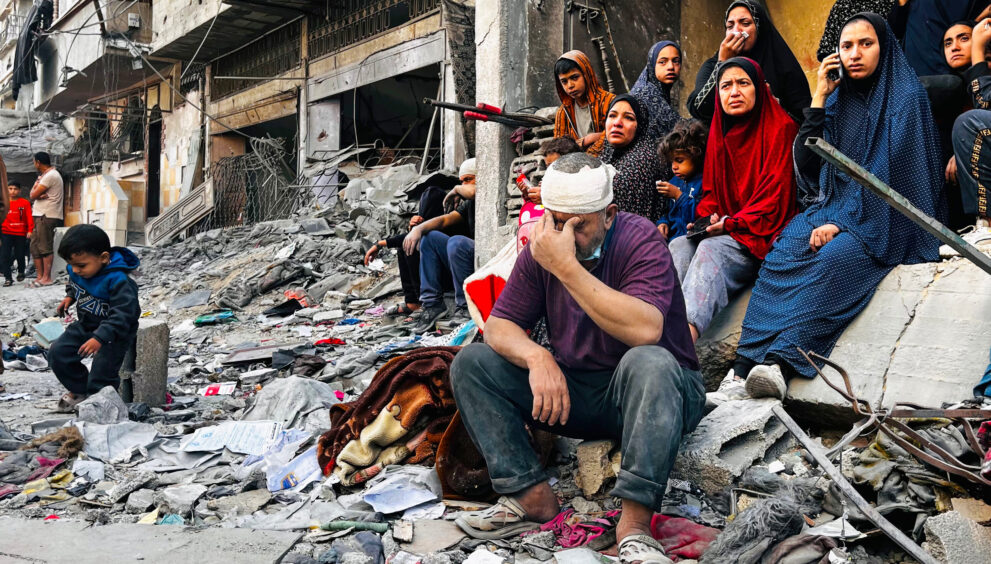
At least 93 people lost their lives in Gaza on Friday due to ongoing airstrikes, coinciding with the conclusion of a high-profile diplomatic visit by the U.S. president to the Middle East.
The strikes, which took place overnight, targeted various locations across Gaza, including the outskirts of Deir al-Balah and the city of Khan Younis. According to health officials in Gaza, hundreds more were wounded during the bombardments.
These attacks occurred as the U.S. president wrapped up a regional trip focused on diplomacy in the Gulf. There had been some optimism that his visit might lead to a ceasefire agreement or improved humanitarian access to the besieged enclave, which has now endured a blockade for three months.
During a public appearance in the Gulf, the U.S. leader expressed concern about the situation in Gaza, stating that resolving the crisis was a priority and acknowledging the severe humanitarian conditions affecting the population.
Israeli authorities reported that their forces targeted 150 locations within Gaza over the previous 24 hours, including sites said to be associated with armed groups. Several individuals reportedly involved in militant operations were killed in the northern part of the territory.
The air raids, which extended into Friday morning, prompted mass displacement from areas like the Jabaliya refugee camp and Beit Lahiya. Eyewitnesses described scenes of chaos as residents fled with whatever belongings they could carry, using donkey carts, vehicles, and even on foot.
One displaced resident described the ordeal of escaping under fire, saying that people fled their homes amid intense bombardments, without time to gather possessions.
Earlier in the week, Israeli leadership signaled an intention to escalate military operations in Gaza, with the stated goal of dismantling the Hamas organization, which governs the territory. Officials described the latest strikes as part of preparations for a broader offensive, while also serving as a warning amid ongoing negotiations over the release of hostages.
Negotiations continue in Qatar, where ceasefire talks are underway. Israeli decision-makers met Friday to assess the progress of those discussions and consider the next steps.
A government spokesperson reiterated that military operations would continue alongside negotiations, emphasizing that pressure would remain on Hamas until hostages are released and the group relinquishes power.
Families of hostages expressed deep concern over the intensifying violence and urged their own government to coordinate efforts with international partners to secure a deal. In a statement, they warned that failing to seize the opportunity for an agreement could mark a historic failure.
The current conflict stems from a large-scale assault carried out by Hamas-led militants on October 7, 2023, which resulted in the deaths of around 1,200 people in southern Israel. In response, Israeli military operations have led to the deaths of over 53,000 people in Gaza, according to local health officials, with women and children among the casualties. Thousands have died since a temporary ceasefire ended in March.
Of the roughly 250 hostages initially taken during the October attack, 58 are still held, with 23 confirmed to be alive, though there are concerns about the condition of several of them.
Meanwhile, the blockade on Gaza continues, restricting access to food, fuel, medicine, and other essential supplies. Israeli authorities state the blockade is aimed at pressuring Hamas, particularly over the release of hostages.
A new aid group with backing from the United States has announced plans to begin delivering humanitarian assistance to Gaza by the end of the month, citing cooperation with Israeli officials. The organization includes former military personnel and aid coordinators. However, several humanitarian groups, including international agencies, have raised concerns about the plan, arguing it may not meet the needs of the civilian population or adhere to established humanitarian principles.

