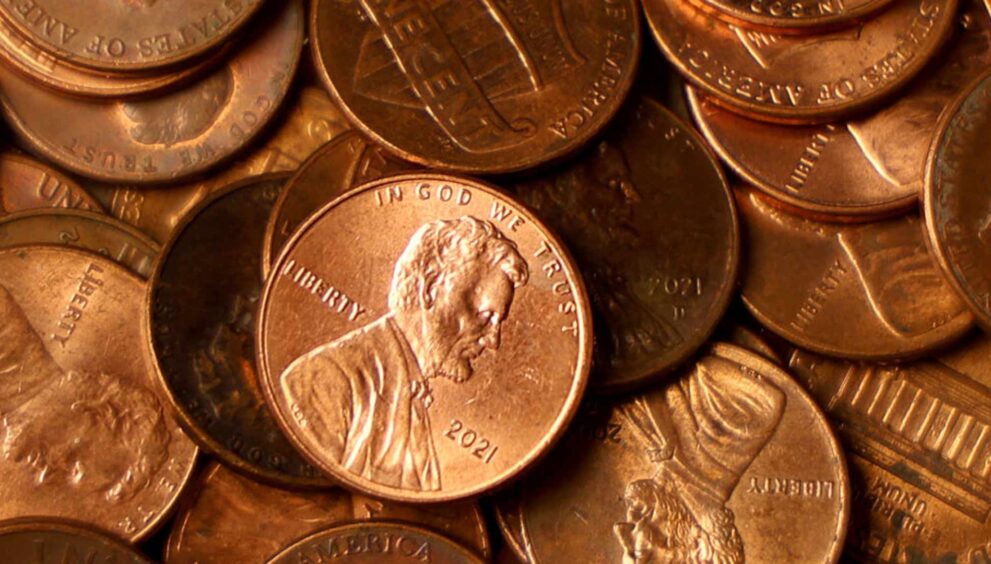
The U.S. Treasury has announced plans to halt production of the penny early next year, following a directive from President Donald Trump, who labeled the coin outdated and costly.
According to a statement from the Treasury, the U.S. Mint will stop minting new pennies once its current supply of metal blanks runs out. The final order for these blanks was placed this month, marking the beginning of the coin’s retirement process after more than two centuries in circulation.
Ending penny production is expected to cut annual expenses by around $56 million, largely due to savings on raw materials. The department also expects additional financial benefits from streamlined operations and facility adjustments tied to the drop in output.
President Trump had publicly criticized the penny earlier this year, calling it inefficient. In a message shared in February, he pointed out that each penny costs more than two cents to produce. “It’s time to eliminate this unnecessary expense,” he said, emphasizing his goal of reducing government waste.
Over the past decade, the production cost of a penny has nearly tripled, rising from 1.3 cents to 3.69 cents in 2024. In contrast, printing a paper dollar costs just 3.2 cents. Pennies are made from a mix of zinc and copper and require a resource-intensive smelting process.
The U.S. Mint recorded an $85.3 million loss from penny production in the last fiscal year, according to its report to Congress. First introduced in 1792, the one-cent coin has featured Abraham Lincoln’s portrait since 1909. Today, an estimated 114 billion pennies remain in circulation, though they are reportedly used far less frequently.
“This decision is part of a broader effort to improve government efficiency and reduce waste for American taxpayers,” the Treasury said in its release.
While the elimination of a currency denomination typically needs Congressional approval, some legal scholars argue the Treasury Secretary has the authority to make this decision independently. Citing federal law, constitutional expert Laurence Tribe has described the move as both legal and within the scope of the department’s powers.
The penny will be the 12th coin to be removed from circulation in U.S. history. Other retired denominations include the half-cent, two-cent, and twenty-cent pieces, as well as the “trime,” a silver three-cent coin from the 19th century.
Caroline Turco, a curator at the Money Museum in Colorado Springs, explained that these past coins were typically retired due to low usage or high production costs—reasons that also apply to the penny today.