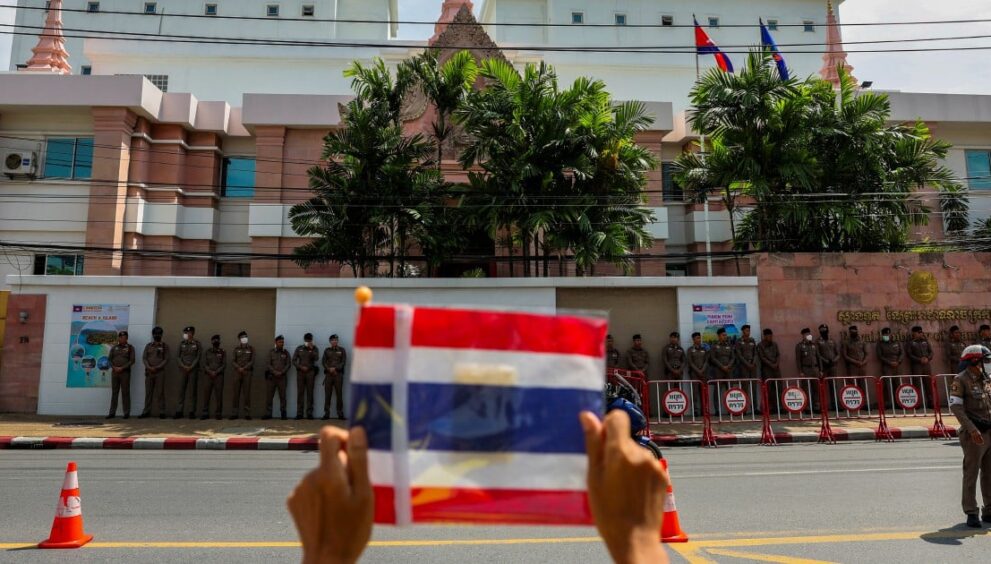
Thailand has reduced the operating hours at 10 border crossings with Cambodia due to security concerns, amid ongoing tensions following a deadly confrontation last month. The day before, both nations increased their military presence in disputed border areas, according to Thailand’s defense minister.
After a Cambodian soldier was killed on May 28 in an unclear border zone, both governments issued statements affirming their commitment to peaceful resolution. Checkpoints, including the busiest crossing in Thailand’s eastern province of Sa Kaeo, have cut hours from 6 a.m. to 10 p.m. down to 8 a.m. to 4 p.m., according to a spokesperson for Thailand’s Foreign Ministry.
Thailand has 17 official border crossings with Cambodia, spanning seven provinces along their shared 817-kilometer frontier. The spokesperson emphasized that no immediate full closures are planned; instead, adjustments are made gradually depending on local circumstances, and the border situation remains calm.
Residents near the Aranyaprathet-Poipet crossing reported a generally peaceful atmosphere despite the shorter hours, with shops remaining open and people continuing to cross as usual.
On June 6, Cambodia’s Foreign Ministry called for the border disputes to be taken to the International Court of Justice, highlighting the complex and sensitive nature of the issue. Cambodia’s Foreign Minister expressed that bilateral talks alone may not be sufficient for a lasting resolution, suggesting that a ruling based on international law would be fair and impartial.
Meanwhile, Thailand does not recognize the court’s jurisdiction and prefers resolving border issues through direct negotiations, with talks planned for June 14.
The two countries have long-standing disagreements over undemarcated points along their border, originally defined by French colonial maps from 1907. Tensions intensified in 2008 over an ancient Hindu temple, leading to several years of clashes and multiple fatalities, including a week of artillery exchanges in 2011.
Despite the disputes, diplomatic relations have remained relatively warm, in part due to close personal ties between former leaders of both countries. The current prime ministers are the children of those former leaders.