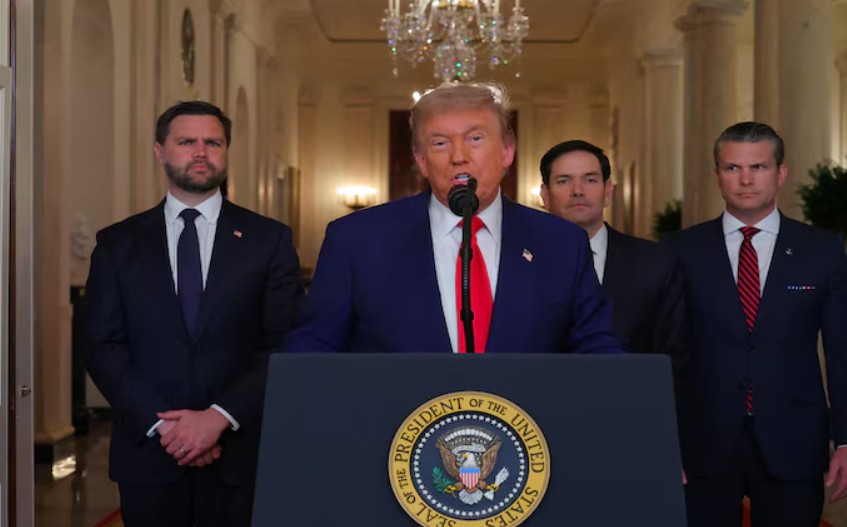
In a stunning series of events that began with military escalation and ended with a diplomatic about-face, President Donald Trump announced on Monday evening that Israel and Iran have agreed to a “complete and total ceasefire,” effective within hours.
The announcement comes just two days after Trump authorized direct strikes on Iranian nuclear facilities, a decision that jolted global markets and raised fears of a broader conflict in the Middle East. The strikes, carried out late Saturday night, marked a dramatic re-entry of the United States into one of the world’s most volatile regions.
Monday’s ceasefire statement was made via a hastily arranged press conference at Trump’s Florida residence, where the former president described the deal as “historic” and a “win for peace.” The ceasefire is reportedly set to take effect around midnight Tehran time (6 p.m. ET), though many details remain unclear.
What is known is that the agreement has taken even senior officials within Trump’s inner circle by surprise. Several members of his national security team were not briefed on the ceasefire talks, according to sources familiar with the matter.
While the world watches to see if the ceasefire holds, analysts remain cautious. “It’s unprecedented not just the speed, but the secrecy,” said Dr. Lila Nasr of the Brookings Institution. “If this ceasefire endures, it could be one of the most unexpected diplomatic developments in recent history.”
No official comment has been released by the Iranian or Israeli governments as of publication. However, early indications suggest both sides have confirmed a pause in hostilities through backchannel diplomatic sources.
The full implications of the agreement for U.S. foreign policy, regional security, and Trump’s political future are still unfolding.