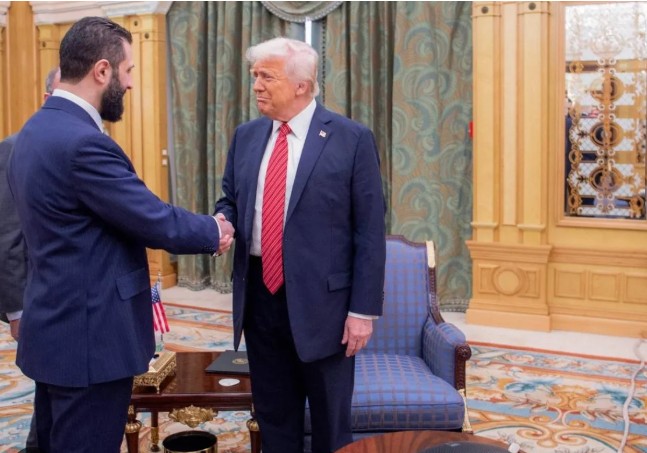
In a significant shift in U.S. foreign policy, President Donald J. Trump has signed an executive order officially lifting all American sanctions on Syria, marking a dramatic turn in the decades-long relationship between the two nations. The announcement, made Friday afternoon, follows a historic meeting between President Trump and Syria’s new president, Ahmad al-Sharaa, held in May at the White House.
According to White House Press Secretary Karoline Leavitt, the executive order is part of the Trump administration’s broader diplomatic effort to “support Syria’s path toward peace, reconstruction, and long-term regional stability.” The administration also confirmed that it is reviewing Syria’s designation as a state sponsor of terrorism, a label that has long restricted economic and diplomatic engagement with the war-torn country.
“The president has been clear,” said Leavitt during the press briefing. “When countries make real efforts toward peace and democratic reform, the United States will respond accordingly. Syria has begun that journey, and today marks a critical first step.”
From Isolation to Reengagement
The U.S. imposed heavy sanctions on Syria starting in 1979, intensified them over the last two decades during the Syrian Civil War, and further expanded restrictions under the Caesar Act in 2020. These measures targeted the Assad regime for human rights abuses and prohibited international financial institutions from supporting reconstruction efforts without U.S. approval.
But in recent months, the tide has shifted. The departure of Bashar al-Assad and the election of Ahmad al-Sharaa a former diplomat with ties to reformist factions signaled a new era in Syrian politics, which the Trump administration appears eager to support.
“This decision does not ignore the past,” said a senior State Department official. “It reflects the possibility of a future where Syria is no longer a pariah state but a partner in building regional peace.”
Conditions Met for Sanctions Relief
While the full terms of the Trump-al-Sharaa agreement remain classified, sources familiar with the discussions say President Trump conditioned sanctions relief on three main commitments:
-
The release of political prisoners and amnesty for non-violent opposition figures.
-
The opening of humanitarian corridors and partnerships with international aid organizations.
-
A firm stance against extremist groups and support for U.S.-led counterterrorism efforts.
Initial reports from the ground suggest that Syria has already begun complying, including the release of hundreds of detainees and a partial ceasefire in contested regions.
Geopolitical Repercussions
Trump’s bold move is likely to send ripples across the Middle East and among U.S. allies. Some have welcomed the decision, seeing it as a pragmatic response to shifting realities on the ground. Others, particularly within Congress, have expressed concern over what they view as a premature reward for a government still proving itself.
Senator Tom Cotton (R-AR), a long-time Syria hawk, issued a statement calling the decision “reckless” and said the administration must ensure “real reform, not just rebranding.”
In contrast, international humanitarian groups have praised the decision, saying it could unlock billions in much-needed aid and finally allow rebuilding efforts to begin in earnest.
Next Steps: A New Chapter?
Whether Syria’s reintegration into the global community succeeds will largely depend on continued reforms, credible international oversight, and political will on both sides.
For now, President Trump’s executive order marks a turning point a rare moment of diplomatic optimism in one of the Middle East’s most devastating conflicts.
“Today is not the end of the journey,” said President Trump in a written statement. “But it is a new beginning one that holds the promise of peace, prosperity, and partnership.”