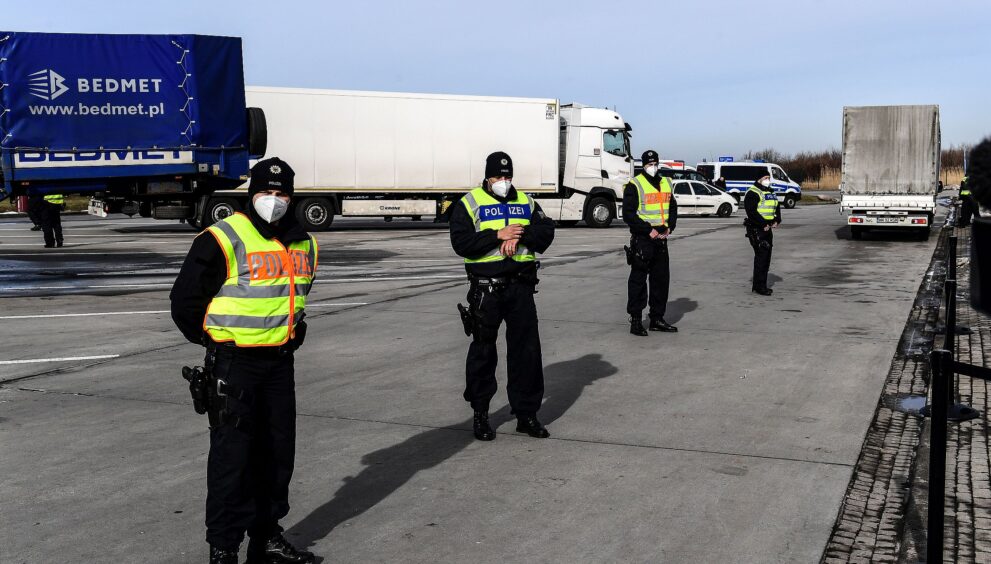
Polish Prime Minister Donald Tusk has issued a stern warning to nationalist vigilante groups patrolling the German border, urging them to cease their activities and return home. He condemned their actions as illegal and disruptive amid rising tensions along the frontier and growing strains within his ruling coalition.
The government’s statement comes after Poland’s recent decision to temporarily reinstate border controls with Germany and Lithuania starting July 7, citing a reported increase in migrants being pushed back by German authorities—claims that remain unverified.
In recent days, self-styled “citizen patrols,” some numbering in the hundreds, have gathered on the Polish side of the border, asserting their intent to prevent the return of migrants sent back by German officials.
These patrols have sparked political controversy, placing added pressure on Tusk’s increasingly fragile centrist government. While officials demand the vigilantes disband, conservative nationalist President-elect Karol Nawrocki has publicly praised them.
“Only the Border Guard has the authority to control our borders,” government spokesperson Adam Szłapka said following an emergency security meeting in Warsaw. He warned that individuals impersonating officers or obstructing official duties would face legal consequences.
Videos circulating on social media show masked men stopping vehicles, demanding identification, and attempting so-called “citizen arrests” of suspected illegal entrants. Regional authorities have cautioned that such actions could constitute impersonation of public officials and threaten public safety.
Prime Minister Tusk criticized political backers of the patrols, including some opposition politicians, describing their support as “shameful and scandalous.” Meanwhile, President-elect Nawrocki thanked far-right activist Robert Bąkiewicz, a leading organizer of the patrols, praising their efforts as a “citizen-led defense of the border.” Critics argue such endorsements risk legitimizing unauthorized paramilitary groups.
The reinstatement of border controls was intended to bolster Tusk’s image of strength amid a challenging political environment. The prime minister faces mounting pressure to regain control after a recent setback in the presidential election, where his endorsed candidate lost to Nawrocki, backed by the conservative Law and Justice party.
The election defeat has unsettled the coalition that brought Tusk to power in 2023, with some partners now reportedly exploring new alliances. Tensions surfaced further when junior coalition members met privately with opposition figures in a late-night session, sparking speculation about possible realignments.
Despite the turbulence, Tusk’s administration insists the prime minister remains in command. A planned cabinet reshuffle later this month is widely viewed as a key test of his ability to maintain authority over the fractious coalition.